

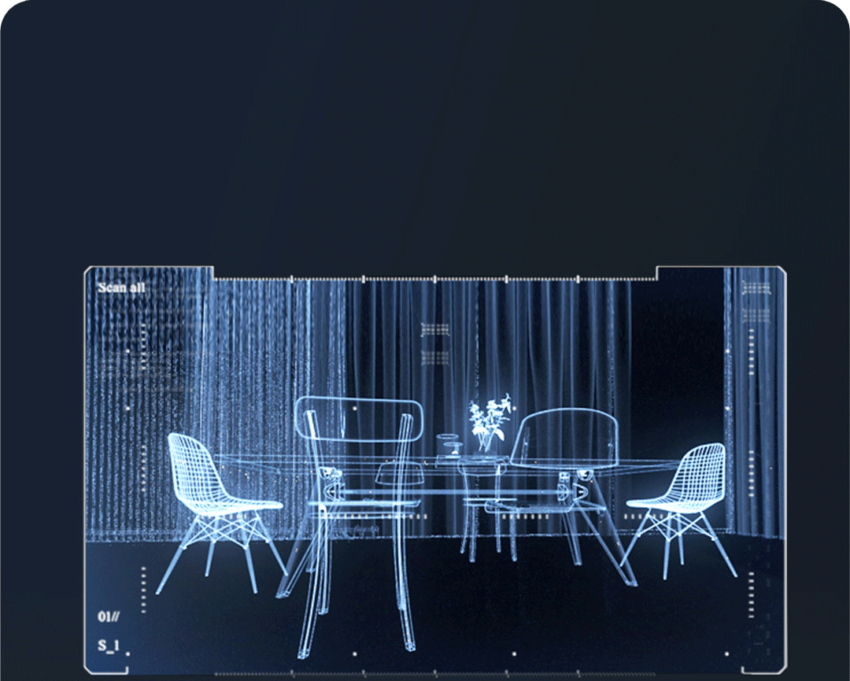
One recent report discovered that a consumer’s smart robot vacuum was constantly sending a detailed 3D map of his home to its manufacturer overseas as the device quietly roamed through rooms. Source investigations revealed that certain models, especially from the manufacturer Ecovacs, are vulnerable to remote hacking—allowing strangers to access live camera feeds, control the movement of the vacuum, and even broadcast harmful audio through its speaker; security analysis documents show that these devices have been used to capture photos, videos and voice recordings of users without their knowledge, and in multiple cases have been exploited in U.S. households to issue racial slurs and invade privacy. One security-firm blog explains that newly identified vulnerabilities in Ecovacs robot vacuums and lawn mowers provide malicious actors the ability to spy on owners, control devices remotely and abuse onboard cameras and mics.
Key Takeaways
– Smart home robot vacuums are not just cleaning devices—they can collect and transmit detailed data (including spatial maps, photos, audio) that could compromise user privacy.
– Major security vulnerabilities in specific brands (e.g., Ecovacs) have already been exploited in real-world incidents, enabling hackers to remotely control devices, access live feeds, and even harass users.
– Buyers and users of smart robot vacuums should treat them like any other IoT device: ensure firmware is up to date, disable unnecessary camera/mic functions, restrict cloud-access rights, and consider opting for models with strong documented security standards.
In-Depth
Smart homes are increasingly populated by intelligent devices that promise convenience: robot vacuums that auto-map your living space, schedule cleanings, mop, return to the dock. But beneath the veneer of automation and ease lies a growing privacy and security headache—one that every single household owner should take seriously. The recent spate of revelations about robot vacuum vulnerabilities highlight how these devices can act as sneaky portals into our private lives.
One of the more striking disclosures showed that a vacuum cleaner was quietly sending a detailed 3D map of a home back to its manufacturer. That alone raises questions: how is that map used? Who has access? Could it be combined with other data streams to build a behavioral profile of the occupants? The fact that such data transmission was happening — and apparently without explicit user awareness — highlights an under-appreciated risk in the connected home ecosystem.
Security researchers have drilled deeper. In one case involving the Chinese-made brand Ecovacs (model Deebot X2 and others), hackers exploited discovered vulnerabilities to gain remote access, seen in multiple U.S. households. Attackers manipulated the robot’s cameras, turned its speaker into a tool of harassment (broadcasting racial slurs), and effectively turned an innocuous cleaning machine into a roaming surveillance and abuse device. That may sound sensational, but the underlying technical reality is plain: remote cloud access, weak authentication, insufficient encryption, and permissive default permissions can render what should be a domestic helper into a liability.
Further, explosion of data collection—even when not overtly malicious—adds to the concern. Some vacuums are found to capture still images, audio snippets or video, presumably for mapping or “AI training” purposes, but often without transparent notice to the consumer. The combination of microphone, camera, mobility, and WiFi/cloud connectivity makes these devices uniquely vulnerable and uniquely invasive compared to many fixed smart-home accessories.
From a conservative-leaning vantage, the implications extend beyond inconvenience: they touch on property rights, privacy rights, and the basic expectation that a homeowner can control what happens in their home without being surveilled or manipulated by remote parties. Just as we wouldn’t accept a burglar-camera streaming to unknown servers or a microphone recording inside our living room without clear user consent, we should not treat robot vacuums as benign appliances without oversight.
What can sensible homeowners do now? First, before buying a robot vacuum, check the manufacturer’s track record in security patches and firmware updates. Prioritize models that allow you to disable the camera or mic entirely, or that let you operate locally (without mandatory cloud). After purchase, change default passwords, ensure your home WiFi network is segmented (guest vs. main network), and monitor firmware updates. If mapping data is stored in the cloud, ask how long it is retained, and whether it is encrypted. If your device has a camera and mic, ask if the user can disable or cover them when not needed.
In today’s world where connectivity is marketed as added convenience—lights that turn on automatically, voice assistants, fridges that reorder groceries—the connected vacuum seems innocuous. But the digital architecture behind it is the same architecture that powers surveillance tools. Failure to treat these devices cautiously can thrust homeowners into a vulnerable position: someone else might not just watch how you live, but intervene. That reality may sit uncomfortably, but as technology evolves, it is precisely the responsible homeowner who will anticipate risk, secure devices, and protect the sanctity of their home.