

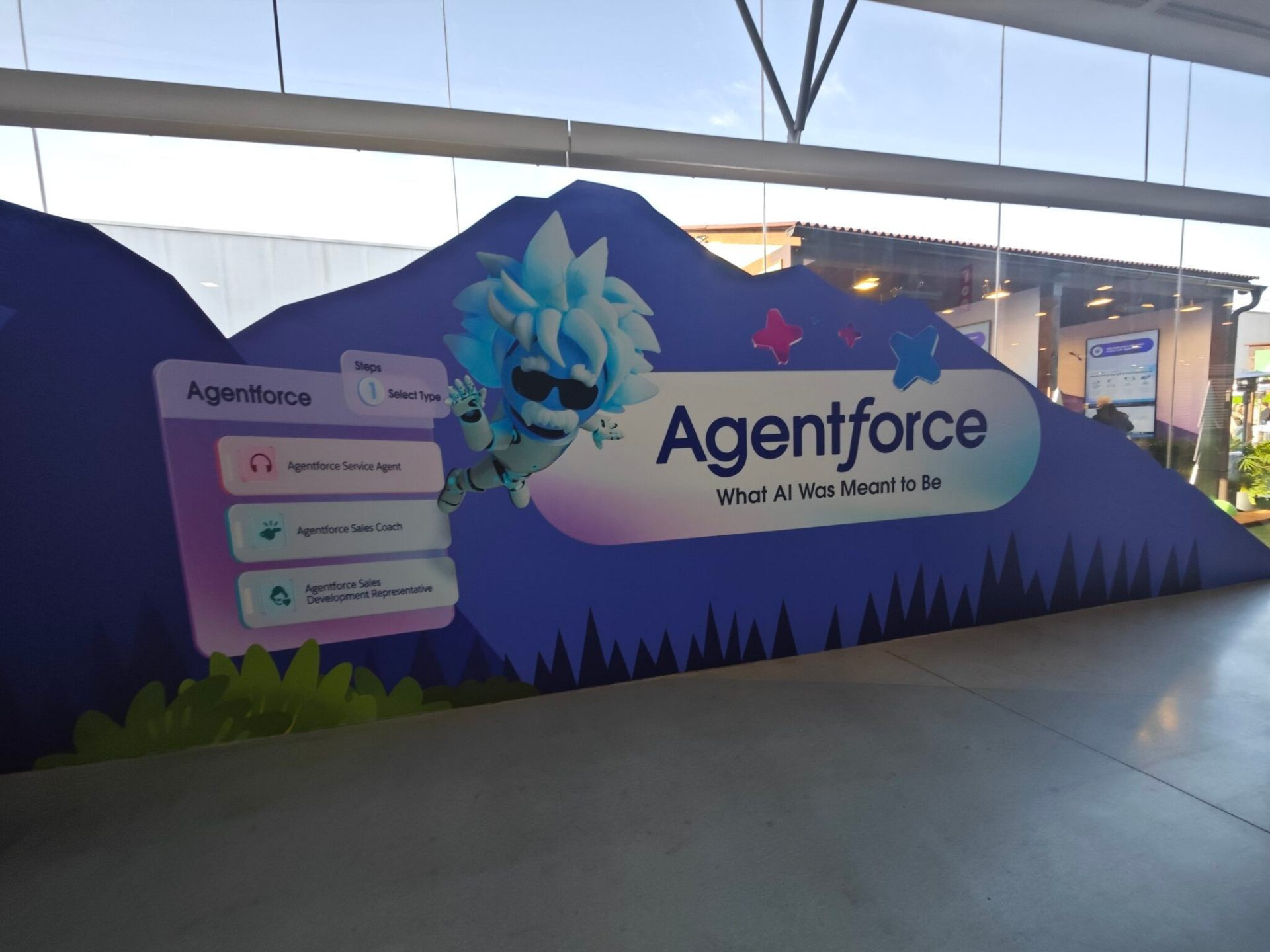
Salesforce has officially opened its Agentforce 360 platform to independent software vendors (ISVs), partners, and systems integrators, marking one of the most significant expansions of its enterprise platform in nearly two decades. The revamped program lets partners build, embed, and commercially distribute AI-powered agents and applications—using the same foundational capabilities that power Salesforce’s own AI offerings—while benefiting from flexible pricing, marketplace automation, and real-time usage insights. This move aims to reduce barriers to entry for partners transforming expertise into revenue-generating AI solutions and advances Salesforce’s strategy of driving broader ecosystem participation in agentic software development. Full details of the announcement and expanded capabilities are emerging as the rollout continues.
Sources: Salesforce, IT Pro
Key Takeaways
– Expanded Partner Access: Salesforce is allowing partners to fully embed and distribute Agentforce 360 capabilities, a major shift from past limitations where key AI foundations were reserved for Salesforce’s own products.
– Commercial Flexibility: The program introduces flexible pricing and packaging options and integrates automated marketplace tools that simplify provisioning, billing, and customer engagement.
– Ecosystem Growth Opportunity: By lowering technical barriers and providing real-time insights, Salesforce aims to empower a new generation of partner-built, AI-driven applications across industries.
In-Depth
Salesforce’s expansion of Agentforce 360 into a partner-centric development and commercialization engine represents a strategic broadening of the company’s platform playbook, one that has significant implications for how enterprise software and AI converge. Traditionally, Salesforce’s ecosystem enabled partners to build extensions or customizations on top of its CRM and cloud products, but deep AI capabilities—especially around autonomous agent experiences—were more tightly held. With the opening of Agentforce 360, that’s shifting toward a more inclusive model, where independent software vendors and systems integrators can embed the full suite of agentic AI tools directly into their own products. This isn’t just a technical change; it’s a business transformation. Instead of investing heavily in building AI infrastructure from scratch, partners now tap into decades of Salesforce’s foundational work—spanning CRM, data services, workflow automation, and generative AI reasoning.
From a market perspective, this move meets several critical demands. Enterprises increasingly want tailored AI solutions that reflect deep understanding of industry-specific workflows—whether in healthcare, finance, agriculture, or customer service—yet building such solutions in isolation carries significant cost and complexity. Agentforce 360’s partner opening reduces these barriers by providing pre-built features, flexible pricing models that align with modern revenue expectations, and automation tools that streamline the path from development to commercial sales. For smaller firms and startups, this levels the playing field: those with domain expertise but limited engineering resources can now create commercial-grade AI agents that address complex business problems without having to house large internal AI teams.
Salesforce’s broader strategy also comes into play here. The company has been positioning itself as an AI-first enterprise platform, not just a cloud application vendor. Opening Agentforce 360 reinforces that story while extending Salesforce’s ecosystem value proposition. Partners become more directly invested in the platform’s success, potentially driving greater consumption of Salesforce services and increasing stickiness within customer accounts. Flexible pricing and built-in marketplace support help partners manage commercial relationships more efficiently, reducing friction in go-to-market efforts.
It’s also worth noting that this shift aligns with wider industry trends: major enterprise vendors are pursuing partner-centric AI strategies to avoid bottlenecks and encourage innovation outside their walls. By enabling partners to build and sell their own agentic applications, Salesforce signals confidence in its platform’s maturity and scalability. In doing so, it acknowledges that the future of enterprise software innovation relies not solely on internal product teams but also on a vibrant partner ecosystem empowered by accessible tools and commercial support structures.
In practical terms, organizations considering joining or expanding within the Salesforce partner network should evaluate how this expanded Agentforce 360 access could accelerate their product roadmaps and revenue goals. The key advantages lie in reduced development overhead, direct access to high-value AI capabilities, and built-in mechanisms for monitoring usage and customer engagement—factors that can make new AI offerings more competitive. As partners begin to adopt and experiment with these tools, we’ll likely see a broadening range of commercial AI solutions emerge in the marketplace, with Salesforce’s platform acting as the common foundation.