

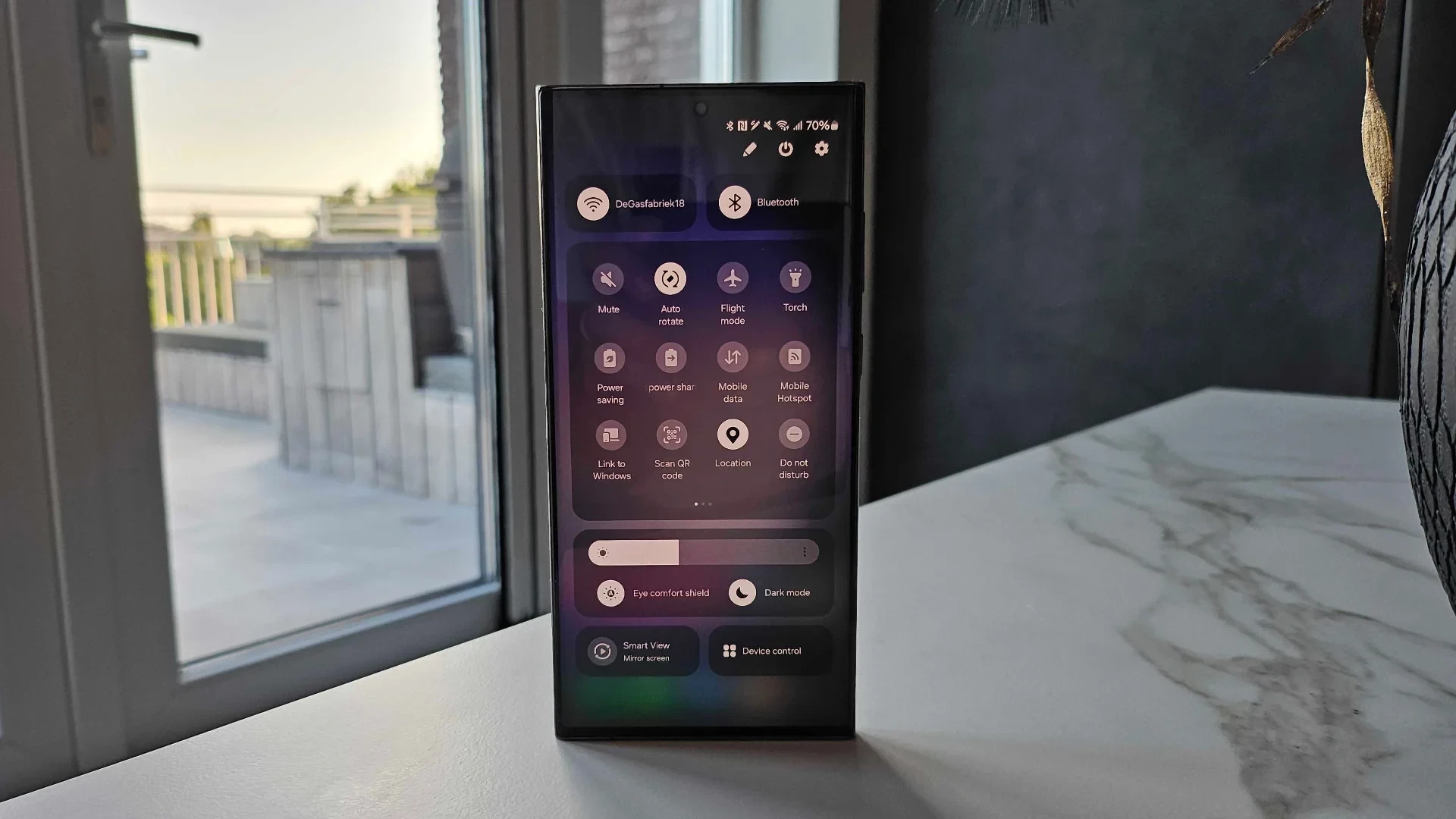
A recent teardown of leaked One UI 8.5 firmware indicates Samsung is planning to introduce a “Network Battery Saver” feature that will intentionally limit network performance when the phone is idle (for example, during sleep) to conserve battery. This feature reportedly leans on Samsung’s on-device AI system known as Personal Data Intelligence (PDI) to decide when throttling should kick in, based on user habits. Reports suggest the update is built atop Android 16 QPR2 and may debut with the Galaxy S26 series in early 2026, later rolling out to other eligible Galaxy devices.
Sources: SAM Mobile, Gadgets360
Key Takeaways
– The Network Battery Saver feature aims to reduce battery drain by throttling network activity when the device is detected as idle.
– Samsung would use Personal Data Intelligence (on-device AI) to learn usage patterns and selectively apply throttling.
– One UI 8.5 is expected to align with Android 16 QPR2, launch with Galaxy S26 in early 2026, then gradually extend to supported Galaxy phones.
In-Depth
Samsung seems to be quietly stepping up its software game. The One UI 8.5 update, based on Android 16 QPR2, isn’t just a cosmetic refresh—it’s shaping up to introduce smarter, more context-aware features under the hood. The most interesting among them is what’s being called Network Battery Saver, spotted in code via an APK teardown by Android Authority. The core idea: when your phone isn’t actively being used—say while you sleep or when you’re stationary for long stretches—the system may throttle network performance to reduce background data usage and save battery.
That’s not as draconian as it sounds. According to the code strings, the throttling won’t kick in during active use (streaming, browsing, gaming). Instead, it uses Personal Data Intelligence (also called PDI) to sense when the phone is unlikely to be used and then dial down network access during those windows. The AI engine builds a “knowledge graph” of your usage habits—times when you’re most active vs. times you’re idle—and factors these in to decide when to apply the limits. You’ll presumably be able to manage which apps or services PDI monitors in settings.
Multiple news outlets confirm this direction: SamMobile notes the same code strings and the reliance on PDI; Gadgets360 emphasizes that the update could launch alongside the Galaxy S26 series with this battery-saving tool. The combined picture is that Samsung wants to squeeze more daily uptime out of its Galaxy phones without relying solely on hardware (bigger batteries) or letting users manually adjust many settings. It’s a subtle shift toward more hands-off, AI-driven battery efficiency.
Of course, leaks aren’t guarantees. Samsung may alter or drop the feature before release. But if it sticks, this could mark a meaningful leap: instead of “you turn battery saver on/off,” the phone may learn when to throttle itself intelligently. For users, that means less micromanagement and better battery retention on days when you forget to plug in. If it works well, it could become one of the features that defines One UI’s evolution in the AI era.