

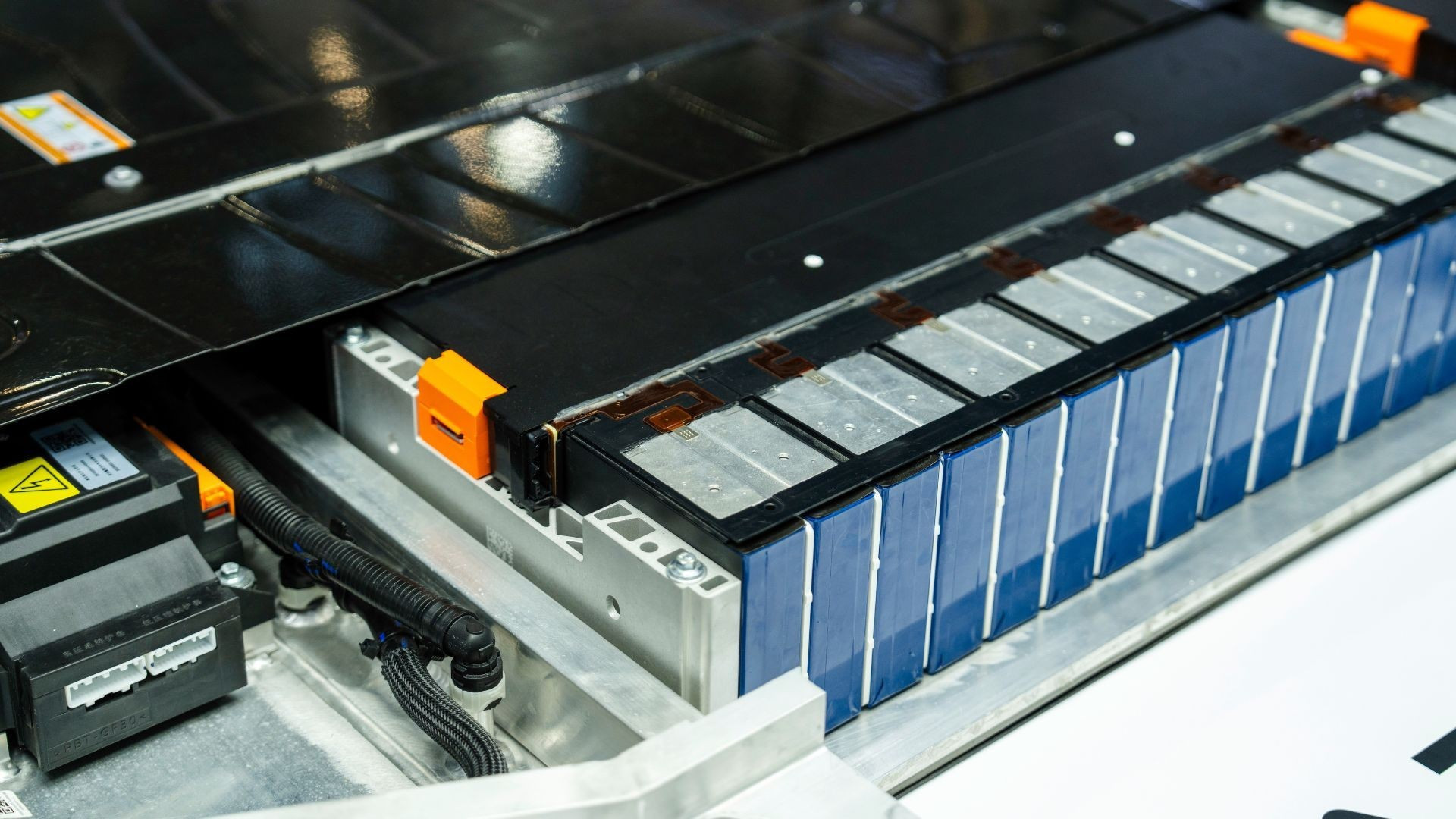
Researchers at the University of California San Diego (in collaboration with the University of Chicago) have developed an all-solid-state sodium battery that retains strong performance even at subzero temperatures, signaling a notable advance in non-lithium battery technology. The innovation depends on kinetically stabilizing a metastable sodium hydridoborate electrolyte via heat-and-rapid-cool processing, which suppresses less conductive phases and enables fast sodium-ion mobility. While the battery underperforms at room temperature today, the team also demonstrated that by integrating a coated chloride solid electrolyte and a thick cathode layout, the device achieves improved energy density and stability close to ambient. Further promising is their earlier work producing a world’s first “anode-free” sodium solid-state battery, which pairs sodium metal directly with a solid electrolyte, eliminating a separate anode layer and potentially lowering cost. Still, significant scientific and engineering hurdles remain—particularly improving ionic conductivity at room temperature and scaling manufacturing. As sodium is far more abundant and less environmentally damaging than lithium, these breakthroughs hint at future battery systems less dependent on scarce materials.
Sources: Interesting Engineering, University of California at San Diego
Key Takeaways
– The new solid-state sodium battery retains high ion mobility and electrochemical performance even in subzero temperatures through kinetic stabilization of a metastable phase.
– The team also created an “anode-free” sodium solid-state battery configuration, simplifying cell architecture and potentially lowering costs.
– Major challenges remain in boosting room-temperature ionic conductivity, scaling up manufacturing, and surpassing lithium-based energy densities.
In-Depth
Battery tech has long been dominated by lithium-based chemistries, but lithium’s rising cost, resource limits, and environmental footprint have pushed researchers to explore alternatives. Sodium (Na) is abundant, cheap, and widely available, and it offers an attractive path for large-scale energy storage—provided its performance can catch up. The recent work from UCSD and UChicago brings sodium-based solid-state batteries one meaningful step closer to that goal.
A key obstacle for sodium batteries is the conductivity of solid electrolytes, especially at moderate temperatures. At room temperature, many sodium-based solid electrolytes fall short, making them unattractive for practical use. In this new research, the team focused on sodium hydridoborate, a compound which in its stable form exhibits poor ionic conduction. By heating it until it begins to crystallize and then rapidly quenching it, they kinetically trap a metastable orthorhombic phase. That metastable phase exhibits sodium ion mobility at least one order of magnitude better than prior reports, and three to four orders of magnitude better than the unmodified precursor material. Pairing it with a chloride-based solid electrolyte–coated cathode and a cathode design with high areal loading, they achieved a composite cell that maintains good performance even when cooled below freezing.
The researchers admit, though, that performance at room temperature is still not ideal. Their strategy partially rectifies that: the thick cathode (which minimizes dead weight from inactive support materials) improves energy density, and the coating strategy enhances stability and ionic transport across interfaces. Their approach also generalizes: the idea of kinetic stabilization may apply to other hydridoborates or anion-cluster electrolytes.
An earlier related milestone from the same group is the creation of a sodium antinode-free solid-state battery. In that design, there is no separate anode (negative electrode) — sodium metal is paired directly with the solid electrolyte and cathode. This architecture cuts complexity, potentially lowers material and manufacturing costs, and could help sodium batteries approach the energy densities and cost metrics needed for real-world use.
Still, the path ahead is steep. To compete with lithium-ion, sodium-based solid-state batteries must significantly improve room-temperature ionic conductivity; they must sustain many charge-discharge cycles with minimal capacity fade; they must be manufacturable at scale; and they must match or exceed lithium batteries in volumetric and gravimetric energy density. Moreover, stability of interfaces under cycling, suppression of side reactions, and mechanical integrity under thermal and mechanical stress are all concerns.
Yet the implications are compelling. If these challenges can be overcome, sodium solid-state batteries could reduce reliance on lithium and cobalt, lower costs, reduce supply chain vulnerability (especially to countries dominating lithium production), and open new possibilities for grid-level energy storage, off-grid systems, and even more sustainable electric mobility. The recent advances don’t claim to replace lithium today, but they mark meaningful progress toward that future.