

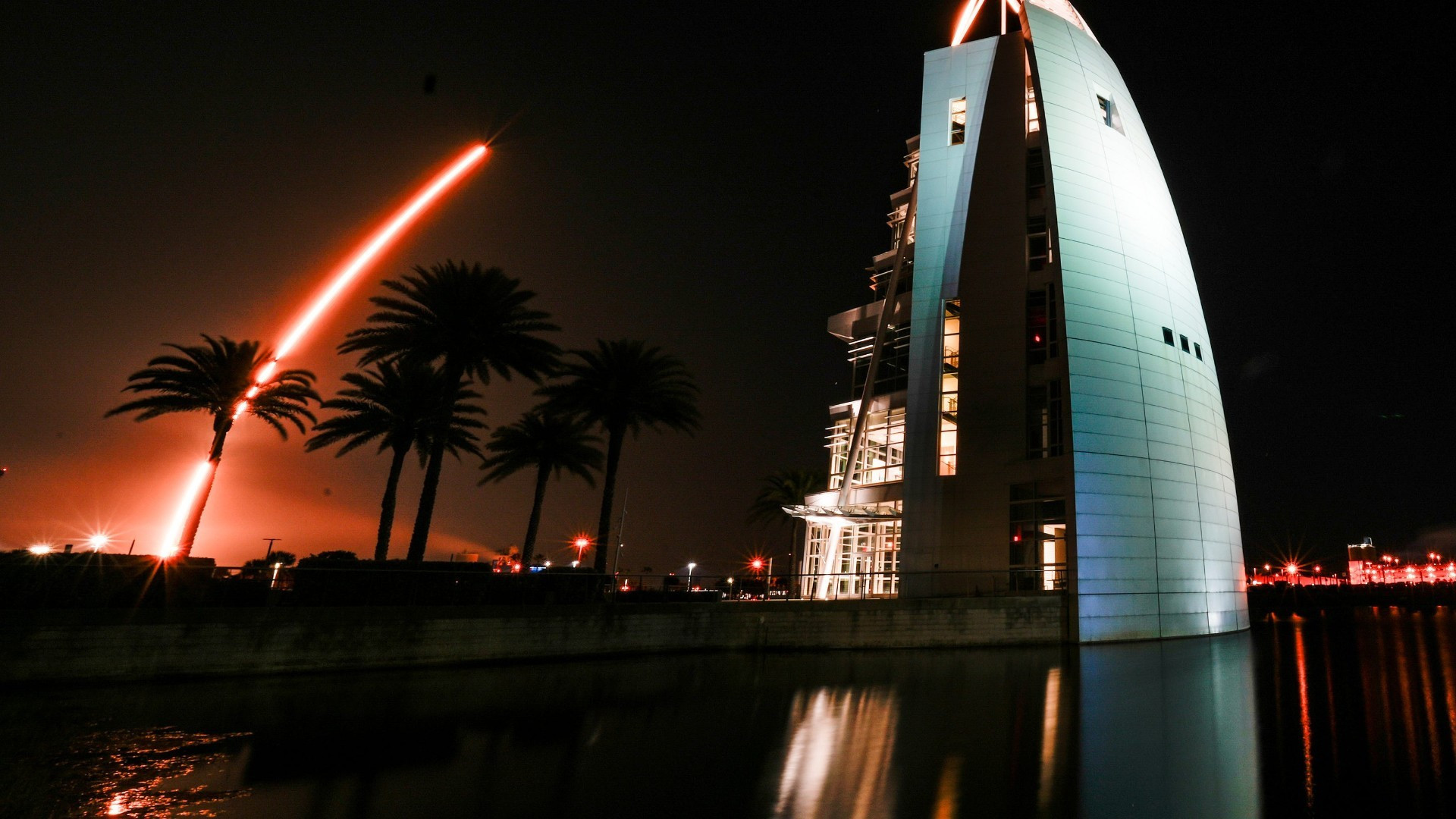
The U.S. Department of the Air Force has released a Final Environmental Impact Statement (EIS) for SpaceX‘s plan to launch and land the Starship and its Super Heavy booster at Cape Canaveral Space Force Station’s SLC-37 in Florida. The EIS outlines a future in which Starship could launch up to 76 times annually, with Super Heavy boosters returning within minutes of liftoff and full Starship vehicles landing back at the same pad — possibly after multi-year missions — effectively transforming the site into a true interplanetary “spaceport.” This operational concept, once restricted to science-fiction, could soon become reality if regulatory approvals go through.
Key Takeaways
– SpaceX’s Florida facility at Cape Canaveral could support up to 76 launches per year, with rapid-return booster landings and long-term “ship returns,” signaling a shift toward high-cadence, full-reuse space operations.
– The proposed reuse model would enable a Starship that launches on a given mission — whether short orbit hops or multi-year Mars or lunar trips — to return to the same pad, essentially making the launch site a functioning interplanetary port.
– If realized, the development would mark a major paradigm shift in aerospace infrastructure, blending Earth-based launch facilities with capabilities for launching and receiving missions spanning years and distances within the solar system.
In-Depth
The newly released Final Environmental Impact Statement from the Department of the Air Force lays out a bold — some might say audacious — plan for how SpaceX intends to operate its Starship fleet from the Space Coast. According to the document, the Florida site could see as many as 76 Starship launches per year. That frequency alone would represent a dramatic increase over historical norms, but the operational twist is what truly stands out: Super Heavy boosters are expected to land back at the pad within minutes of liftoff, captured by “chopstick” arms on the tower, while the Starship upper stage could return months, years — even decades later — to the very same launch pad.
Imagine a scenario where a vessel lifts off this year, sails through orbit, perhaps ferries cargo to the Moon or Mars, then returns not to some distant runway or ocean splashdown, but to the same concrete pad in Florida where it began. The notion seems ripped from a sci-fi storyboard, but the official EIS treats it as standard fare. This makes the site more than a launch complex — it becomes a genuine interplanetary port, the sort of hub once only speculated about in space-age fiction.
From a strategic and conservative-leaning vantage point, this represents a huge leap forward for American space infrastructure. We’re talking about a domestic launch and recovery system at a cadence reminiscent of commercial aviation — a reusability model that could significantly lower cost-per-launch, increase access, and enable the kind of sustained deep-space operations that until now have belonged to government agencies or international consortia. It also reinforces U.S. leadership in space at a time when global competition is intensifying.
Naturally, the shift brings regulatory and community implications: noise, environmental impact, and maritime/airspace closures (as seen in earlier drafts) remain real obstacles — but if the EIS clears, the technological and strategic upside is enormous. For those who believe in robust American space dominance, the Florida Starship site could become a crowning achievement — a home-base that supports Earth-orbit missions one day, Mars cargo flights the next, and perhaps lunar infrastructure the day after.