

Close Menu

    Subscribe to Updates

    Get the latest tech news from Tallwire.

      What's Hot

      Project Hail Mary Delivers Record-Breaking Box Office Win For Amazon MGM

      April 4, 2026

      YouTube CEO Signals Home-Based Creator Economy

      April 4, 2026

      Delve Whistleblower Claims Reveal Alleged Pattern Of “Fake Compliance” In Tech Oversight

      April 3, 2026
      Facebook X (Twitter) Instagram
      • Tech
      • AI
      • Get In Touch
      Facebook X (Twitter) LinkedIn
      TallwireTallwire
      • Tech

        Google Finally Lets Users Change Gmail Addresses After Decades of Restrictions

        April 3, 2026

        Speechify Expands Into Local AI With Windows App Focused On Privacy

        April 3, 2026

        Ring Expands Into AI App Ecosystem Beyond Home Security

        April 3, 2026

        Roku Launches Standalone App for Howdy, Its $2.99 Streaming Service

        April 3, 2026

        Supply Chain Attack Targets Widely Used Open-Source Code Library

        April 2, 2026
      • AI

        YouTube CEO Signals Home-Based Creator Economy

        April 4, 2026

        Silicon Valley House Race Turns Bitter As Billionaires, Scandals, And Policy Fights Collide

        April 3, 2026

        Speechify Expands Into Local AI With Windows App Focused On Privacy

        April 3, 2026

        Ring Expands Into AI App Ecosystem Beyond Home Security

        April 3, 2026

        Waymo Expands Robotaxi Operations To San Antonio Airport

        April 3, 2026
      • Security

        Supply Chain Attack Targets Widely Used Open-Source Code Library

        April 2, 2026

        CareCloud Data Breach Raises Fresh Concerns Over Security Of Digital Medical Records

        April 2, 2026

        Apple Claims Lockdown Mode Has Prevented All Known Spyware Attacks Since Launch

        March 29, 2026

        Iranian Hackers Claim Breach Of FBI Director Kash Patel’s Personal Email Account

        March 29, 2026

        European Commission Confirms Cyberattack Amid Growing Concerns Over Vulnerability

        March 29, 2026
      • Health

        Meta Finally Held Accountable For Harming Teens, But Real Reform Remains Uncertain

        April 2, 2026

        Jury Verdicts Against Social Media Giants Signal Turning Point In Child Safety Accountability

        April 1, 2026

        U.K. Tests Social Media Bans and Curfews in State Intervention Pilot

        April 1, 2026

        Austria Moves To Ban Social Media For Children Under 14 Amid Growing Global Crackdown

        March 31, 2026

        Study Warns Overly Agreeable AI Chatbots May Mislead Users and Reinforce Harmful Behavior

        March 31, 2026
      • Science

        White House Tech Advisor David Sacks Steps Down To Lead Presidential Science Advisory

        March 31, 2026

        Blue Origin’s Orbital Data Center Push Signals New Frontier in Tech Infrastructure

        March 27, 2026

        Quantum Cryptography Pioneers Awarded Computing’s Highest Honor

        March 25, 2026

        Amazon’s New Robot Looks Like a Toy. That Might Be the Point.

        March 25, 2026

        AI Data Center Boom Drives Shift Toward Liquid Cooling Technology

        March 24, 2026
      • Tech

        White House Tech Advisor David Sacks Steps Down To Lead Presidential Science Advisory

        March 31, 2026

        Another Billionaire Signals Exit As California’s Taxes Drives Out High-Profile Entrepreneurs

        March 28, 2026

        Bezos Eyes $100 Billion War Chest To Rewire Legacy Industry With AI

        March 28, 2026

        Blue Origin’s Orbital Data Center Push Signals New Frontier in Tech Infrastructure

        March 27, 2026

        Musk Pushes Aggressive U.S. Chip Independence With Tesla And SpaceX

        March 26, 2026
      TallwireTallwire
      Home»AI»Speechify Expands Into Local AI With Windows App Focused On Privacy
      AI

      Speechify Expands Into Local AI With Windows App Focused On Privacy

      4 Mins Read
      Facebook Twitter Pinterest LinkedIn Tumblr Email
      Share
      Facebook Twitter LinkedIn Pinterest Email

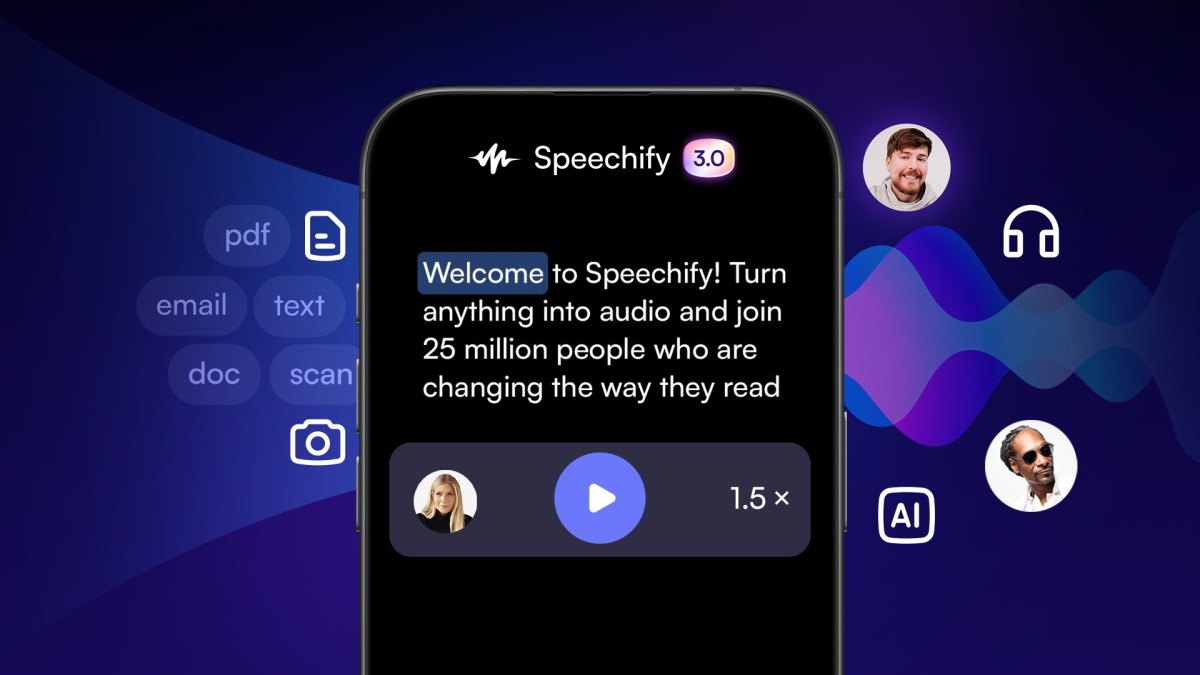
      A newly released Windows application from Speechify signals a notable shift in how artificial intelligence tools are being deployed for everyday productivity, emphasizing on-device processing over cloud dependence. By leveraging local AI models for transcription and dictation, the platform reduces reliance on remote servers, offering users improved privacy, faster response times, and greater control over their data. This approach stands in contrast to the dominant trend of cloud-based AI services that require continuous internet access and raise ongoing concerns about data exposure and centralized control. The move reflects a broader recalibration within the tech sector, where efficiency, sovereignty over personal data, and resilience against outages are becoming priorities. While still early in adoption, locally run AI tools like this one may represent a turning point—especially for professionals handling sensitive information or users wary of handing over speech data to third-party infrastructure. The rollout underscores a growing demand for AI solutions that are not only powerful but also self-contained, reinforcing a shift toward practical, user-first innovation rather than dependence on massive, centralized systems.

      Sources

      https://techcrunch.com/2026/03/31/speechifys-windows-app-uses-local-models-for-transcription-and-dictation/
      https://www.theverge.com/2026/03/31/local-ai-models-windows-apps-privacy-trend
      https://arstechnica.com/information-technology/2026/03/on-device-ai-transcription-tools-gain-ground-amid-privacy-push/

      Key Takeaways

      • Local AI processing is emerging as a viable alternative to cloud-based tools, particularly for speech-to-text and dictation applications.
      • Privacy concerns and data ownership are driving increased demand for on-device solutions that minimize external data transmission.
      • Performance improvements, including reduced latency and offline functionality, are making local AI more practical for everyday users.

      In-Depth

      The introduction of locally powered AI transcription tools marks a subtle but important pivot in the broader artificial intelligence landscape. For years, the dominant model has relied heavily on cloud infrastructure—massive server farms processing user inputs remotely, often with impressive accuracy but at the cost of privacy and dependency. That model, while effective, created a dynamic where users effectively traded control over their data for convenience. The emergence of applications that run sophisticated AI models directly on personal machines suggests that this trade-off is no longer a given.

      What makes this development particularly significant is not just the technical capability, but the philosophy behind it. Running AI models locally eliminates the need to send sensitive voice data across networks, reducing exposure to breaches, misuse, or even routine data harvesting. For professionals in fields like law, healthcare, or finance—where confidentiality is not optional—this shift is more than a convenience; it is a necessity. Even for everyday users, the appeal is obvious: faster processing, no reliance on internet connectivity, and a sense that their personal information remains truly personal.

      There is also a practical dimension that cannot be ignored. Cloud-based systems, while powerful, introduce latency and are vulnerable to outages. Anyone who has experienced a stalled transcription service due to server issues understands the frustration. Local models, by contrast, operate independently of external conditions, delivering consistent performance regardless of network status. This reliability is likely to become a key selling point as more users grow tired of being tethered to always-on connectivity.

      At the same time, this shift raises questions about the broader trajectory of the tech industry. For years, there has been a clear push toward centralization—funneling data and processing power into a handful of dominant platforms. Local AI represents a countercurrent, one that redistributes capability back to individual users. It suggests a future where powerful tools are not locked behind subscriptions or dependent on distant servers, but instead reside directly on personal devices.

      Of course, challenges remain. Local models must balance performance with hardware limitations, and not every device is equipped to handle advanced AI workloads efficiently. There is also the question of updates and improvements, which are easier to deploy in centralized systems. But the pace of innovation in this space is accelerating, and hardware is rapidly catching up to the demands of modern AI applications.

      In the end, what is unfolding is less a revolution than a correction. The industry is beginning to recognize that not every problem requires a cloud-based solution, and that users increasingly value control, privacy, and reliability. The rise of local AI tools reflects a broader rethinking of priorities—one that places the user, rather than the platform, at the center of the experience.

      Intel
      Share. Facebook Twitter Pinterest LinkedIn Tumblr Email
      Previous ArticleWaymo Expands Robotaxi Operations To San Antonio Airport
      Next Article Ring Expands Into AI App Ecosystem Beyond Home Security

      Related Posts

      YouTube CEO Signals Home-Based Creator Economy

      April 4, 2026

      Project Hail Mary Delivers Record-Breaking Box Office Win For Amazon MGM

      April 4, 2026

      Silicon Valley House Race Turns Bitter As Billionaires, Scandals, And Policy Fights Collide

      April 3, 2026

      Delve Whistleblower Claims Reveal Alleged Pattern Of “Fake Compliance” In Tech Oversight

      April 3, 2026
      Add A Comment
      Leave A Reply Cancel Reply

      Editors Picks

      Google Finally Lets Users Change Gmail Addresses After Decades of Restrictions

      April 3, 2026

      Speechify Expands Into Local AI With Windows App Focused On Privacy

      April 3, 2026

      Ring Expands Into AI App Ecosystem Beyond Home Security

      April 3, 2026

      Roku Launches Standalone App for Howdy, Its $2.99 Streaming Service

      April 3, 2026
      Popular Topics
      spotlight Samsung Sundar Pichai Sam Altman Startup Tesla Cybertruck SpaceX trending Robotics Tim Cook Quantum computing Taiwan Tech Viral UAE Tech Series A Series B Satya Nadella Ransomware Software Tesla
      Major Tech Companies
      • Apple News
      • Google News
      • Meta News
      • Microsoft News
      • Amazon News
      • Samsung News
      • Nvidia News
      • OpenAI News
      • Tesla News
      • AMD News
      • Anthropic News
      • Elbit News
      AI & Emerging Tech
      • AI Regulation News
      • AI Safety News
      • AI Adoption
      • Quantum Computing News
      • Robotics News
      Key People
      • Sam Altman News
      • Jensen Huang News
      • Elon Musk News
      • Mark Zuckerberg News
      • Sundar Pichai News
      • Tim Cook News
      • Satya Nadella News
      • Mustafa Suleyman News
      Global Tech & Policy
      • Israel Tech News
      • India Tech News
      • Taiwan Tech News
      • UAE Tech News
      Startups & Emerging Tech
      • Series A News
      • Series B News
      • Startup News
      Tallwire
      Facebook X (Twitter) LinkedIn Threads Instagram RSS
      • Tech
      • Entertainment
      • Business
      • Government
      • Academia
      • Transportation
      • Legal
      • Press Kit
      © 2026 Tallwire. Optimized by ARMOUR Digital Marketing Agency.

      Type above and press Enter to search. Press Esc to cancel.