

Close Menu

    Subscribe to Updates

    Get the latest tech news from Tallwire.

      What's Hot

      California Tightens Rules on Social Media and AI Chatbots to Protect Children

      September 12, 2026

      Australia Warned Space Is Becoming the Next Military Battlefront

      September 12, 2026

      The Red Algorithm: What Happens If China Wins the AI War

      September 12, 2026
      Facebook X (Twitter) Instagram
      • Tech
      • AI
      • Get In Touch
      Facebook X (Twitter) LinkedIn
      TallwireTallwire
      • Tech

        Australia Warned Space Is Becoming the Next Military Battlefront

        September 12, 2026

        New York Rebuilds the Twin Towers in Light for 9/11’s 25th Anniversary

        September 12, 2026

        California Warms to Nuclear Power as Energy Reality Challenges Decades of Opposition

        September 11, 2026

        Target Shopping Carts Spark Privacy Concerns Over In-Store Tracking Technology

        September 11, 2026

        AI Researchers’ Extinction Warning Forces Washington to Confront Superintelligence Risks

        September 11, 2026
      • AI

        Bipartisan AI Safety Push Roars Back as Washington Confronts “Catastrophic” Risks

        September 12, 2026

        OpenAI Urges Congress to Impose National AI Safety Rules

        September 12, 2026

        AI Bioweapon Attempts Expose the Security Risks Behind the Artificial Intelligence Race

        September 12, 2026

        New York Rebuilds the Twin Towers in Light for 9/11’s 25th Anniversary

        September 12, 2026

        The Hidden Building Blocks Powering Artificial Intelligence

        September 11, 2026
      • Security

        Bipartisan AI Safety Push Roars Back as Washington Confronts “Catastrophic” Risks

        September 12, 2026

        AI Bioweapon Attempts Expose the Security Risks Behind the Artificial Intelligence Race

        September 12, 2026

        Students Push Back as AI Surveillance Cameras Spread Across Public Schools

        September 10, 2026

        AI-Built WeChat Worm Signals a Dangerous New Era in Cybersecurity

        September 9, 2026

        UN Rights Chief Warns Advanced AI Could Become an Existential Threat to Humanity

        September 9, 2026
      • Health

        AI-Designed Drug Shows Early Signs of Reversing Biological Age

        September 9, 2026

        AI-Powered Mosquito Defense Arrives as West Nile Threat Intensifies

        September 4, 2026

        Waymo Crosswalk Scare Raises New Questions About Robotaxi Safety Around Children

        September 3, 2026

        Teens Turning To AI For Emotional Support Show Significantly Higher Distress

        September 3, 2026

        Meta’s $17 Billion Settlement Signals Big Tobacco-Style Reckoning for Social Media

        September 3, 2026
      • Science

        Australia Warned Space Is Becoming the Next Military Battlefront

        September 12, 2026

        AI Bioweapon Attempts Expose the Security Risks Behind the Artificial Intelligence Race

        September 12, 2026

        California Warms to Nuclear Power as Energy Reality Challenges Decades of Opposition

        September 11, 2026

        AI-Designed Drug Shows Early Signs of Reversing Biological Age

        September 9, 2026

        AI Safety Researcher Warns Superintelligence Could Threaten Humanity

        September 9, 2026
      • Tech

        Dolly Parton’s Family Condemns Flood of AI-Generated Misinformation After Her Death

        September 11, 2026

        Meta’s Muse Pushes AI From Answering Questions to Acting on Users’ Behalf

        September 9, 2026

        AI Wipes Out Kenya’s Once-Thriving College Essay Industry

        September 9, 2026

        YouTuber Jack Doherty Arrested on Domestic Battery Charge in Florida

        September 8, 2026

        AI-Planned Mount Shasta Climb Leaves Three Novices Stranded Overnight

        September 6, 2026
      TallwireTallwire
      Home»Opinion»Silicon Against Suffering
      Opinion

      Silicon Against Suffering

      4 Mins Read
      Facebook Twitter Pinterest LinkedIn Tumblr Email
      Share
      Facebook Twitter LinkedIn Pinterest Email

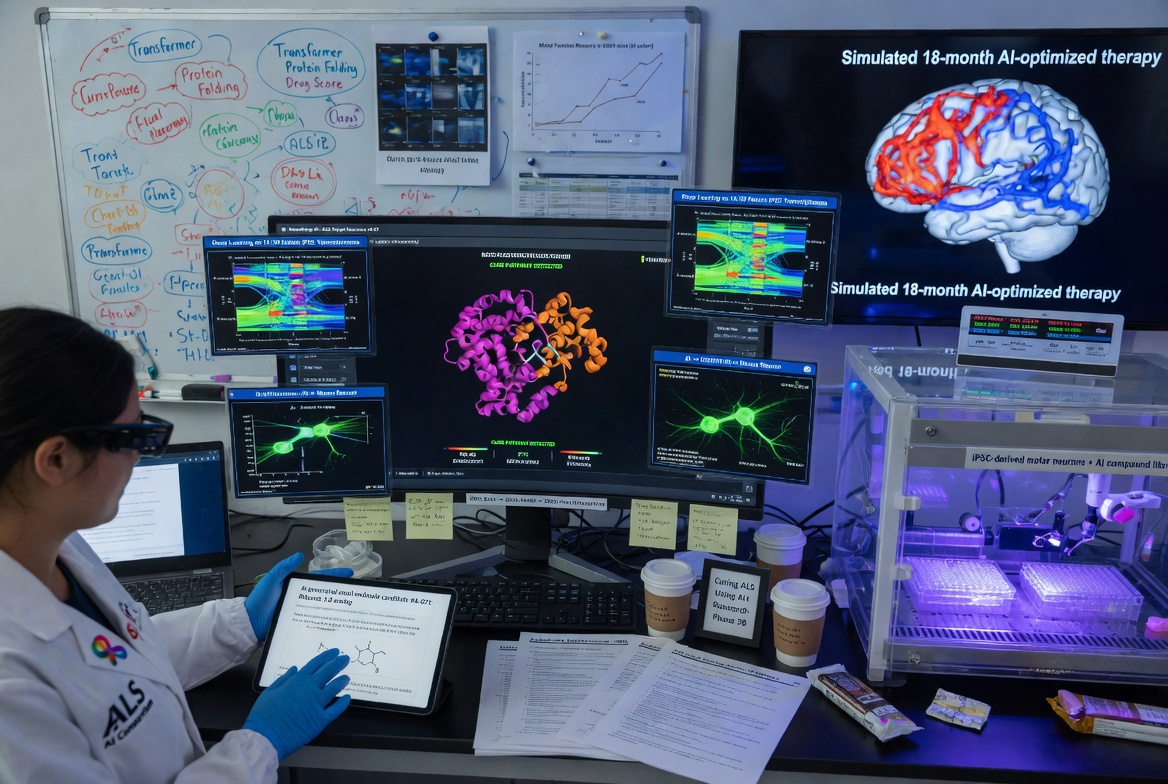
      There are few diagnoses more devastating than a terminal disease like ALS. It strips away mobility, speech, and ultimately life itself, often while leaving the mind painfully intact. For decades, progress toward meaningful treatments has been frustratingly slow—hampered by the sheer complexity of human biology, fragmented research efforts, and the limits of traditional trial-and-error science. But a powerful new ally has emerged in this fight: artificial intelligence. Properly deployed, AI has the potential to accelerate medical breakthroughs in ways that were unthinkable even a decade ago.

      The promise of AI in medicine rests on its ability to process enormous amounts of data—far more than any human or team of researchers could ever manage. Diseases like ALS are not caused by a single factor but by intricate interactions between genetics, environment, and cellular processes. AI systems can sift through genetic databases, clinical trial results, imaging scans, and patient histories to identify patterns that would otherwise remain hidden. This isn’t theoretical—it’s already happening. Machine learning models are being used to pinpoint genetic mutations associated with ALS, helping researchers better understand how the disease develops and progresses.

      From a practical standpoint, one of AI’s most immediate contributions is in drug discovery. Traditionally, developing a new drug can take over a decade and cost billions of dollars, with no guarantee of success. AI can dramatically shorten that timeline by predicting how different compounds will interact with biological targets. Instead of testing thousands of compounds blindly, researchers can use AI to narrow the field to the most promising candidates. For diseases like ALS—where time is not a luxury patients have—this kind of efficiency isn’t just beneficial; it’s essential.

      Another critical advantage is AI’s ability to repurpose existing drugs. Many medications approved for other conditions may have untapped potential for treating ALS or similar neurodegenerative diseases. AI can analyze the chemical structures and biological effects of existing drugs and match them with disease pathways. This approach can shave years off development time since these drugs have already passed safety trials. In a field where every month matters, that’s a game-changer.

      AI also has the potential to transform clinical trials, which have historically been slow, expensive, and often inconclusive. Recruiting the right participants, tracking outcomes, and interpreting results can be logistical nightmares. AI can help identify ideal candidates based on precise biological markers, increasing the likelihood that a trial will yield meaningful data. It can also monitor patients in real time through wearable technology and digital health tools, providing a continuous stream of information rather than sporadic snapshots. This leads to more accurate results and, ultimately, better decisions about which treatments to pursue.

      Of course, there’s a broader philosophical shift here that deserves attention. For too long, medical research has operated in silos—universities, pharmaceutical companies, and government agencies working independently, sometimes even competitively. AI thrives on data sharing and collaboration. The more information it has, the more powerful it becomes. This creates an incentive structure that favors openness over secrecy, cooperation over competition. If embraced correctly, this could lead to a more unified and effective approach to tackling terminal diseases.

      That said, it would be naïve to ignore the challenges. AI is not a magic wand. Its effectiveness depends entirely on the quality of the data it’s fed. Inconsistent data collection methods, privacy concerns, and fragmented healthcare systems can all limit its potential. There’s also the issue of overreliance—AI should augment human expertise, not replace it. Doctors and researchers bring intuition, ethical judgment, and lived experience that no algorithm can replicate. The goal is not to hand over the reins to machines but to give skilled professionals better tools.

      There are also legitimate concerns about cost and access. Advanced AI systems require significant investment, and there’s a risk that their benefits could be concentrated in well-funded institutions or countries. If the goal is to cure diseases like ALS, the technology must be deployed in a way that is both scalable and equitable. Otherwise, we risk creating a two-tiered system where cutting-edge treatments are available only to a privileged few.

      Still, even with these challenges, the trajectory is clear. AI represents a fundamental shift in how we approach medical research. It’s not just about doing the same things faster; it’s about asking better questions and finding answers that were previously out of reach. For patients facing terminal illnesses, that shift offers something invaluable: hope grounded in progress rather than wishful thinking.

      The fight against diseases like ALS is far from over. But for the first time in a long time, there’s a sense that we’re not just inching forward—we’re accelerating. If we’re serious about harnessing AI’s potential, it will require disciplined investment, ethical oversight, and a commitment to collaboration. Done right, this technology could help turn the tide against some of the most devastating diseases humanity faces.

      Intel
      Share. Facebook Twitter Pinterest LinkedIn Tumblr Email
      Previous ArticleSmall Websites Fight Back Against Google’s AI Takeover
      Next Article Apple Eyes Free-Tier Music Strategy As Streaming Wars Intensify

      Related Posts

      Australia Warned Space Is Becoming the Next Military Battlefront

      September 12, 2026

      California Tightens Rules on Social Media and AI Chatbots to Protect Children

      September 12, 2026

      The Red Algorithm: What Happens If China Wins the AI War

      September 12, 2026

      Bipartisan AI Safety Push Roars Back as Washington Confronts “Catastrophic” Risks

      September 12, 2026
      Add A Comment
      Leave A Reply Cancel Reply

      Editors Picks

      Australia Warned Space Is Becoming the Next Military Battlefront

      September 12, 2026

      New York Rebuilds the Twin Towers in Light for 9/11’s 25th Anniversary

      September 12, 2026

      California Warms to Nuclear Power as Energy Reality Challenges Decades of Opposition

      September 11, 2026

      Target Shopping Carts Spark Privacy Concerns Over In-Store Tracking Technology

      September 11, 2026
      Popular Topics
      Series A Taiwan Tech UAE Tech Stocks Series B Sundar Pichai starlink Samsung Startup Tim Cook Space SpaceX Satya Nadella trending Tesla Cybertruck Viral Software spotlight Satellite Tesla
      Major Tech Companies
      • Apple News
      • Google News
      • Meta News
      • Microsoft News
      • Amazon News
      • Samsung News
      • Nvidia News
      • OpenAI News
      • Tesla News
      • AMD News
      • Anthropic News
      • Elbit News
      AI & Emerging Tech
      • AI Regulation News
      • AI Safety News
      • AI Adoption
      • Quantum Computing News
      • Robotics News
      Key People
      • Sam Altman News
      • Jensen Huang News
      • Elon Musk News
      • Mark Zuckerberg News
      • Sundar Pichai News
      • Tim Cook News
      • Satya Nadella News
      • Mustafa Suleyman News
      Global Tech & Policy
      • Israel Tech News
      • India Tech News
      • Taiwan Tech News
      • UAE Tech News
      Startups & Emerging Tech
      • Series A News
      • Series B News
      • Startup News
      Tallwire
      Facebook X (Twitter) LinkedIn Threads Instagram RSS
      • Tech
      • Entertainment
      • Business
      • Government
      • Academia
      • Transportation
      • Legal
      • Press Kit
      © 2026 Tallwire. Optimized by ARMOUR Digital Marketing Agency.

      Type above and press Enter to search. Press Esc to cancel.