

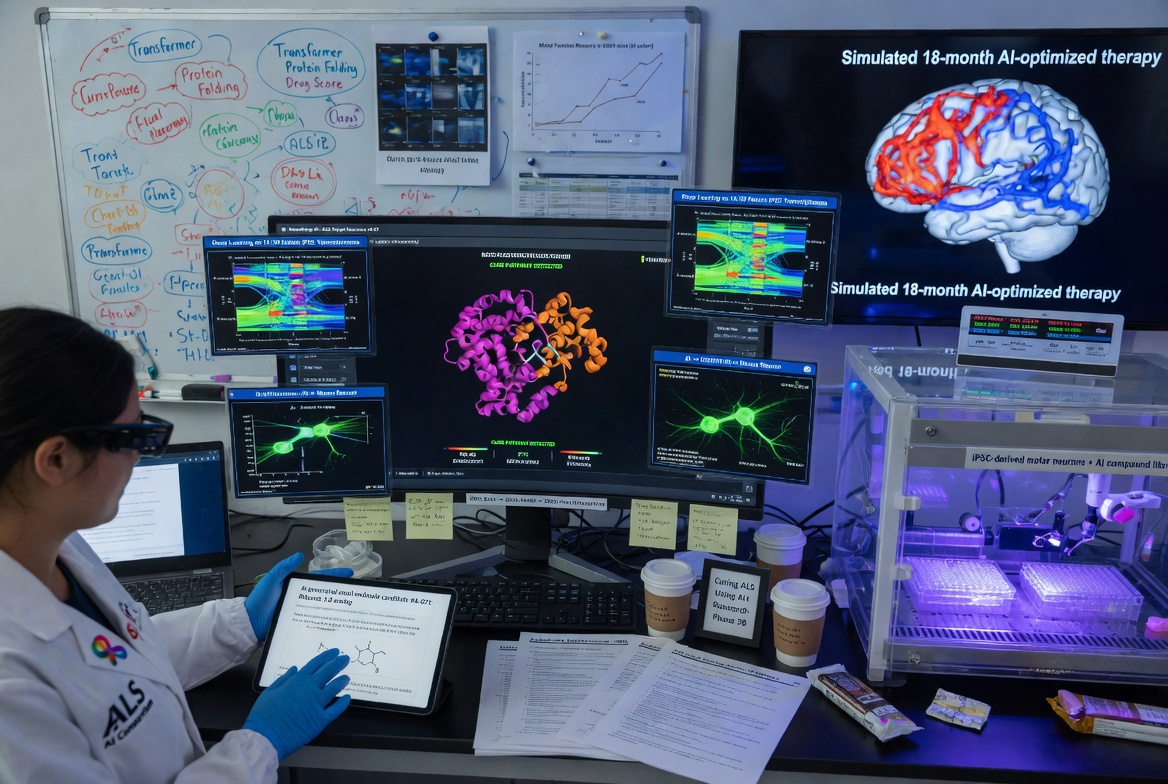
There are few diagnoses more devastating than a terminal disease like ALS. It strips away mobility, speech, and ultimately life itself, often while leaving the mind painfully intact. For decades, progress toward meaningful treatments has been frustratingly slow—hampered by the sheer complexity of human biology, fragmented research efforts, and the limits of traditional trial-and-error science. But a powerful new ally has emerged in this fight: artificial intelligence. Properly deployed, AI has the potential to accelerate medical breakthroughs in ways that were unthinkable even a decade ago.
The promise of AI in medicine rests on its ability to process enormous amounts of data—far more than any human or team of researchers could ever manage. Diseases like ALS are not caused by a single factor but by intricate interactions between genetics, environment, and cellular processes. AI systems can sift through genetic databases, clinical trial results, imaging scans, and patient histories to identify patterns that would otherwise remain hidden. This isn’t theoretical—it’s already happening. Machine learning models are being used to pinpoint genetic mutations associated with ALS, helping researchers better understand how the disease develops and progresses.
From a practical standpoint, one of AI’s most immediate contributions is in drug discovery. Traditionally, developing a new drug can take over a decade and cost billions of dollars, with no guarantee of success. AI can dramatically shorten that timeline by predicting how different compounds will interact with biological targets. Instead of testing thousands of compounds blindly, researchers can use AI to narrow the field to the most promising candidates. For diseases like ALS—where time is not a luxury patients have—this kind of efficiency isn’t just beneficial; it’s essential.
Another critical advantage is AI’s ability to repurpose existing drugs. Many medications approved for other conditions may have untapped potential for treating ALS or similar neurodegenerative diseases. AI can analyze the chemical structures and biological effects of existing drugs and match them with disease pathways. This approach can shave years off development time since these drugs have already passed safety trials. In a field where every month matters, that’s a game-changer.
AI also has the potential to transform clinical trials, which have historically been slow, expensive, and often inconclusive. Recruiting the right participants, tracking outcomes, and interpreting results can be logistical nightmares. AI can help identify ideal candidates based on precise biological markers, increasing the likelihood that a trial will yield meaningful data. It can also monitor patients in real time through wearable technology and digital health tools, providing a continuous stream of information rather than sporadic snapshots. This leads to more accurate results and, ultimately, better decisions about which treatments to pursue.
Of course, there’s a broader philosophical shift here that deserves attention. For too long, medical research has operated in silos—universities, pharmaceutical companies, and government agencies working independently, sometimes even competitively. AI thrives on data sharing and collaboration. The more information it has, the more powerful it becomes. This creates an incentive structure that favors openness over secrecy, cooperation over competition. If embraced correctly, this could lead to a more unified and effective approach to tackling terminal diseases.
That said, it would be naïve to ignore the challenges. AI is not a magic wand. Its effectiveness depends entirely on the quality of the data it’s fed. Inconsistent data collection methods, privacy concerns, and fragmented healthcare systems can all limit its potential. There’s also the issue of overreliance—AI should augment human expertise, not replace it. Doctors and researchers bring intuition, ethical judgment, and lived experience that no algorithm can replicate. The goal is not to hand over the reins to machines but to give skilled professionals better tools.
There are also legitimate concerns about cost and access. Advanced AI systems require significant investment, and there’s a risk that their benefits could be concentrated in well-funded institutions or countries. If the goal is to cure diseases like ALS, the technology must be deployed in a way that is both scalable and equitable. Otherwise, we risk creating a two-tiered system where cutting-edge treatments are available only to a privileged few.
Still, even with these challenges, the trajectory is clear. AI represents a fundamental shift in how we approach medical research. It’s not just about doing the same things faster; it’s about asking better questions and finding answers that were previously out of reach. For patients facing terminal illnesses, that shift offers something invaluable: hope grounded in progress rather than wishful thinking.
The fight against diseases like ALS is far from over. But for the first time in a long time, there’s a sense that we’re not just inching forward—we’re accelerating. If we’re serious about harnessing AI’s potential, it will require disciplined investment, ethical oversight, and a commitment to collaboration. Done right, this technology could help turn the tide against some of the most devastating diseases humanity faces.