

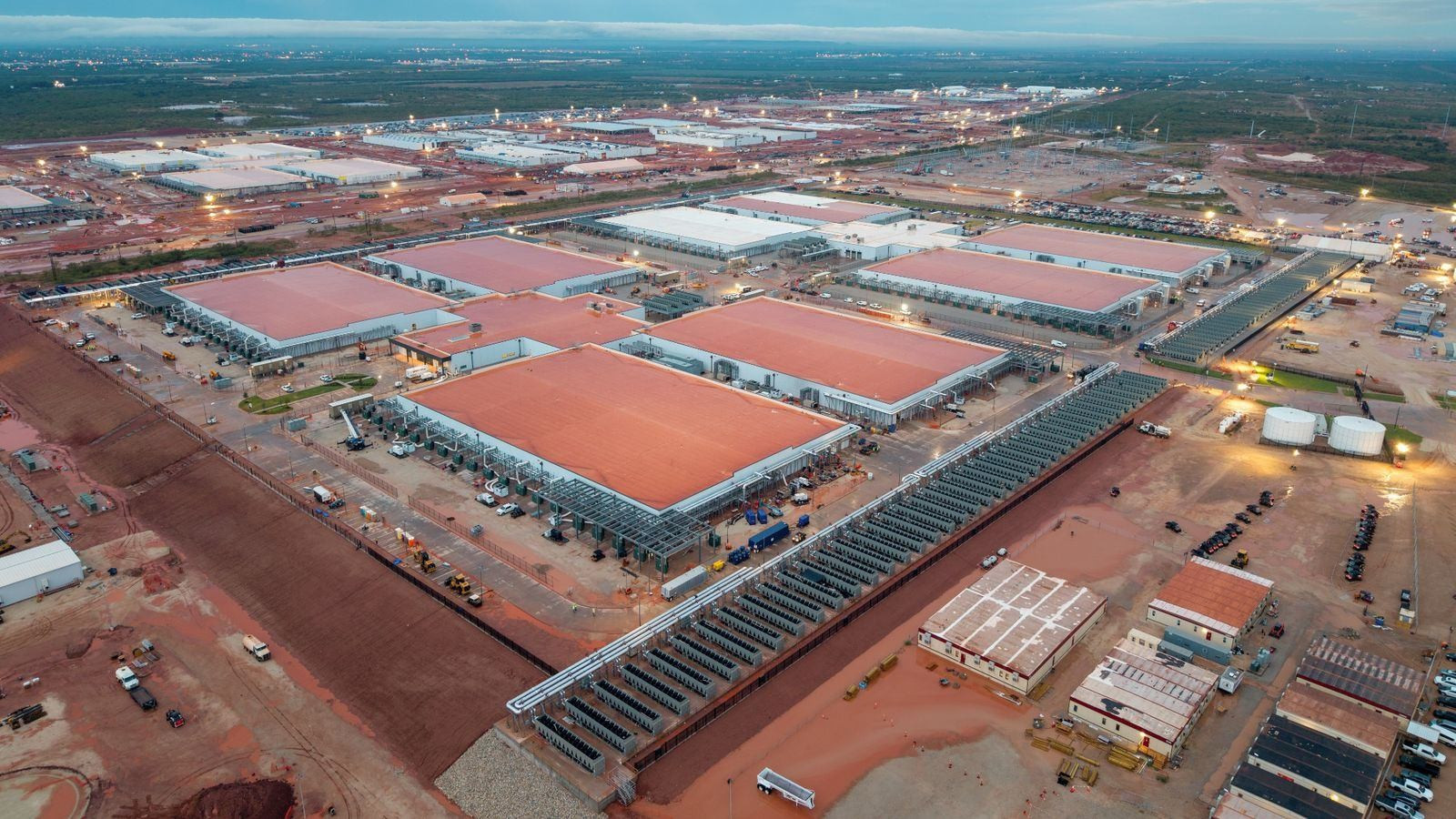
Meta is reportedly in early discussions with Anthropic over a potential agreement that could see Meta lease as much as $10 billion worth of artificial intelligence computing capacity to the AI company over a two-year period. The talks, while preliminary and not guaranteed to produce a final agreement, underscore the increasingly fierce competition for AI infrastructure rather than simply AI models. The proposed arrangement would represent a significant strategic shift for Meta, which has traditionally built massive computing infrastructure for its own products rather than operating as a commercial cloud provider. At the same time, Anthropic’s continued search for additional computing resources illustrates that access to advanced chips, electricity, and data center capacity has become one of the most valuable commodities in the AI race, with technology companies investing unprecedented sums to secure enough computational power to train and operate next-generation models.
Sources
- https://www.nytimes.com/2026/07/17/technology/meta-anthropic-ai-computing-power.html
- https://www.reuters.com/technology/meta-talks-10-billion-anthropic-compute-deal-2026-07-17
- https://www.ft.com/content/0ae58f76-3386-464a-9248-090cc68e9864
- https://www.barrons.com/articles/anthropic-meta-ai-deal-report-d4a64b79
Key Takeaways
- • AI competition is rapidly shifting from a race over software to a race over physical infrastructure, with computing capacity now becoming one of the industry’s most strategically valuable assets.
- • Meta appears to be positioning itself to monetize its enormous AI infrastructure investments, potentially creating a new revenue stream beyond advertising while entering territory traditionally dominated by major cloud providers.
- • The willingness of AI leaders to spend billions simply to secure access to computing power highlights both the extraordinary capital requirements of frontier AI development and the growing concentration of technological advantages among a handful of companies.
In-Depth
The reported negotiations between Meta and Anthropic highlight an important reality that often gets overshadowed by flashy chatbot announcements: artificial intelligence is increasingly constrained not by ideas but by infrastructure. Building sophisticated AI systems now requires staggering quantities of specialized chips, electrical power, cooling capacity, and data centers. Companies that spent years investing tens of billions of dollars in that infrastructure are discovering those assets may be just as valuable as the AI models themselves.
For Meta, leasing computing power would represent a notable evolution in strategy. Rather than relying almost exclusively on advertising revenue, the company could begin generating income by renting excess computing capacity to outside firms. That would place Meta into a market long dominated by established cloud providers, while helping offset the enormous costs of its AI spending. It is another sign that AI infrastructure itself has become a commercial product.
From a conservative perspective, this development also demonstrates why private-sector investment continues to outpace government-led industrial policy. The companies driving AI innovation are committing enormous sums of private capital to build the computing backbone of the next technological era. That willingness to assume financial risk has accelerated AI development far faster than public planning likely could.
Still, the trend carries legitimate concerns. As AI development becomes increasingly dependent on multibillion-dollar infrastructure, fewer companies will possess the resources necessary to compete at the highest level. The result could be an AI marketplace dominated by a small group of technology giants whose financial strength creates increasingly high barriers to entry. While market competition remains preferable to heavy-handed regulation, policymakers and consumers alike will be watching closely to ensure that innovation remains open rather than becoming concentrated in the hands of only a few firms.