

Close Menu

    Subscribe to Updates

    Get the latest tech news from Tallwire.

      What's Hot

      Australia Moves to Regulate AI Data Centers’ Power and Water Consumption

      July 25, 2026

      China Targets AI Romance Chatbots as Birthrate Crisis Deepens

      July 25, 2026

      Meta Recruits Top AWS Executive as It Accelerates AI Cloud Ambitions

      July 25, 2026
      Facebook X (Twitter) Instagram
      • Tech
      • AI
      • Get In Touch
      Facebook X (Twitter) LinkedIn
      TallwireTallwire
      • Tech

        Australia Moves to Regulate AI Data Centers’ Power and Water Consumption

        July 25, 2026

        Dash Cameras Become Social Media Content Engines as Dangerous Driving Trends Grow

        July 25, 2026

        Meta Recruits Top AWS Executive as It Accelerates AI Cloud Ambitions

        July 25, 2026

        SpaceX Eyes Multibillion-Dollar Pentagon AI Computing Deal

        July 25, 2026

        New York School to Introduce Humanoid Robot ‘Sally’ Into High School Classrooms

        July 24, 2026
      • AI

        China Targets AI Romance Chatbots as Birthrate Crisis Deepens

        July 25, 2026

        Australia Moves to Regulate AI Data Centers’ Power and Water Consumption

        July 25, 2026

        Meta Recruits Top AWS Executive as It Accelerates AI Cloud Ambitions

        July 25, 2026

        New Breed of AI Investors Reshapes Silicon Valley Power Structure

        July 25, 2026

        AI Recording Apps and Wearables Are Making Constant Surveillance the New Workplace Normal

        July 25, 2026
      • Security

        AI Recording Apps and Wearables Are Making Constant Surveillance the New Workplace Normal

        July 25, 2026

        China’s AI Distillation Campaign Raises National Security Concerns

        July 25, 2026

        Grocery Outlet Expands Facial Recognition to Combat Shoplifting

        July 24, 2026

        White House Launches AI Cybersecurity Initiative to Protect Critical Infrastructure

        July 21, 2026

        xAI Takes Legal Action Against User Accused of Misusing Grok for Child Exploitation Material

        July 21, 2026
      • Health

        Parents Increasingly Anxious Over Teens’ Digital Lives as Online Risks Mount

        July 24, 2026

        Google AI Search Safety Report Raises Alarms Over Risks to Children

        July 24, 2026

        Your Smartwatch May Be Hurting Your Sleep More Than Helping It

        July 24, 2026

        Meta Faces Lawsuit Alleging AI Was Used to Target Employees on Protected Leave

        July 23, 2026

        UK Expands Social Media Restrictions With Default Overnight Curfew for Older Teenagers

        July 22, 2026
      • Science

        India Launches First Hydrogen-Powered Passenger Train as Rail Modernization Accelerates

        July 20, 2026

        MIT Researchers Develop Bird-Inspired Robot That Flies, Dives, and Returns to the Air

        July 19, 2026

        Palisades Nuclear Restart Faces Legal Victory but Operational Delays

        July 18, 2026

        Trump Takes Measured Approach to Winning the Quantum Race

        July 17, 2026

        AI Chatbots Face Growing Scrutiny as Mental Health Risks Draw Medical Alarm

        July 16, 2026
      • Tech

        China Targets AI Romance Chatbots as Birthrate Crisis Deepens

        July 25, 2026

        AI-Generated Biography Scam Highlights Growing Amazon Content Crisis

        July 22, 2026

        AI Revolution Outpaces Workplace Readiness as Productivity Gains Lag

        July 20, 2026

        Wisconsin Panel Refers Elon Musk Voter Giveaway Case for Possible Criminal Prosecution

        July 20, 2026

        AI Protesters March on Silicon Valley Giants Demanding Development Freeze

        July 14, 2026
      TallwireTallwire
      Home»Opinion»When Innovation Meets Overreach: The Growing Risk of Government Control in AI
      Opinion

      When Innovation Meets Overreach: The Growing Risk of Government Control in AI

      5 Mins Read
      Facebook Twitter Pinterest LinkedIn Tumblr Email
      Share
      Facebook Twitter LinkedIn Pinterest Email

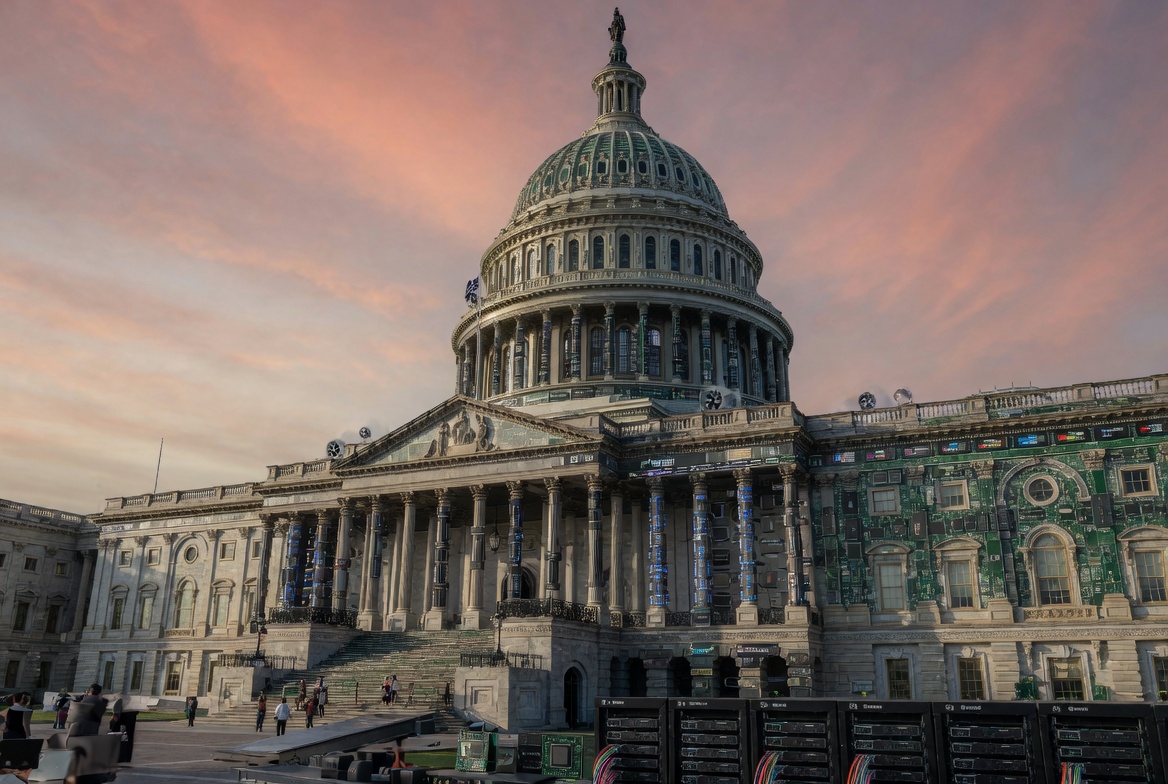
      There’s a fine line between prudent oversight and counterproductive interference, and nowhere is that line being tested more aggressively than in the rapidly evolving world of artificial intelligence. Governments around the globe—especially in the United States and Europe—are increasingly stepping into the AI arena, not just as regulators, but as investors, gatekeepers, and, in some cases, de facto architects of the industry’s future. While the stated intentions often revolve around safety, fairness, and national competitiveness, the reality is more complicated. Too much government intervention risks suffocating the very innovation it claims to protect, creating a system where bureaucracy—not ingenuity—sets the pace.

      At its core, AI development thrives on speed, experimentation, and competition. The private sector has historically excelled in these areas, driven by market incentives and the constant pressure to improve. When governments impose heavy-handed regulations—often written by individuals who are not deeply embedded in the technology—they introduce friction into a system that depends on agility. Compliance costs rise, smaller innovators get squeezed out, and larger incumbents gain an advantage simply because they can afford to navigate the regulatory maze. The result isn’t a safer or more equitable AI ecosystem—it’s a more consolidated one.

      This dynamic is already playing out. Complex regulatory frameworks, particularly those focused on preemptive risk management, tend to assume worst-case scenarios and legislate accordingly. While caution is understandable given AI’s potential impact, overregulation can freeze development in place. Companies may become hesitant to release new models or features for fear of running afoul of unclear or constantly shifting rules. In such an environment, innovation slows—not because the technology has reached its limits, but because the regulatory climate discourages forward movement.

      Government investment in AI presents a different, but equally important, set of concerns. Public funding can certainly play a constructive role, particularly in basic research or areas where private capital is reluctant to invest. However, when governments begin directing large sums of money toward specific companies, technologies, or strategic goals, they inevitably start picking winners and losers. This distorts the market, steering resources toward politically favored outcomes rather than the most promising innovations.

      There’s also the issue of incentives. Private companies succeed or fail based on performance, customer adoption, and financial sustainability. Government-backed initiatives, on the other hand, often operate under different pressures—political timelines, public perception, and bureaucratic accountability. These factors can lead to inefficiencies, misallocation of resources, and projects that persist long after they’ve proven unviable. In the context of AI, where the landscape changes rapidly, that kind of inertia can be especially damaging.

      Another concern is the growing tendency for governments to view AI through a national security lens. While there are legitimate reasons to consider the strategic implications of advanced technologies, framing AI primarily as a geopolitical asset can lead to protectionist policies and increased central control. Export restrictions, data localization requirements, and tight oversight of research collaborations may be intended to safeguard national interests, but they also fragment the global innovation ecosystem. AI development benefits from the free flow of ideas, talent, and data. Restricting that flow in the name of security can slow progress for everyone.

      None of this is to suggest that government should play no role in the AI sector. There are legitimate concerns around privacy, bias, accountability, and misuse that warrant thoughtful oversight. The question isn’t whether to regulate, but how much—and how intelligently. Effective governance should be targeted, flexible, and informed by a deep understanding of the technology. It should focus on clear harms and enforceable standards, rather than speculative risks and broad mandates.

      Striking that balance is difficult, and there’s no one-size-fits-all solution. But history offers some guidance. Many of the most transformative technological advancements—from the internet to personal computing—flourished in environments where regulation was relatively light and innovation was largely driven by the private sector. Governments played a role, certainly, but they didn’t attempt to micromanage the direction of development.

      The danger today is that policymakers, eager to get ahead of potential risks, may overcorrect. In doing so, they could inadvertently create a system where compliance becomes more important than creativity, and where the pace of innovation is dictated not by what’s possible, but by what’s permissible. That’s a recipe for stagnation in a field that depends on momentum.

      If AI is to reach its full potential—driving economic growth, improving quality of life, and solving complex global challenges—it will require a careful recalibration of the government’s role. Oversight should exist, but it should be restrained. Investment should be strategic, but not distortive. Above all, policymakers should recognize that innovation is not something that can be centrally planned or tightly controlled. It emerges from freedom—the freedom to experiment, to fail, and to push boundaries.

      Cross that line into overreach, and the cost won’t just be slower progress. It will be missed opportunities on a scale that’s hard to measure, but impossible to ignore.

      Intel
      Share. Facebook Twitter Pinterest LinkedIn Tumblr Email
      Previous ArticleTrump Floats Public Stakes in AI Firms as Washington Reconsiders Its Role in the AI Boom
      Next Article Anthropic Calls for Global AI Slowdown Amid Fears of Self-Improving Systems

      Related Posts

      China Targets AI Romance Chatbots as Birthrate Crisis Deepens

      July 25, 2026

      Australia Moves to Regulate AI Data Centers’ Power and Water Consumption

      July 25, 2026

      Meta Recruits Top AWS Executive as It Accelerates AI Cloud Ambitions

      July 25, 2026

      The Quiet Danger of Over-Regulating Artificial Intelligence

      July 25, 2026
      Add A Comment
      Leave A Reply Cancel Reply

      Editors Picks

      Australia Moves to Regulate AI Data Centers’ Power and Water Consumption

      July 25, 2026

      Dash Cameras Become Social Media Content Engines as Dangerous Driving Trends Grow

      July 25, 2026

      Meta Recruits Top AWS Executive as It Accelerates AI Cloud Ambitions

      July 25, 2026

      SpaceX Eyes Multibillion-Dollar Pentagon AI Computing Deal

      July 25, 2026
      Popular Topics
      spotlight Space Tesla Cybertruck Tesla Sundar Pichai Series A Tim Cook starlink UAE Tech trending Satya Nadella Taiwan Tech Stocks Software Series B SpaceX Startup Viral Samsung Satellite
      Major Tech Companies
      • Apple News
      • Google News
      • Meta News
      • Microsoft News
      • Amazon News
      • Samsung News
      • Nvidia News
      • OpenAI News
      • Tesla News
      • AMD News
      • Anthropic News
      • Elbit News
      AI & Emerging Tech
      • AI Regulation News
      • AI Safety News
      • AI Adoption
      • Quantum Computing News
      • Robotics News
      Key People
      • Sam Altman News
      • Jensen Huang News
      • Elon Musk News
      • Mark Zuckerberg News
      • Sundar Pichai News
      • Tim Cook News
      • Satya Nadella News
      • Mustafa Suleyman News
      Global Tech & Policy
      • Israel Tech News
      • India Tech News
      • Taiwan Tech News
      • UAE Tech News
      Startups & Emerging Tech
      • Series A News
      • Series B News
      • Startup News
      Tallwire
      Facebook X (Twitter) LinkedIn Threads Instagram RSS
      • Tech
      • Entertainment
      • Business
      • Government
      • Academia
      • Transportation
      • Legal
      • Press Kit
      © 2026 Tallwire. Optimized by ARMOUR Digital Marketing Agency.

      Type above and press Enter to search. Press Esc to cancel.