

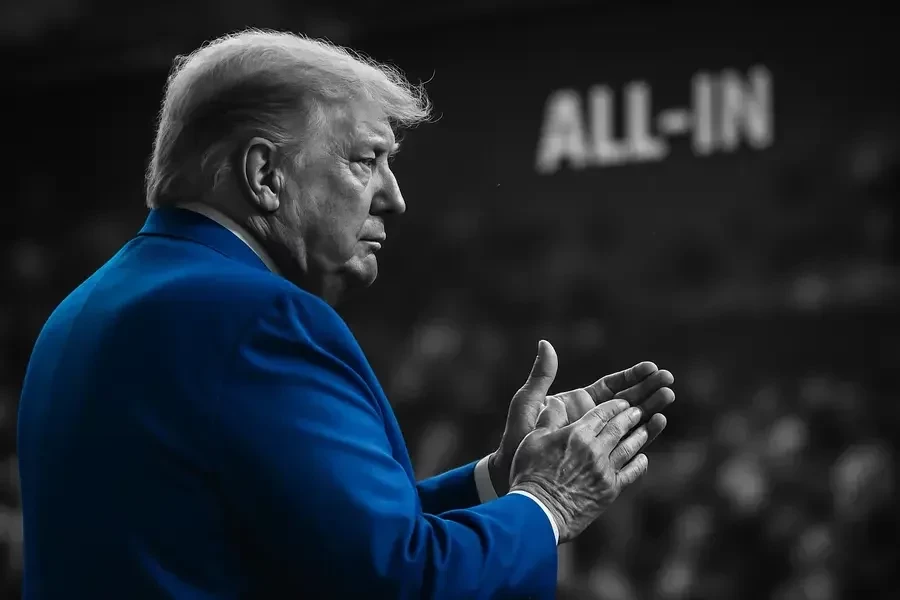
President Donald Trump has confirmed that his administration is examining whether the American public should hold ownership stakes in leading artificial intelligence companies, a proposal that would mark a significant departure from traditional free-market norms. The concept appears to stem from ongoing discussions among administration officials, AI executives, and policymakers who are grappling with how the enormous wealth generated by AI should be distributed. Supporters argue that Americans should directly benefit from a technology revolution that could transform the economy and displace millions of jobs. Critics, however, warn that government ownership in private enterprises risks politicizing innovation, distorting markets, and expanding federal influence over one of the nation’s most strategically important industries. The proposal emerges as the administration simultaneously pursues stronger national-security oversight of advanced AI systems while seeking to maintain America’s technological advantage over China.
Sources
- https://www.reuters.com/business/trump-says-his-team-will-look-into-us-taking-stake-ai-companies-2026-06-05
- https://www.ft.com/content/8559a3f9-86de-4a1c-8a75-6623e83e6a00
- https://www.ft.com/content/b1ab6106-77e6-4218-9eb4-e44bd56ca400
- https://www.wsj.com/tech/ai/u-s-officials-discuss-taking-financial-stakes-in-ai-industry-b654d41a
- https://www.axios.com/2026/06/06/trump-us-stake-ai-companies
Key Takeaways
- The Trump administration is actively exploring whether Americans should gain direct ownership exposure to major AI companies through some form of public stake or sovereign-wealth-style mechanism.
- The debate reflects growing concern that AI’s economic benefits could become concentrated among a handful of technology firms while automation disrupts traditional employment sectors.
- While broad public participation in AI-generated wealth may appeal to populists across the political spectrum, government ownership in private companies raises serious concerns about market interference, regulatory favoritism, and federal overreach.
In-Depth
For decades, conservatives have generally embraced the principle that government should create conditions for economic growth, not become an owner of private enterprise. That is why President Trump’s suggestion that the federal government could explore taking stakes in major AI companies has generated such intense discussion across political and business circles.
The rationale behind the idea is understandable. Artificial intelligence is poised to become one of the most transformative technologies in human history. Companies developing advanced AI systems could eventually create trillions of dollars in value while reshaping industries ranging from manufacturing and transportation to finance and healthcare. Many policymakers fear that this unprecedented wealth creation could flow primarily to investors, founders, and technology elites while ordinary Americans absorb the disruption caused by automation.
From a conservative perspective, however, the challenge is finding ways to broaden prosperity without abandoning free-market principles. There is a substantial difference between encouraging widespread investment and allowing Washington to become a shareholder in private corporations. Once government acquires ownership interests, political considerations inevitably begin influencing business decisions. Regulatory agencies could find themselves overseeing companies in which taxpayers have a financial stake, creating conflicts that undermine market competition and public trust.
At the same time, the proposal reflects a growing recognition that AI is not merely another technology sector. It is increasingly viewed as a strategic national asset in America’s competition with China. The administration’s recent efforts to increase oversight of advanced AI systems demonstrate that Washington already sees the industry through a national-security lens.
The central question is whether Americans can share in the AI revolution without turning the federal government into a venture-capital firm. If policymakers can devise a mechanism that expands public participation while preserving private-sector innovation, the idea may gain traction. If not, many conservatives will likely view government ownership as a cure potentially more dangerous than the problem it seeks to solve.