

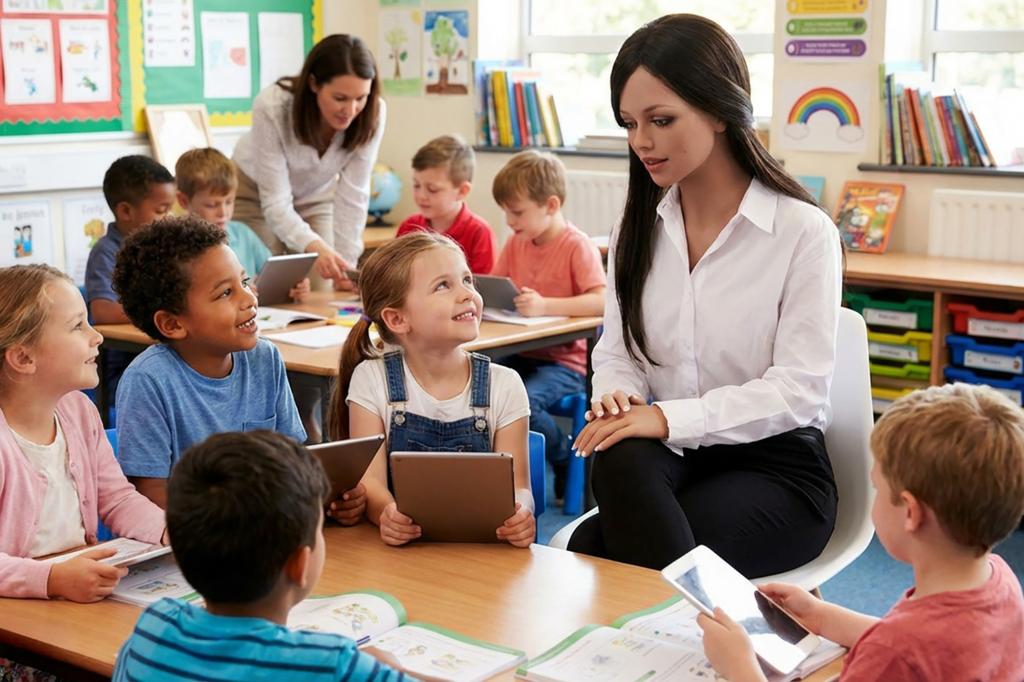
The Salamanca City Central School District, located on Seneca Nation territory in western New York, plans to introduce a humanoid robot named “Sally” into its high school classrooms beginning this fall, making it one of the first public school districts in the United States to deploy a lifelike AI-powered robot as a classroom teaching assistant. District officials insist the $57,000 Realbotix robot will supplement—not replace—teachers by assisting with coding, robotics, and artificial intelligence instruction while operating on a closed, offline system designed to protect student privacy and avoid internet-based data collection. The announcement has generated both enthusiasm among technology advocates who view the initiative as an innovative way to prepare students for an AI-driven economy and skepticism from critics concerned about educational priorities, student privacy, and the growing role of artificial intelligence in American classrooms.
Sources
- https://nypost.com/2026/07/18/us-news/humanoid-robot-sally-to-join-seneca-nation-k-12-classrooms
- https://nysfocus.com/2026/07/14/new-york-humanoid-robot-teacher-salamanca-school-district
- https://districtadministration.com/rural-ny-school-district-will-be-one-of-first-to-bring-humanoid-robot-into-classroom/
Key Takeaways
- • Salamanca City Central School District will become one of the first public school systems in America to deploy a humanoid AI robot as a teaching assistant in high school STEM classrooms, signaling that AI is moving beyond software into physical classroom environments.
- • District leaders emphasize that “Sally” is intended to enhance instruction rather than replace educators, using an offline AI platform with privacy safeguards designed to prevent student data collection and internet connectivity.
- • The rollout reflects the broader national debate over artificial intelligence in education, balancing technological innovation and workforce preparation against concerns over cost, privacy, educational priorities, and preserving the central role of human teachers.
In-Depth
The arrival of “Sally” represents another milestone in the rapid integration of artificial intelligence into American education, but it also highlights a much larger debate over where technology should end and human instruction should begin. While school officials have repeatedly emphasized that the robot exists to support teachers rather than replace them, the deployment illustrates how quickly AI is moving from novelty to everyday educational tool.
Supporters argue that refusing to expose students to emerging technologies would leave them at a competitive disadvantage in an economy increasingly shaped by artificial intelligence. Coding, robotics, and AI literacy are likely to become foundational skills for tomorrow’s workforce, and introducing students to these tools in a structured classroom environment may prove more beneficial than allowing them to experiment independently with largely unrestricted consumer AI platforms. If properly managed, a humanoid assistant could reinforce lessons, answer routine questions, and allow teachers to devote more attention to higher-level instruction.
Even so, skepticism is justified. Public education has frequently embraced expensive technological initiatives before fully understanding their long-term educational value. Taxpayers have every reason to question whether sophisticated robotics should receive funding before districts address core academic performance, teacher recruitment, school safety, and student achievement. Likewise, assurances regarding privacy, while encouraging, will ultimately be judged by implementation rather than promises.
The district deserves credit for making clear that Sally will not replace teachers and for designing the system to operate offline with significant guardrails. Those decisions acknowledge an important reality: education depends upon human judgment, mentorship, and relationships that no machine can replicate.
As artificial intelligence becomes increasingly woven into American life, schools should prepare students to understand, question, and responsibly use these technologies—not simply accept them uncritically. Innovation has value, but it should always remain subordinate to the mission of educating informed, capable, and independent-thinking citizens. Technology should serve the classroom, not redefine it.