

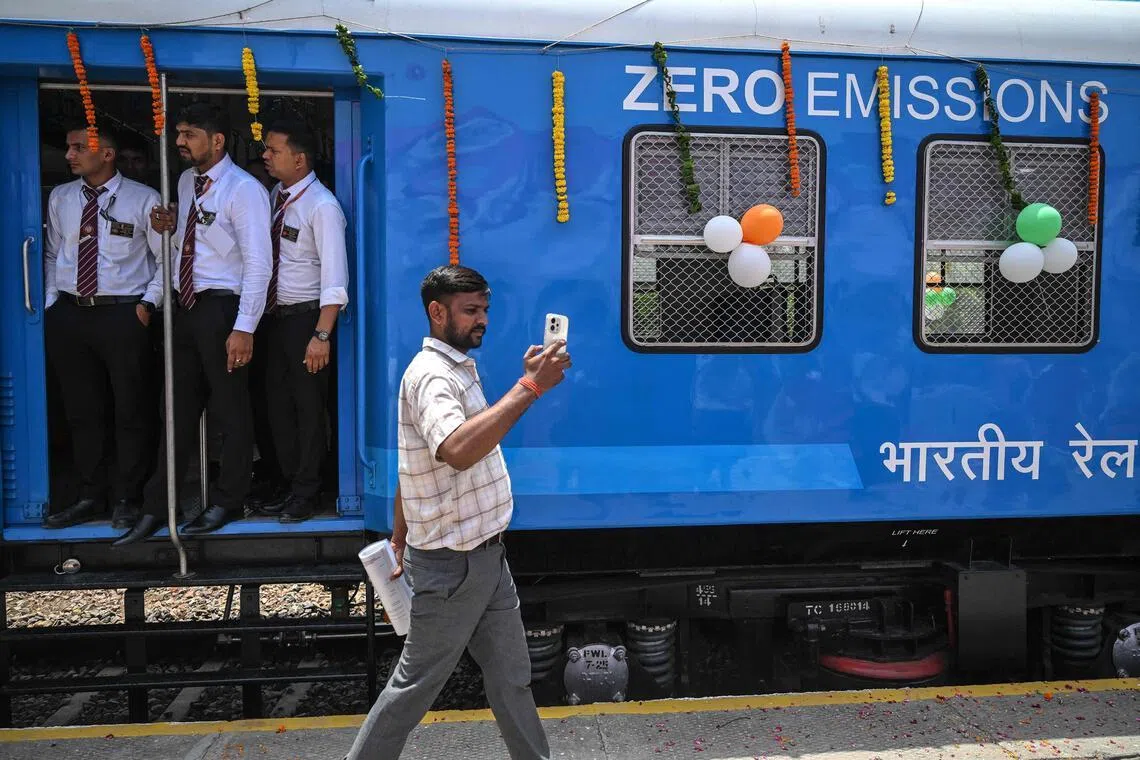
India has officially launched its first domestically built hydrogen-powered passenger train, marking another milestone in its effort to modernize one of the world’s largest rail networks while reducing reliance on diesel-powered rail service. The 10-coach train, operating on the 89-kilometer Jind-Sonipat route in Haryana, uses hydrogen fuel cells that generate electricity while emitting only water vapor and steam. Officials describe the propulsion system as among the most powerful of its kind, and the project includes a dedicated hydrogen storage and refueling facility. While the pilot program is significantly more expensive than conventional rail service, Indian officials argue costs should decline as the technology matures. Beyond its environmental implications, the project reflects India’s broader strategy of investing heavily in domestic infrastructure, advanced manufacturing, and transportation technology as part of its long-term economic and industrial ambitions.
Sources
- https://www.straitstimes.com/asia/south-asia/india-launches-first-hydrogen-powered-train-in-clean-energy-push
- https://apnews.com/article/4ea2bd0b987e863d9238b493627f4b1f
- https://www.reuters.com/world/india/india-joins-select-group-nations-operating-hydrogen-powered-trains-2026-07-17
- https://www.pib.gov.in/PressReleasePage.aspx?PRID=2285240&lang=1®=3
Key Takeaways
- • India has joined a small group of nations deploying hydrogen-powered passenger rail technology, signaling continued investment in advanced transportation infrastructure.
- • The project combines environmental goals with industrial policy by emphasizing domestic engineering, manufacturing capability, and energy independence.
- • Although hydrogen rail remains substantially more expensive than conventional alternatives today, Indian officials view the pilot as a strategic investment whose long-term value extends beyond immediate operating costs.
In-Depth
India’s first hydrogen-powered passenger train represents more than another clean-energy demonstration. It reflects a national strategy focused on strengthening infrastructure, expanding domestic manufacturing, and reducing dependence on imported fuels through technological innovation. While much of the international attention has centered on emissions reductions, the larger story is India’s determination to position itself as a serious industrial power capable of developing sophisticated transportation systems at home.
The economics remain an open question. Hydrogen-powered rail systems currently cost substantially more than traditional diesel or electric alternatives, and critics rightly question whether widespread deployment makes financial sense. Even Indian railway officials acknowledge the pilot project’s premium cost while expressing confidence that future production and technological improvements will lower expenses. That is a reasonable expectation, although history shows emerging energy technologies do not always achieve the projected cost reductions as quickly as advocates predict.
Even so, governments have legitimate reasons to pursue pilot programs when they advance strategic capabilities. Rail infrastructure is critical national infrastructure, and investing in domestic engineering expertise can strengthen supply chains, manufacturing capacity, and energy security. Rather than relying exclusively on foreign technology, India is building experience that could eventually translate into export opportunities and greater industrial competitiveness.
Whether hydrogen ultimately proves superior to battery-electric or conventional electrified rail remains uncertain. Markets—not political mandates—should determine which technologies succeed over time. Nevertheless, India’s willingness to experiment with competing solutions demonstrates an understanding that long-term economic strength depends upon continuous investment in infrastructure, engineering talent, and technological innovation rather than simply preserving the status quo.