

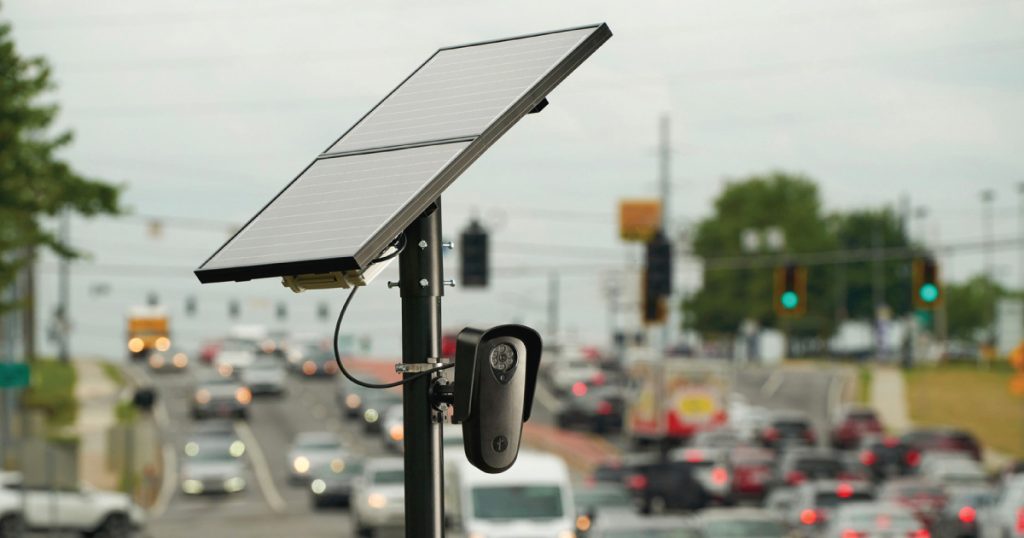
Florida transportation officials have revoked permits for automated license plate readers on state highway rights-of-way and ordered local law enforcement agencies to remove the devices within 30 days, citing rapid expansion of the technology, reported misuse, data-privacy concerns and broader fears about government surveillance. The directive also halts approval of future license plate reader installations under the department’s jurisdiction. Gov. Ron DeSantis had recently criticized the proliferation of the cameras, saying law enforcement should have effective tools to pursue criminals while warning against creating a system capable of routinely tracking the movements of ordinary citizens. The order is limited to state highway rights-of-way and does not automatically eliminate cameras located on city or county roads or private property.
Key Takeaways
- Florida revoked existing permits for automated license plate readers located within state highway rights-of-way and ordered law enforcement agencies to remove affected cameras within 30 days; state transportation officials can remove remaining devices after the deadline.
- The state cited the rapid proliferation of the technology alongside reports of misuse, privacy concerns and surveillance practices, reflecting growing skepticism about allowing government agencies to build searchable records of citizens’ movements.
- The action is significant but limited: it applies to state highway rights-of-way rather than automatically banning license plate readers on county roads, municipal streets, private property or certain mobile law-enforcement systems.
In-Depth
Florida has drawn a significant line in the debate between technological policing and individual privacy, ordering automated license plate readers removed from state highway rights-of-way while suspending future permits for the systems. Law enforcement agencies have 30 days to remove affected cameras, with transportation officials authorized to remove equipment remaining afterward.
The decision follows growing concern about the expanding network of cameras capable of recording license plates, vehicle characteristics, locations and timestamps. Such information can be placed into searchable databases and shared among participating law enforcement agencies. Police supporters argue that these systems provide valuable assistance in recovering stolen vehicles, locating missing persons and identifying suspects. But the same technological capability raises an obvious civil-liberties question: whether government should routinely collect information about innocent motorists simply because they travel on public roads.
DeSantis has framed the issue as a distinction between legitimate criminal investigation and indiscriminate surveillance. His position leaves room for technology targeted at criminals while rejecting an infrastructure capable of broadly documenting Floridians’ movements. Several Florida jurisdictions have separately reconsidered or discontinued camera programs amid similar concerns.
Importantly, Florida has not imposed a comprehensive statewide prohibition. The transportation order concerns systems located within state highway rights-of-way. Cameras operating along locally controlled roads or private property can remain outside its reach. That limitation means the broader debate now shifts toward local governments and the Legislature, where policymakers must determine what safeguards, retention limits and restrictions should govern surveillance technology without unnecessarily depriving police of legitimate investigative tools.
Sources
- https://abcnews.com/US/florida-remove-flock-cameras-state-highway-roads/story?id=136118376
- https://www.flsenate.gov/Laws/statutes/2025/316.0777
- https://www.fdot.gov/traffic/trafficservices/info
- https://www.wuft.org/public-safety/2026-08-31/all-putnam-county-flock-cameras-discontinued-as-fdot-calls-for-removal-on-state-roads