

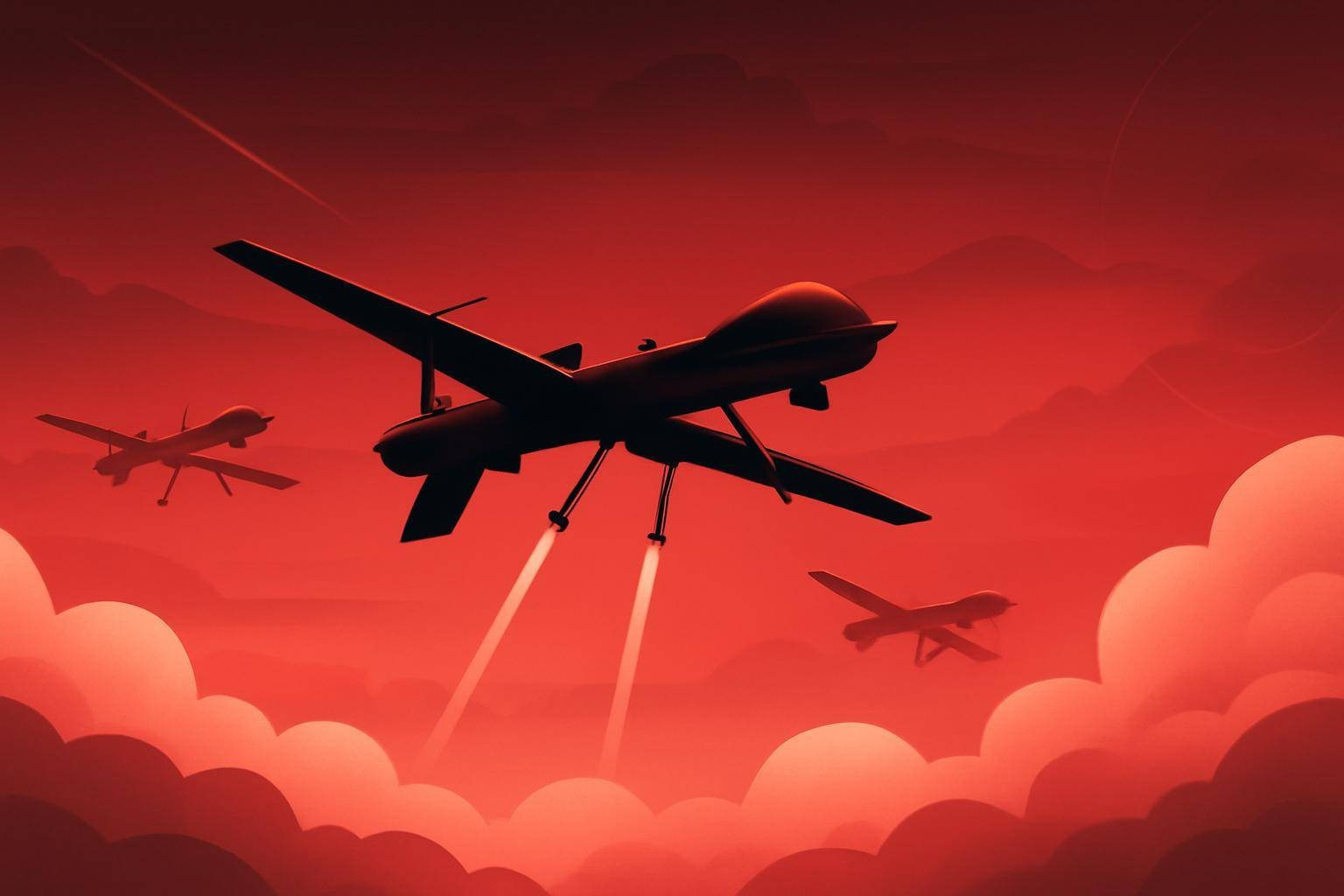
The United Arab Emirates is reportedly overhauling its planned 5-gigawatt artificial-intelligence data-center complex after Iranian drone and missile attacks demonstrated that the Gulf’s rapidly expanding digital infrastructure can become a direct military target. The project, originally envisioned as a massive, roughly 10-square-mile centralized campus in Abu Dhabi, is now expected to be dispersed among multiple locations across the country, with officials considering underground facilities, blast-resistant construction, electronic jamming, air defenses, redundant power and cooling, and even mountain-based installations for especially sensitive data. The reassessment follows March attacks that physically damaged two cloud facilities in the UAE and infrastructure in Bahrain, producing serious and prolonged service disruptions. The lesson is difficult to ignore: as AI infrastructure becomes integral to finance, government operations, communications and national security, the physical computers behind the digital economy are assuming the strategic importance once reserved for power plants, military bases and telecommunications hubs.
Key Takeaways
- The UAE is reconsidering the centralized design of its enormous 5-gigawatt AI project, favoring geographically dispersed facilities so that a successful attack on one location cannot cripple the country’s emerging AI infrastructure.
- Proposed defenses reportedly include underground construction, blast-resistant concrete, electronic jamming, air-defense systems, greater backup power and cooling capacity, and potentially placing highly sensitive military data inside hardened mountain facilities.
- Iranian drone attacks on cloud infrastructure in the UAE and Bahrain exposed a fundamental weakness in the modern digital economy: supposedly resilient cloud systems still depend upon physical buildings, electricity, cooling and communications infrastructure that can be destroyed in wartime.
In-Depth
The UAE’s decision to reconsider the architecture of its massive AI infrastructure program represents more than an engineering adjustment. It is an acknowledgment that data centers have become strategic assets—and therefore strategic targets.
The planned 5-gigawatt project was originally conceived as a huge centralized campus in Abu Dhabi. That approach offers substantial economic advantages, including concentrated electrical generation, cooling, networking and construction. But concentration also creates vulnerability. Following Iranian attacks against Gulf infrastructure, planners are reportedly shifting toward multiple facilities distributed across the Emirates. Some could be underground, while the most sensitive information may ultimately be housed in hardened mountain installations.
The concern is hardly theoretical. Drone strikes in March physically damaged two cloud facilities in the UAE, while another facility in Bahrain suffered physical effects from a nearby strike. The resulting damage included interrupted power, structural problems and water damage associated with fire suppression. Cloud services consequently suffered significant disruptions, demonstrating that redundancy designed for equipment failures and ordinary disasters may prove inadequate when an adversary deliberately attacks multiple facilities.
That realization has implications well beyond the UAE. Governments have spent years encouraging the migration of financial, commercial and government operations into cloud environments while simultaneously treating data centers primarily as commercial infrastructure. AI raises the stakes considerably. Massive computing campuses increasingly support government services, financial systems, intelligence processing and potentially military applications.
The UAE’s response therefore reflects an old national-security principle applied to a new technology: critical assets should be dispersed, hardened and redundant. The cloud may appear intangible to users, but war has provided a sharp reminder that it ultimately resides inside very tangible—and potentially vulnerable—buildings.
Sources
- https://www.reuters.com/world/middle-east/uae-revises-ai-data-center-plan-after-iranian-attacks-sources-say-2026-09-11/
- https://health.aws.amazon.com/health/status
- https://apnews.com/article/71066b0a822c4cfd88b61e3fe79af917
- https://www.datacenterdynamics.com/en/news/amazon-confirms-two-uae-data-centers-hit-by-drone-strikes-third-in-bahrain-damaged/