

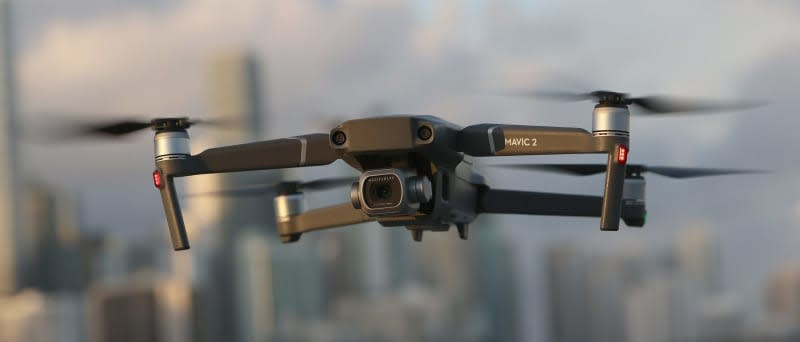
Low-cost drones have demonstrated that relatively inexpensive weapons can disrupt energy infrastructure worth hundreds of millions of dollars and rapidly move global commodity markets. Drone attacks damaged Saudi Arabia’s critical East-West Pipeline, which had become especially important after disruption of the Strait of Hormuz forced the kingdom to redirect millions of barrels of crude toward the Red Sea. The pipeline shutdown, combined with threats around the Bab el-Mandeb Strait, has placed both major Saudi export routes under pressure. Oil markets reacted sharply, with Brent reaching roughly $109 per barrel and Saudi Arabia canceling some European cargoes. The larger lesson extends beyond the immediate conflict: modern energy infrastructure remains enormously expensive, geographically concentrated, and increasingly vulnerable to comparatively cheap precision weapons. That imbalance could force governments, producers, refiners, and investors to reconsider the value of domestic production, redundant infrastructure, hardened facilities, and energy supplies that do not depend upon vulnerable international chokepoints.
Key Takeaways
- Cheap drones have fundamentally altered the economics of attacking energy infrastructure, allowing non-state forces to threaten facilities and transportation networks whose disruption can affect millions of barrels of daily oil supply.
- Saudi Arabia’s East-West Pipeline had become a critical alternative to the Strait of Hormuz, carrying roughly 4 million to 5 million barrels per day toward the Red Sea; its disruption therefore threatens a meaningful portion of global petroleum supply.
- The episode strengthens the strategic case for geographically diversified energy production, redundant transportation infrastructure, domestic refining capacity, and reduced dependence on maritime chokepoints that hostile governments or armed groups can disrupt.
In-Depth
The drone attacks against Saudi Arabia’s East-West Pipeline demonstrate an uncomfortable reality of modern energy security: the cost of disrupting critical infrastructure is falling dramatically while the economic consequences of disruption are rising.
Saudi Arabia relied heavily on the roughly 1,200-kilometer pipeline after turmoil surrounding the Strait of Hormuz restricted the kingdom’s traditional Persian Gulf export route. Millions of barrels per day were redirected west toward Yanbu, effectively transforming the pipeline into a crucial artery for world petroleum markets. Drone damage forced its shutdown and subsequently contributed to suspended Yanbu loadings and canceled Saudi deliveries to European customers.
Markets responded accordingly. Brent crude closed September 15 at $108.75 per barrel, while West Texas Intermediate reached $105.83. Estimates suggest disruption could threaten approximately 4 percent of global oil supply if Saudi exports remain constrained.
The strategic implications are larger than the immediate price increase. A sophisticated refinery, pumping station, pipeline, terminal or electrical installation can require hundreds of millions—or billions—of dollars to construct. Yet relatively inexpensive unmanned aircraft can potentially disable vulnerable components without requiring conventional air forces, naval forces or expensive missile inventories.
That asymmetry challenges decades of assumptions about infrastructure security. Western economies built enormously efficient international supply networks around predictable transportation corridors and relatively secure maritime chokepoints. Efficiency, however, often eliminated redundancy.
The emerging lesson favors resilience: more domestic production, additional refining capacity, hardened infrastructure, alternative pipelines, diversified transportation routes and strategic inventories. Cheap drones cannot eliminate global energy trade, but they can impose a substantial geopolitical risk premium on every barrel dependent upon vulnerable infrastructure.
Sources
- https://www.reuters.com/business/energy/oil-prices-rise-saudi-pipeline-outage-fresh-attacks-raise-supply-concerns-2026-09-15/
- https://www.theguardian.com/world/2026/sep/14/saudi-pipeline-drone-attack-houthis-global-oil-supply-prices
- https://apnews.com/article/saudi-arabia-egypt-houthis-red-sea-oil-pipeline-5696629010c86b8cc83f69cbd093e3f1