

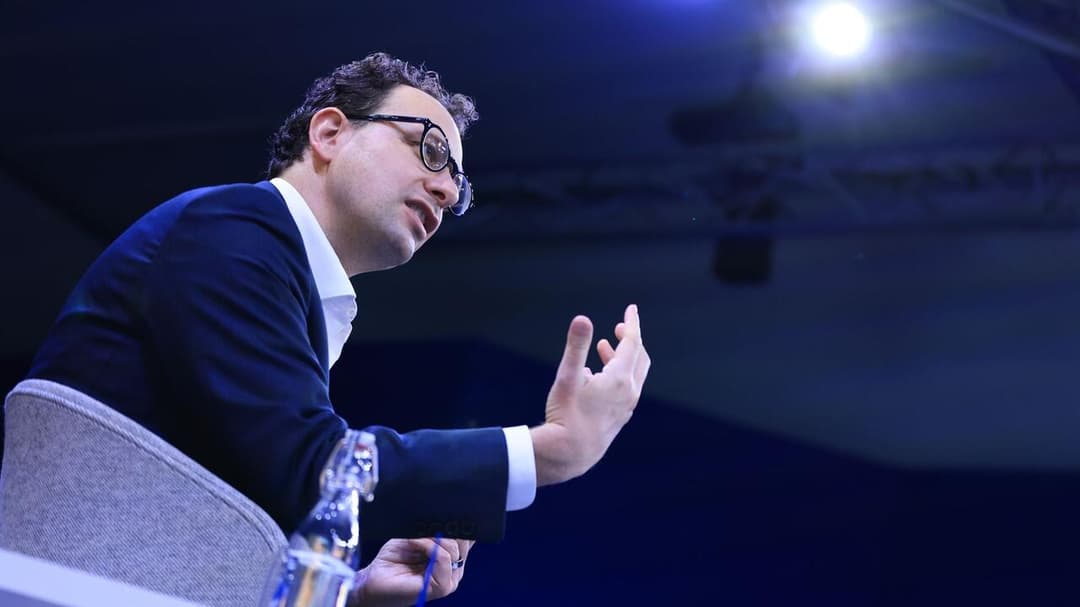
Dario Amodei‘s increasingly influential vision for governing advanced artificial intelligence is drawing scrutiny not simply because he advocates slowing frontier development, expanding outside oversight and pursuing international coordination, but because critics argue that the intellectual circle informing those proposals lacks meaningful ideological diversity. Across several major essays, Amodei credits advisers spanning AI research, academia, national-security institutions, philanthropy, Effective Altruism and Democratic administrations. His proposals include embedded independent AI evaluators, greater transparency, stronger semiconductor export controls against China, coordination among leading American AI companies and ultimately international arrangements intended to prevent an uncontrolled technological race. Critics contend that such consequential ideas should face considerably more intellectual resistance from advocates of decentralized authority, free markets, national sovereignty and skepticism toward international institutions—particularly when cooperation with China would be extraordinarily difficult to verify. The controversy therefore extends beyond AI safety itself to a larger question: who should shape the institutions that could eventually exercise enormous influence over one of the most consequential technologies ever developed?
Key Takeaways
- Amodei has assembled an intellectually accomplished network around his AI thinking, but critics argue its publicly acknowledged members disproportionately represent establishment academia, technocratic policy circles, Effective Altruism, NGOs and Democratic-administration experience, leaving limited evidence of serious conservative, libertarian or decentralist participation.
- His emerging governance model would combine independent evaluators inside frontier AI companies with industry coordination, government involvement and eventually international agreements. The central conservative concern is whether supposedly temporary safety mechanisms could evolve into permanent bureaucratic institutions exercising sweeping authority over technological development.
- China presents the hardest practical test. Amodei simultaneously supports restricting Chinese access to advanced chips and exploring international coordination on AI development. That creates an obvious verification problem: any agreement restraining American development becomes strategically dangerous if Beijing can secretly continue advancing its own capabilities.
In-Depth
Dario Amodei has emerged as one of artificial intelligence’s most consequential advocates for slowing frontier development long enough for safety systems to catch up. His proposals deserve attention because they could influence how governments ultimately regulate a technology with enormous economic and national-security consequences.
The controversy surrounding Amodei increasingly concerns who helps shape that worldview. His acknowledged intellectual network includes AI researchers, academics, nonprofit executives, national-security specialists, Effective Altruism figures and people with Democratic-administration backgrounds. Critics argue that conspicuously scarce are conservative, libertarian and decentralist voices inclined to challenge international governance, concentrated regulatory authority or agreements dependent upon Chinese compliance.
That matters because Amodei’s proposals extend beyond technical safety testing. He supports embedded independent evaluators, coordination among frontier laboratories, government involvement, semiconductor export restrictions and eventually international cooperation intended to prevent competitors from racing ahead while others exercise restraint.
Some concerns are nevertheless broadly shared across ideological lines. Advanced systems should undergo serious testing, companies should understand dangerous capabilities before deployment, and protecting America’s technological advantage against China presents legitimate national-security considerations.
The harder question is institutional. Creating powerful regulatory structures is considerably easier than limiting them afterward. International AI agreements also face an unavoidable verification problem: Washington can regulate American laboratories directly, but determining whether Beijing is secretly expanding models, computing infrastructure or military applications is another matter entirely.
The debate therefore should not be reduced to whether AI presents risks. It should include who defines those risks, who receives authority to address them, and whether competing perspectives are represented before temporary safeguards become permanent institutions.
Sources
- https://apnews.com/article/anthropic-ai-dario-amodei-d59552edcb27892d8ee4d98a48397706
- https://www.reuters.com/world/china/china-state-newspaper-blasts-anthropics-calls-slow-ai-cold-war-tactic-2026-09-14/
- https://www.theverge.com/ai-artificial-intelligence/995141/ai-executives-politicians-safety-regulation-anthropic-dario-amodei
- https://www.washingtonpost.com/technology/2026/09/14/anthropic-openai-google-discussed-creating-new-ai-safety-body/
- https://news.bloomberglaw.com/us-law-week/anthropics-call-for-antitrust-waiver-falls-flat-in-washington