

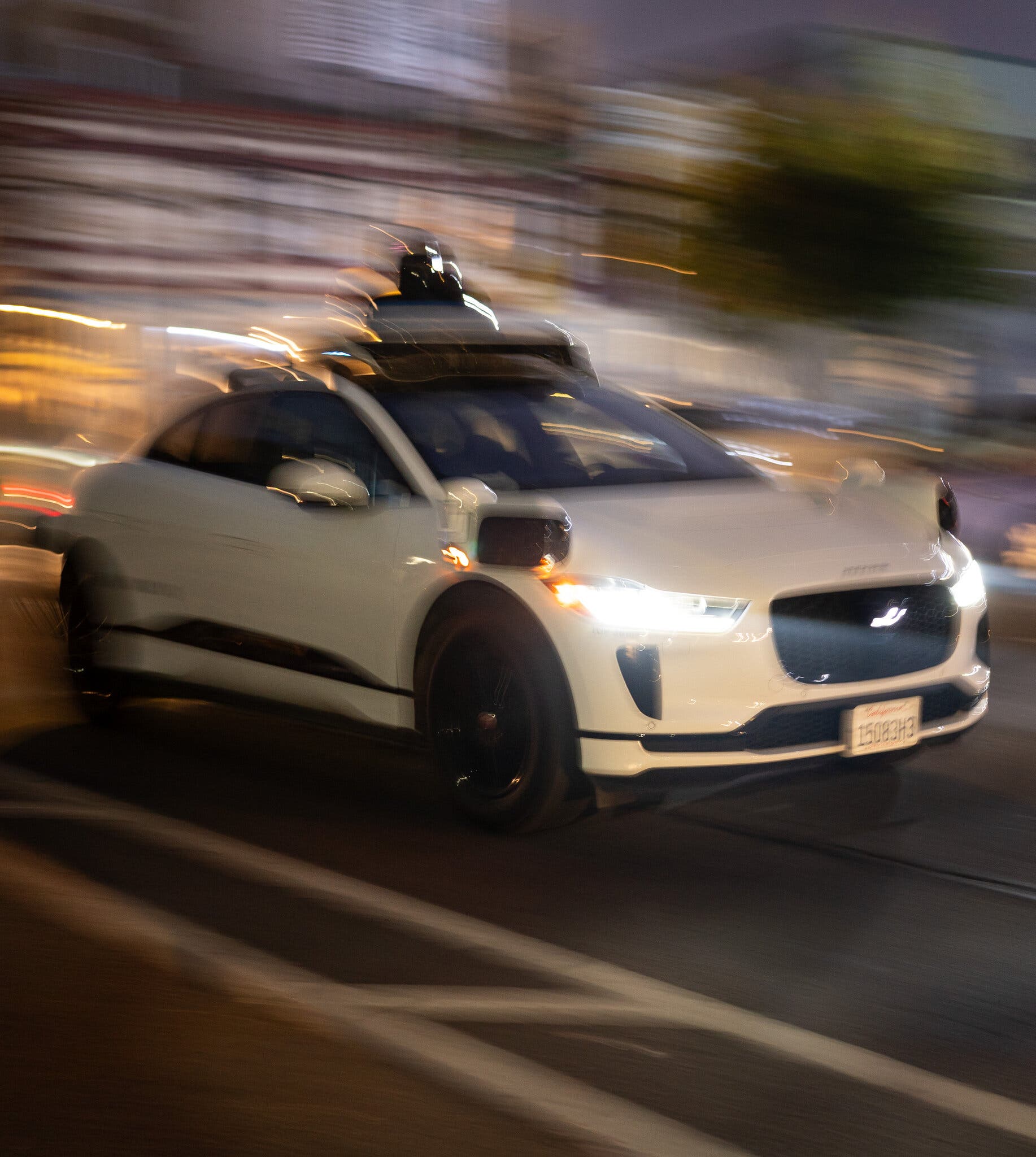
A new study published October 5, 2026, reveals a troubling paradox in the advancement of autonomous vehicles: While self-driving cars generally demonstrate smoother, more cautious driving behavior, their predictability may encourage nearby human motorists to take greater risks. Researchers examining real-world driving data involving autonomous vehicles operated by Lyft and Waymo, along with vehicles using adaptive cruise control, discovered that human drivers following automated vehicles often maintained shorter following distances and reduced their margins for avoiding collisions. The findings raise important questions about whether autonomous technology can deliver its promised safety improvements without accounting for the unpredictable behavior of surrounding motorists. As driverless vehicles become increasingly common on American roads, the research underscores the need for safety standards that evaluate the interaction between human judgment and machine-controlled transportation rather than measuring autonomous vehicles in isolation.
Key Takeaways
• Safer Machines, Riskier Humans: Autonomous vehicles generally demonstrated smoother driving and greater safety margins, but human motorists following them frequently reduced their following distances.
• Predictability Creates New Risks: The consistent behavior of automated vehicles may encourage overconfidence among surrounding drivers, increasing potential collision risks in mixed traffic.
• Safety Requires Broader Evaluation: Researchers emphasize that autonomous vehicle safety assessments must consider human reactions, traffic conditions, and interactions between automated and conventional vehicles.
In-Depth
The promise of autonomous vehicles has always centered on a straightforward proposition: Computers can eliminate the distractions, impaired judgment, and reckless decisions responsible for countless traffic accidents. New research, however, suggests that making individual vehicles safer does not necessarily make the surrounding roadway safer.
Researchers examining real-world driving patterns discovered that automated vehicles generally maintained smoother speeds and more conservative safety margins than human motorists. Yet drivers following these vehicles frequently traveled closer behind them, reducing the time available to respond to sudden braking or unexpected hazards.
The apparent explanation involves predictability. When motorists encounter vehicles that accelerate and brake consistently, they may become comfortable maintaining dangerously narrow following distances. Technology designed to reduce risk can inadvertently encourage behavior that increases it.
Additional research reinforces the complexity of integrating autonomous and human-operated vehicles. Studies have identified coordination problems, heightened collision risks under certain conditions, and differences in how motorists respond to visibly automated vehicles.
These findings present an important challenge for manufacturers and policymakers. Safety cannot be measured exclusively through the performance of autonomous software or the absence of human error inside an individual vehicle. It must also account for how technology influences everyone sharing the road.
American consumers deserve innovation grounded in demonstrable results, not assurances that technological sophistication automatically guarantees public safety. Regulators should demand transparent, independently verifiable evidence while avoiding unnecessary restrictions that discourage genuine improvements.
Ultimately, autonomous transportation must prove itself in the unpredictable conditions of everyday American driving. Until machines can safely coexist with human behavior, technological progress alone cannot establish that our highways are becoming safer.
Sources
• Primary Article — Autonomous Vehicles Drive More Safely but Can Lead Nearby Human Drivers to Take Risks, Study: https://www.theepochtimes.com/tech/avs-drive-more-safely-but-can-lead-nearby-human-drivers-to-take-risks-study-6102195
• Original Research — Automated Vehicles Drive Safer but Induce Riskier Behavior in Human Drivers in Car-Following Scenarios (October 5, 2026): https://www.nature.com/articles/s44172-026-00793-3
• Independent Research — Scenario and Leading Vehicle-Dependent Car-Following Behaviors and Risks: A Real-World Comparison of Automated and Human-Driven Vehicles: https://pubmed.ncbi.nlm.nih.gov/42229308/
• Independent Research — Non-Explicit Coordination Failure Induced by Autonomous Vehicles: Evidence From Waymo: https://link.springer.com/article/10.1007/s44230-026-00160-7
• Independent Research — Does the Conspicuity of Automated Vehicles With Visible Sensor Stacks Influence the Car-Following Behavior of Human Drivers? https://journals.sagepub.com/doi/10.1177/03611981251372466
• Independent Research — Analysis of Secondary Risks Induced by Defensive Braking in Autonomous Vehicles: https://www.sciencedirect.com/science/article/pii/S0001457525002623