

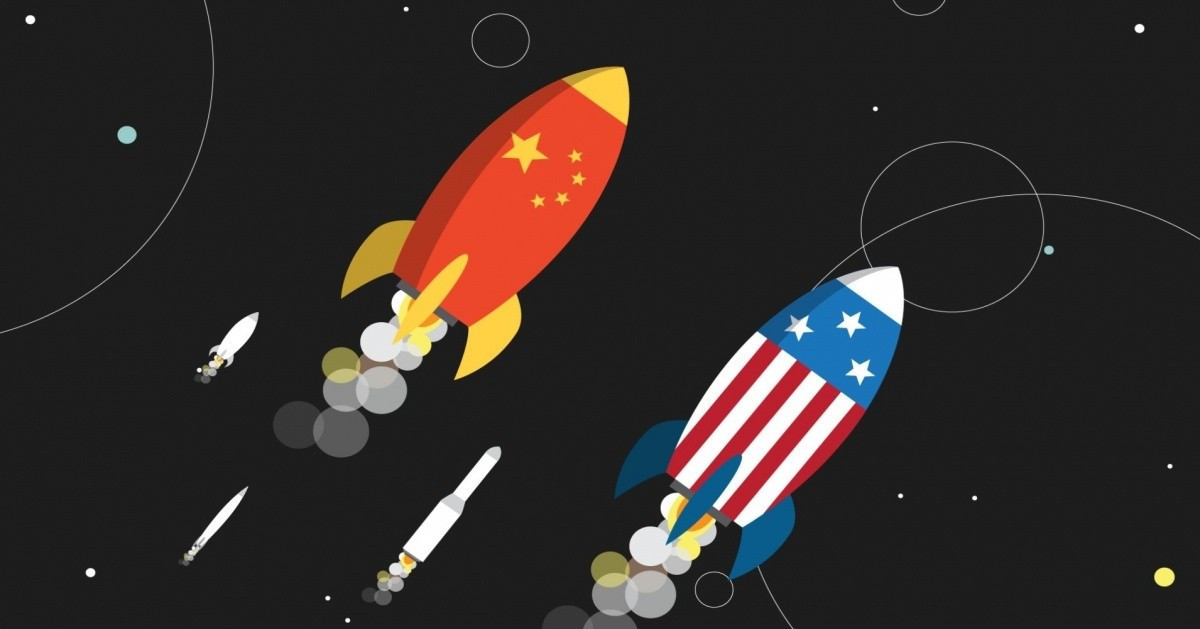
China’s ambitious campaign to recruit the world’s leading artificial intelligence researchers is encountering significant resistance despite generous financial incentives, specialized visas, and substantial government investment. New research examining international AI talent movements reveals that, for every 30 Chinese AI researchers working in the United States in 2025, only one researcher made the reverse move to China. Although Beijing has successfully expanded its domestic AI industry and retained more homegrown talent, its efforts to attract foreign scientists remain largely unsuccessful. Language barriers, concerns about academic freedom, geopolitical tensions, and the appeal of American research institutions continue to complicate China’s recruitment strategy. The findings underscore an important American competitive advantage while raising questions about whether tightening immigration restrictions could eventually undermine the United States’ longstanding leadership in scientific innovation.
Key Takeaways
• China’s recruitment strategy is struggling: Despite generous research funding and specialized visas, Beijing has attracted relatively few foreign AI researchers, with the United States maintaining a substantial advantage in international talent recruitment.
• China’s domestic AI capabilities are expanding: China accounted for approximately 41% of leading AI researchers in the study’s 2025 measure, reflecting growing domestic research strength rather than widespread success in recruiting foreign scientists.
• American immigration policy presents a strategic challenge: The United States continues benefiting from international scientific talent, but restrictive immigration policies and research funding uncertainty could weaken that advantage over time.
In-Depth
China’s determination to challenge American dominance in artificial intelligence has produced substantial technological investment, aggressive recruitment initiatives, and an expanding domestic research community. Yet Beijing continues struggling with a fundamental obstacle: convincing the world’s most accomplished foreign scientists to relocate to China.
Recent research examining international AI talent movements reveals a striking imbalance. For every 30 Chinese AI researchers working in the United States in 2025, only one researcher made the reverse move to China. Although the disparity has narrowed since 2022, it demonstrates America’s continuing appeal as a destination for scientific advancement.
Beijing has attempted to reverse this imbalance through specialized research visas, competitive compensation, and generous government grants. Nevertheless, language barriers, geopolitical uncertainty, and concerns about intellectual independence continue discouraging international recruitment.
China’s expanding domestic capabilities should not be underestimated. Its research institutions increasingly retain Chinese scientists, while companies developing advanced AI models demonstrate considerable technological sophistication. Domestic talent retention, however, differs fundamentally from attracting international researchers.
For Washington, the findings present both an opportunity and a warning. America’s universities, private-sector laboratories, entrepreneurial environment, and established research networks remain powerful competitive advantages. Restrictive immigration policies and uncertainty surrounding scientific funding could gradually erode those strengths.
Artificial intelligence leadership ultimately depends upon more than computing infrastructure, government subsidies, or technological ambition. It requires attracting exceptional minds and providing conditions where innovation can flourish.
Preserving America’s competitive advantage demands immigration safeguards that protect national security without unnecessarily excluding legitimate scientific talent. The United States must strengthen domestic education, protect sensitive technologies, and maintain an environment that rewards innovation rather than allowing bureaucratic obstacles to surrender an advantage China has struggled to overcome.
Sources
• https://www.nytimes.com/2026/10/06/science/china-ai-research-recruitment.html
• https://www.aiinsiders.net/article/china-fails-to-lure-ai-talent-while-the-us-coasts-on-old