

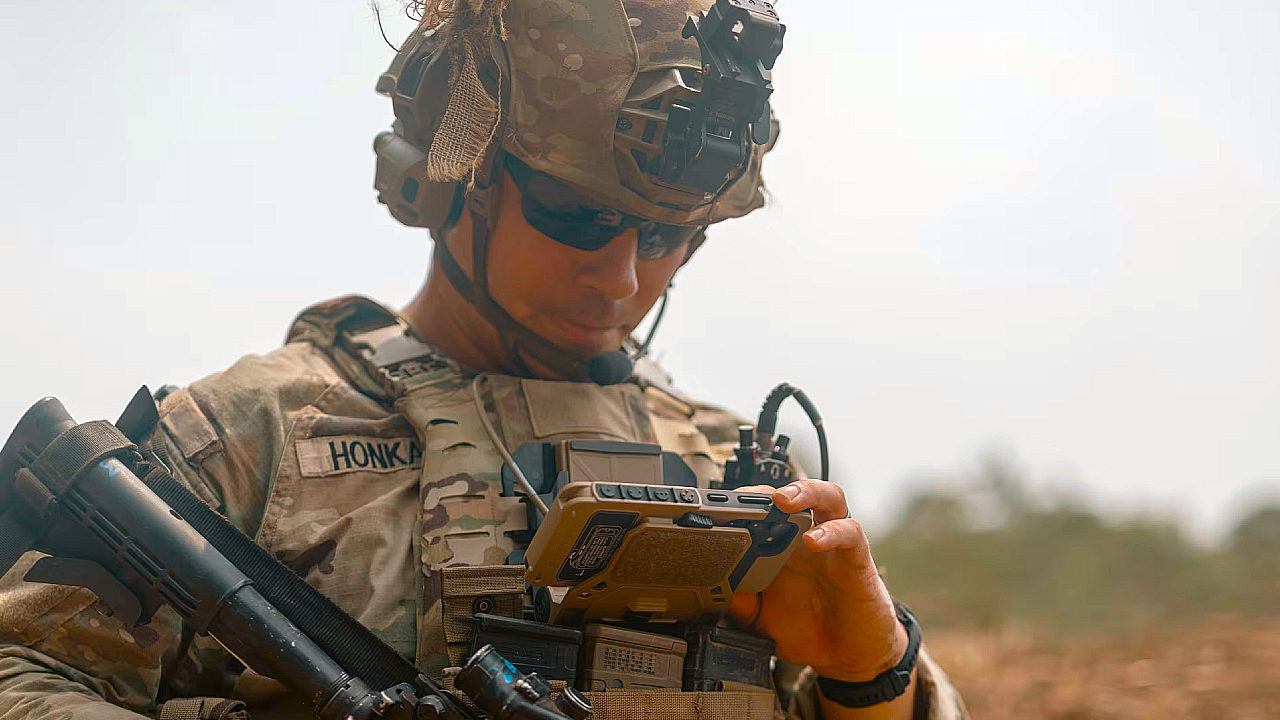
The U.S. Army’s ambitious effort to transform American military operations through artificial intelligence, autonomous drones, and advanced battlefield communications encountered significant setbacks during its Project Convergence exercises at California’s Fort Irwin. Conducted in the unforgiving Mojave Desert, the exercises exposed overheating equipment, failing batteries, unreliable communications, and difficulties integrating sophisticated technologies into conventional combat operations. Despite billions of dollars committed to modernization, the Army discovered that commercially promising systems are not necessarily battlefield-ready. The results underscore a growing national security concern: As adversaries rapidly incorporate inexpensive drones, electronic warfare, and AI-assisted targeting, America’s military must overcome technological shortcomings and institutional bureaucracy without sacrificing the reliability, discipline, and operational effectiveness essential to winning wars.
Key Takeaways
• Technology Failed Under Battlefield Conditions: Extreme heat, unreliable communications, and malfunctioning drones exposed weaknesses in equipment intended to give American forces a technological advantage.
• Military Modernization Faces Institutional Obstacles: The Army’s multibillion-dollar modernization initiative must overcome cumbersome procurement practices, integration problems, and the difficulty of adapting commercial technology to combat.
• National Security Demands Operational Readiness: AI and autonomous weapons offer considerable military advantages, but their effectiveness depends on rigorous testing, resilient communications, and dependable performance under hostile conditions.
In-Depth
The United States Army’s pursuit of artificial intelligence-driven warfare encountered an uncomfortable reality during exercises at Fort Irwin, California: Advanced technology is only as valuable as its ability to function when soldiers need it.
During Project Convergence, military personnel tested autonomous drones, digital command systems, and sophisticated battlefield communications in temperatures approaching 110 degrees. Equipment overheated, batteries failed, and communications deteriorated. Some drones struggled to maintain connectivity across mountainous terrain, exposing vulnerabilities that could prove disastrous against a technologically capable adversary.
The exercises highlighted a fundamental challenge confronting American military modernization. Billions in defense spending cannot guarantee battlefield superiority when emerging technologies remain insufficiently tested under realistic operational conditions. The Army’s Next Generation Command and Control initiative promises faster decisions and improved coordination, but integrating disparate systems into a dependable combat network remains difficult.
Meanwhile, lessons from Ukraine demonstrate how inexpensive drones, rapid technological adaptation, and electronic warfare are transforming military engagements. America’s adversaries are unlikely to wait while Pentagon procurement procedures and contractor development schedules catch up.
Defense Secretary Pete Hegseth’s emphasis on accelerating military innovation reflects the urgency of these challenges. Nevertheless, speed must be accompanied by accountability, measurable performance standards, and disciplined procurement.
America’s technological superiority cannot rest on impressive demonstrations or ambitious contractor promises. Genuine military readiness requires equipment that survives punishing environments, communications that withstand disruption, and commanders who can exploit new capabilities without becoming dependent on unreliable systems.
The objective must remain unmistakable: Equip American warfighters with technology that works when lives and national security depend upon it.
Sources
• https://www.wsj.com/tech/the-u-s-armys-desert-tech-test-shows-long-road-to-ai-warfare-2fc2ba1e
• https://www.stripes.com/branches/army/2026-06-25/tech-put-to-test-drones-ntc-training-22065489.html
• https://www.army.mil/article/291092/ads_cft_advances_technical_operational_experimentation