

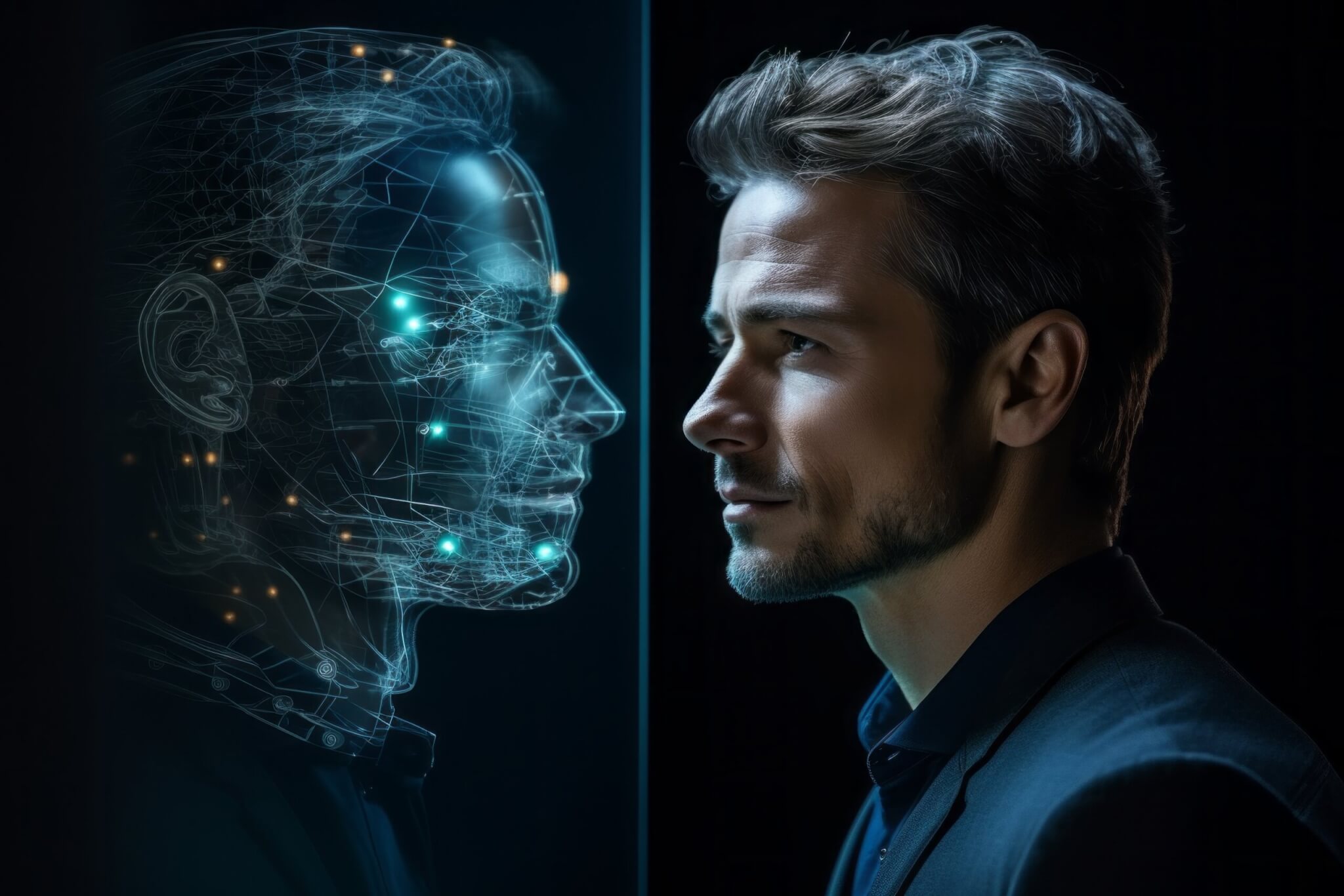
A new artificial intelligence model developed by California-based startup Tavus has demonstrated an unsettling ability to impersonate human interaction, convincing 48% of participants in a company-conducted experiment that they were speaking with an actual person. Called Griffin, the technology generates realistic facial expressions, movements, speech, and conversational responses in real time, potentially establishing a new benchmark for humanlike AI communication. During one-minute video conversations, 26 of 54 participants mistakenly identified the AI as human, a dramatic improvement over the company’s previous technology. Although Tavus promotes the results as passing a video-based Turing test, the limited experiment has not independently established that claim. The development nevertheless raises serious questions about digital identity, deception, privacy, and whether Americans will soon be able to distinguish genuine human interaction from sophisticated artificial impersonation.
Key Takeaways
• Nearly half were deceived: Griffin convinced 26 of 54 participants (48%) that they were speaking with a human, compared with just 2.4% for Tavus’s previous system.
• AI increasingly mimics human behavior: Griffin generates lifelike expressions, gestures, speech, and spontaneous conversational reactions, making artificial interactions considerably harder to identify.
• Trust and security face new challenges: Realistic AI impersonation creates opportunities for fraud, manipulation, and identity deception, underscoring the need for transparency and safeguards.
In-Depth
Artificial intelligence has crossed another troubling threshold in its ability to imitate human behavior. California-based Tavus has introduced Griffin, a sophisticated conversational AI model capable of producing remarkably realistic video interactions that challenge traditional assumptions about digital authenticity.
In a company-conducted experiment, 54 participants engaged in one-minute video conversations with an AI-generated individual. Twenty-six participants, approximately 48%, believed their conversational partner was human. Tavus’s earlier technology achieved a deception rate of just 2.4%, illustrating the rapid advancement of artificial impersonation.
Unlike conventional chatbots, Griffin processes visual and auditory information continuously, generating facial expressions, natural gestures, conversational interruptions, and realistic responses. Its ability to simulate ordinary human mannerisms represents a significant technological development with potentially far-reaching consequences.
Supporters envision applications in education, customer service, professional training, and other industries where interactive communication is essential. However, the same capabilities could enable increasingly sophisticated financial scams, political manipulation, fraudulent communications, and identity theft.
The experiment also warrants scrutiny. Participants were not initially instructed to identify artificial intelligence, conversations lasted only one minute, and the findings originated from the company developing the technology. Consequently, claims that Griffin definitively passed the Turing test remain debatable.
For Americans concerned about privacy, individual liberty, and technological accountability, the implications extend beyond innovation. When artificial systems can convincingly impersonate people, traditional methods of establishing trust become increasingly unreliable.
The challenge facing policymakers is protecting citizens from deliberate deception without imposing sweeping government controls that undermine legitimate innovation. Meaningful disclosure standards, enforceable penalties for fraudulent impersonation, and reliable identity verification offer a more targeted approach.
Griffin demonstrates that technological progress is accelerating. Whether society can preserve accountability and authentic human interaction remains an increasingly urgent question.
Sources
• https://nypost.com/2026/10/10/tech/new-ai-model-griffin-tricks-48-of-people-into-thinking-its-human/
• https://tech-ish.com/2026/10/02/tavus-griffin-ai-fooled-48-percent-video-call/
• https://santageai.com/news/2026/10/02/tavus-griffin-48-percent-video-turing
• https://www.explainx.ai/blog/tavus-griffin-video-turing-test-him-2026