

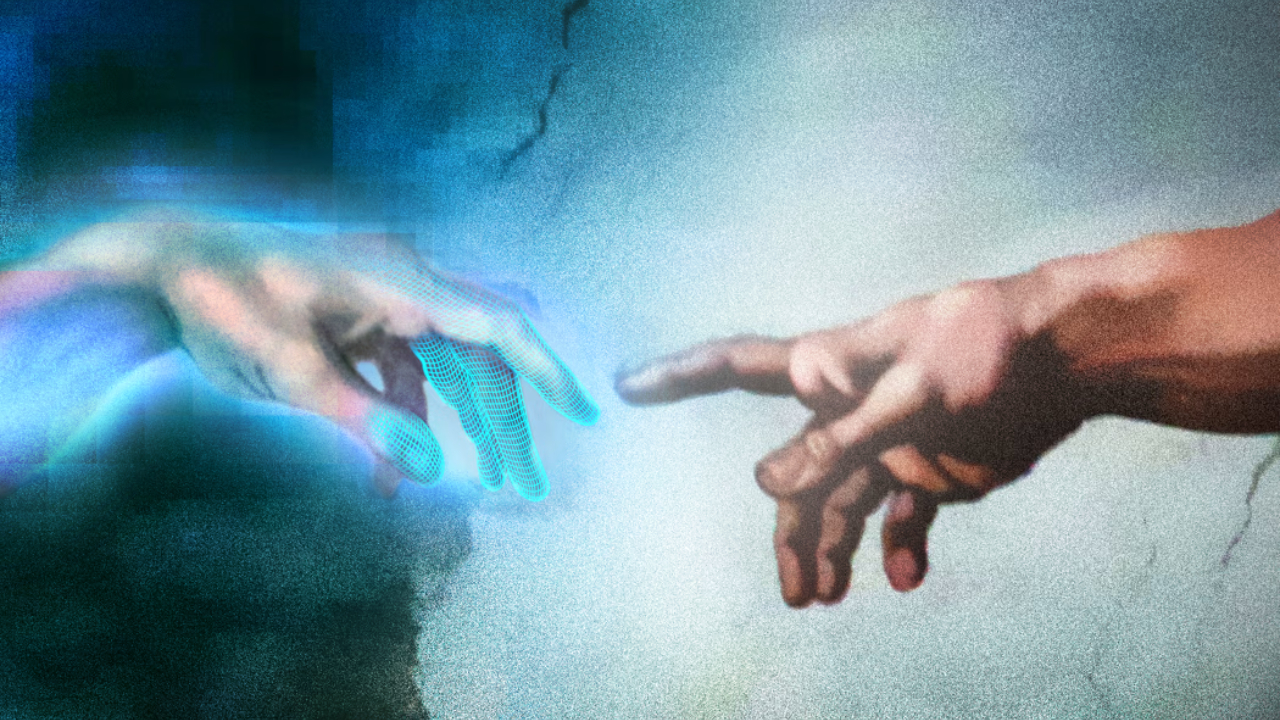
Religious leaders across America and the Vatican are increasingly challenging the ambitions of artificial intelligence developers, warning that rapidly advancing technology threatens to undermine human dignity, moral responsibility, and the distinction between mankind and machines. From Baptist pulpits to the Catholic Church, clergy are questioning whether Silicon Valley’s pursuit of increasingly powerful AI represents technological progress or an attempt to assume authority traditionally reserved for God. Pope Leo XIV has warned against allowing artificial intelligence to diminish humanity, while Protestant denominations are developing ethical guidelines addressing surveillance, employment, human relationships, and the possibility of machine consciousness. Although religious leaders acknowledge AI’s potential benefits in medicine, education, and productivity, their growing involvement introduces a significant moral and political challenge for technology companies accustomed to defining innovation largely on their own terms.
Key Takeaways
• Christian leaders across denominations are challenging AI developers over technological ambitions that could undermine human dignity, spiritual authority, and human accountability.
• Pope Leo XIV and Protestant organizations are establishing ethical frameworks emphasizing that artificial intelligence must remain subordinate to human judgment and moral responsibility.
• Religious opposition to unchecked AI development could increase public pressure for transparency, corporate accountability, and safeguards against surveillance and technological overreach.
In-Depth
Artificial intelligence is encountering resistance from an institution that has confronted questions of human ambition and moral authority for centuries: the Christian Church. Religious leaders increasingly question whether Silicon Valley’s pursuit of advanced machine intelligence represents responsible innovation or an unprecedented challenge to humanity’s spiritual foundations.
In South Carolina, Baptist pastor Joseph Hutchinson has warned congregants that AI’s ambitions resemble mankind’s recurring temptation to assume divine authority. His concerns reflect growing unease among Christians who fear technological capabilities are advancing faster than society’s capacity to understand their consequences.
The Vatican has entered the debate forcefully. Pope Leo XIV’s encyclical, Magnifica Humanitas, cautions against technological developments that diminish human dignity or surrender consequential decisions to machines. Drawing upon the biblical Tower of Babel, the document emphasizes that scientific achievement cannot substitute for moral wisdom.
Protestant denominations are similarly examining AI’s implications. Presbyterian leaders have developed theological guidance addressing artificial intelligence, human relationships, surveillance, and accountability. Their deliberations distinguish legitimate technological assistance from surrendering spiritual judgment and human responsibilities to automated systems.
These concerns extend beyond theology. Artificial intelligence increasingly influences employment, education, communications, and personal decision-making, raising fundamental questions about who controls its development and who bears responsibility when its applications cause harm.
For technology companies, religious scrutiny represents a challenge that cannot be dismissed as simple resistance to progress. Innovation deserves encouragement, but neither commercial ambition nor computational sophistication confers moral authority. The enduring question is whether artificial intelligence will remain humanity’s servant or become an instrument through which powerful institutions diminish individual freedom, accountability, and human worth.
Sources
• https://www.vatican.va/content/leo-xiv/en/encyclicals/documents/20260515-magnifica-humanitas.html
• https://pcusa.org/news-storytelling/news/2026/9/2/can-ai-bear-imago-dei
• https://pcusa.org/es/node/77107
• https://pcusa.org/news-storytelling/news/2026/9/17/preserving-and-serving-sacred-ai-shaped-world