

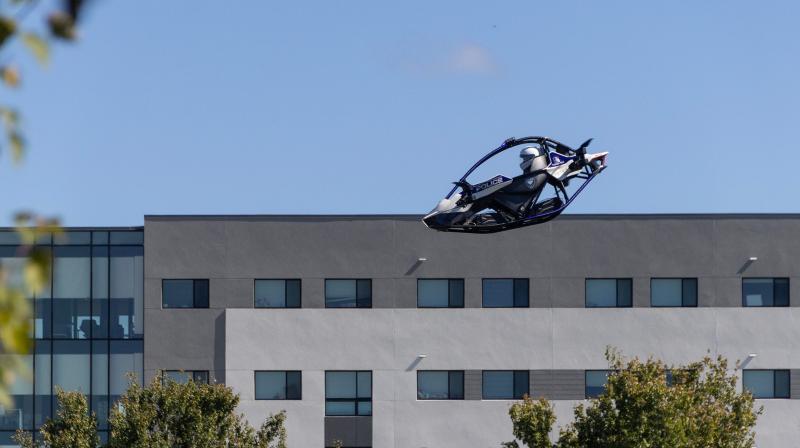
- Florida Polytechnic University police have acquired Astro, a $148,000 electric flying patrol vehicle, marking a first for U.S. law enforcement.
- The single-seat aircraft reaches 63 mph, operates for approximately 20 minutes per charge and could assist with surveillance, emergency response and disaster recovery.
- Federal Aviation Administration approval remains pending, while flight limitations, operational costs and privacy concerns raise questions about widespread police adoption.
Florida Polytechnic University police in Lakeland have acquired a $148,000 electric flying patrol vehicle called Astro, a Jetson ONE aircraft that university officials describe as a first for American law enforcement. The single-seat aircraft takes off vertically, uses eight electric motors and can reach 63 mph. Its battery supports 20 minutes of flight, while the combined weight of the pilot, equipment and supplies cannot exceed 210 pounds. The department received Astro this summer and has trained officers, including Police Chief Aaron Murray.
Officials envision using the aircraft to survey campus property, locate missing people, assess storm damage and reach areas blocked to ground vehicles. Astro will also support aerospace research and student training, with possible partnerships involving law enforcement agencies. However, it cannot carry rescue passengers, and federal regulations governing recreational ultralights do not authorize police patrols. The university is seeking additional Federal Aviation Administration clearance before operational missions begin.
Why It Matters
Florida’s experiment presents an opportunity to strengthen emergency response without committing taxpayers to the larger expense of conventional aircraft. A compact electric vehicle could help police assess flooded roads, search difficult terrain and direct responders where they are needed most. University research could also produce useful evidence about reliability, training and public safety before other departments consider similar purchases.
But technological novelty is not proof of public value. At $148,000, a vehicle restricted to roughly 20 minutes of flight and one pilot demands careful scrutiny of its advantages over existing drones and ground equipment. Federal aviation approval is essential, not an inconvenient formality. Public agencies should establish measurable performance standards, transparent operating costs and clear privacy protections before expanding airborne patrols. If Astro improves emergency response while respecting constitutional liberties and fiscal discipline, the investment may prove worthwhile. If it cannot, officials should resist buying technology because it looks futuristic.
Sources
- Primary report, Nov. 2, 2026: https://nypost.com/2026/11/02/tech/florida-police-get-first-ever-148k-flying-patrol-vehicle/
- Florida Polytechnic University, Oct. 20, 2026: https://floridapoly.edu/news/102026-florida-poly-makes-history-with-first-flying-police-vehicle/
- Jetson, Oct. 20, 2026: https://jetson.com/news/jetson-florida-polytechnic
- Independent local reporting, Oct. 20, 2026: https://www.fox13news.com/news/florida-poly-unveils-nations-first-flying-electric-police-vehicle
- Independent local reporting, Oct. 20, 2026: https://baynews9.com/fl/tampa/news/2026/10/20/electric-aircraft-to-support-florida-poly-campus-police-operations
- Federal Aviation Administration, ultralight vehicle regulations: https://www.faa.gov/airports/resources/advisory_circulars/index.cfm/go/document.information/documentNumber/103-7