

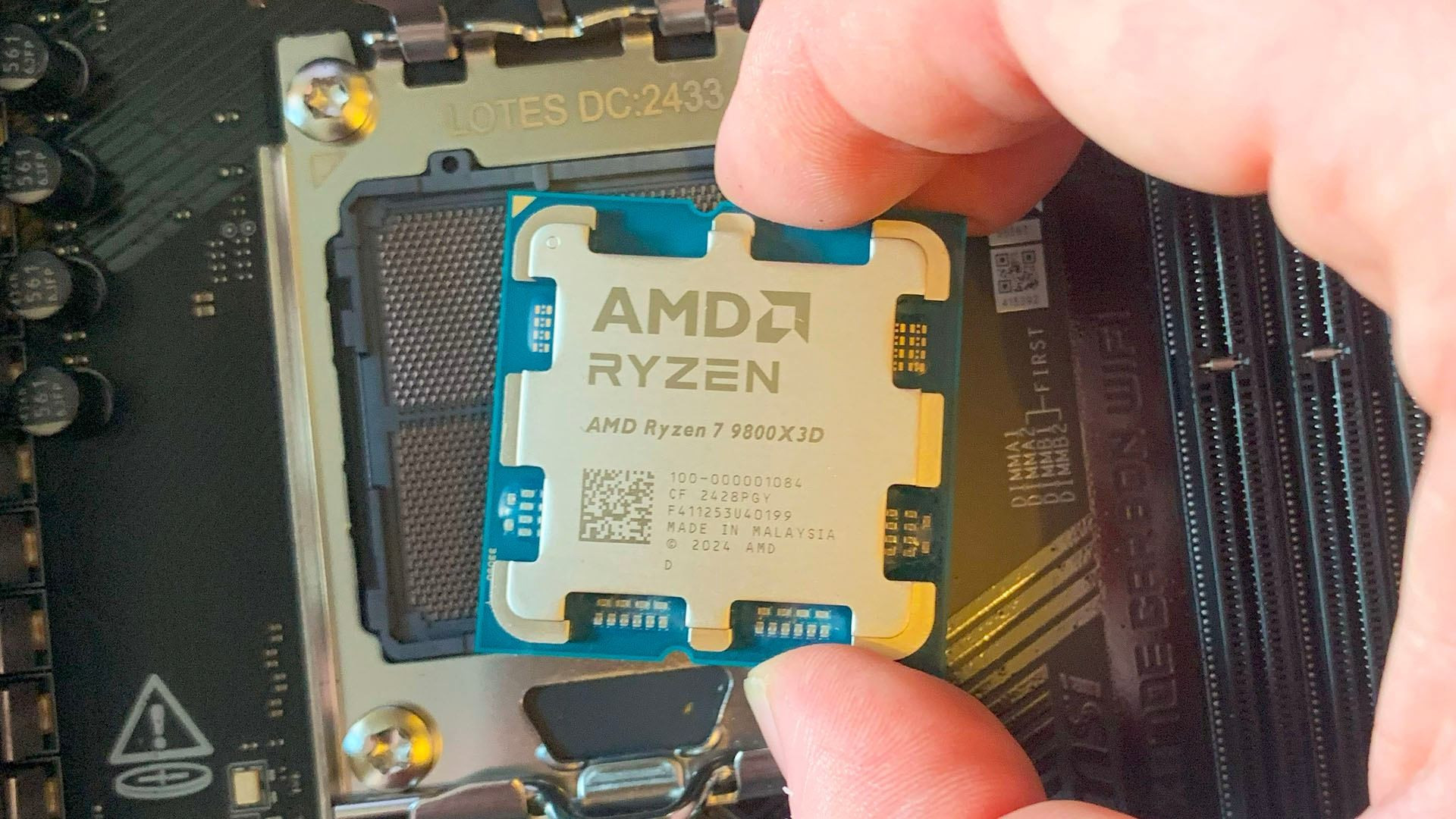
AMD recently said that a spike in physical CPU socket damage—particularly involving Ryzen X3D processors on ASRock AM5 motherboards—is linked to motherboards using BIOS/UEFI settings that stray from AMD’s recommended voltage and power specifications. The chipmaker stressed that even slight deviations from its guidelines on power delivery and tuning parameters can lead to serious hardware failures, and urged users to update to the latest BIOS while it works closely with partners to resolve the issue. Similar reports were previously documented in Tom’s Hardware, which noted that ASRock’s BIOS version 3.25—adjusting EDC, TDC, and “shadow” voltages—did significantly reduce incident rates. Further corroboration comes from PCWorld, reinforcing that this remains an active concern despite earlier fixes.
Sources: PC World, Tom’s Hardware, Ground.news
Key Takeaways
– Cause pinpointed to BIOS/UEFI tuning deviations — AMD attributes the burnt-out CPU sockets to motherboard vendors not following AMD’s official BIOS parameter guidelines, especially on power limits and voltage tuning (PCWorld; Tom’s Hardware).
– Mitigation through ASRock’s BIOS update — ASRock’s version 3.25 BIOS, which tweaked EDC, TDC, and “shadow” voltage settings, has significantly lowered the occurrence of failures—though reports persist (Tom’s Hardware).
– AMD urges BIOS updates and partner collaboration — Despite improvements, AMD emphasizes keeping BIOS current and is actively collaborating with motherboard manufacturers to fully address the issue (PCWorld; Ground News summary of Ars Technica).
In-Depth
When hardware trips, fingers fly—and this time, AMD has pointed back at motherboard makers after plenty of Ryzen X3D owners started reporting burnt-out CPU sockets.
The issue seems especially pronounced on ASRock AM5 boards, where certain BIOS settings apparently exceeded AMD’s carefully crafted power and voltage parameters. AMD officials told QuasarZone that even slight BIOS tuning tweaks—those intended to squeeze out extra performance—can overstress components.
The flip side of that coin? ASRock pushed a BIOS update (version 3.25) that dialed back several settings like EDC, TDC, and “shadow” voltages, and that smoother power delivery has helped calm the carnage—though a few holdouts still experience failures.
AMD is urging users to update their BIOS immediately and is working closely with board partners to iron things out. The conservative takeaway here is this: there’s a good reason CPU makers publish BIOS specs—and manufacturers pushing those boundaries can pay a hardware toll.
As tempting as it is to chase extra performance, staying within manufacturer-approved limits usually prevents drama—and fiery sockets.