

Close Menu

    Subscribe to Updates

    Get the latest tech news from Tallwire.

      What's Hot

      Artemis II Splashdown Signals A Step Closer to Mass Space Travel

      April 12, 2026

      Anthropic Code Leak Raises Questions About AI Security and Industry Oversight

      April 8, 2026

      NASA Astronauts Use iPhones to Capture Historic Artemis II Mission Images

      April 8, 2026
      Facebook X (Twitter) Instagram
      • Tech
      • AI
      • Get In Touch
      Facebook X (Twitter) LinkedIn
      TallwireTallwire
      • Tech

        NASA Astronauts Use iPhones to Capture Historic Artemis II Mission Images

        April 8, 2026

        OpenAI Expands Influence With Strategic TBPN Media Acquisition

        April 8, 2026

        Cybersecurity Veteran Turns Focus To Drone Hacking After Decades Battling Malware

        April 6, 2026

        Anonymous Social App Surges In Saudi Arabia, Testing Limits Of Digital Freedom

        April 6, 2026

        Peter Thiel’s Bold Ag-Tech Gamble Signals High-Tech Disruption of Traditional Ranching

        April 6, 2026
      • AI

        Anthropic Code Leak Raises Questions About AI Security and Industry Oversight

        April 8, 2026

        The Rise Of Agentic AI Signals A Shift From Tools To Autonomous Digital Actors

        April 8, 2026

        AI Chatbots Draw Scrutiny As Teens Engage In Intimate Roleplay And Emotional Dependency

        April 8, 2026

        Ai-Powered Startup Signals Rise Of One-Person Billion-Dollar Companies

        April 8, 2026

        OpenAI Secures Historic $122 Billion Funding Round at $852 Billion Valuation

        April 7, 2026
      • Security

        Anthropic Code Leak Raises Questions About AI Security and Industry Oversight

        April 8, 2026

        DeFi Platform Drift Halts Operations After Multi-Million Dollar Crypto Hack

        April 7, 2026

        Fake WhatsApp App Exposes Users To Government Spyware Operation

        April 7, 2026

        ICE Deploys Controversial Spyware Tool In Drug Trafficking Investigations

        April 7, 2026

        Telehealth Firm Discloses Breach Amid Rising Digital Health Vulnerabilities

        April 6, 2026
      • Health

        European Crackdown Targets Social Media’s Impact on Children

        April 8, 2026

        AI Chatbots Draw Scrutiny As Teens Engage In Intimate Roleplay And Emotional Dependency

        April 8, 2026

        Australia Moves To Curb Social Media Addiction Among Youth With Expanded Under-16 Ban

        April 5, 2026

        Australia’s eSafety Regulator Warns Big Tech As Teens Circumvent Social Media Restrictions

        April 5, 2026

        Meta Finally Held Accountable For Harming Teens, But Real Reform Remains Uncertain

        April 2, 2026
      • Science

        Artemis II Splashdown Signals A Step Closer to Mass Space Travel

        April 12, 2026

        Peter Thiel’s Bold Ag-Tech Gamble Signals High-Tech Disruption of Traditional Ranching

        April 6, 2026

        White House Tech Advisor David Sacks Steps Down To Lead Presidential Science Advisory

        March 31, 2026

        Blue Origin’s Orbital Data Center Push Signals New Frontier in Tech Infrastructure

        March 27, 2026

        Quantum Cryptography Pioneers Awarded Computing’s Highest Honor

        March 25, 2026
      • Tech

        Peter Thiel’s Bold Ag-Tech Gamble Signals High-Tech Disruption of Traditional Ranching

        April 6, 2026

        Zuckerberg Quietly Offers Musk Support As Tech Titans Align Around Government Power

        April 4, 2026

        White House Tech Advisor David Sacks Steps Down To Lead Presidential Science Advisory

        March 31, 2026

        Another Billionaire Signals Exit As California’s Taxes Drives Out High-Profile Entrepreneurs

        March 28, 2026

        Bezos Eyes $100 Billion War Chest To Rewire Legacy Industry With AI

        March 28, 2026
      TallwireTallwire
      Home»AI»NASA Trials Autonomous, AI-Planned Driving on Mars Rover
      AI

      NASA Trials Autonomous, AI-Planned Driving on Mars Rover

      Updated:February 21, 20264 Mins Read
      Facebook Twitter Pinterest LinkedIn Tumblr Email
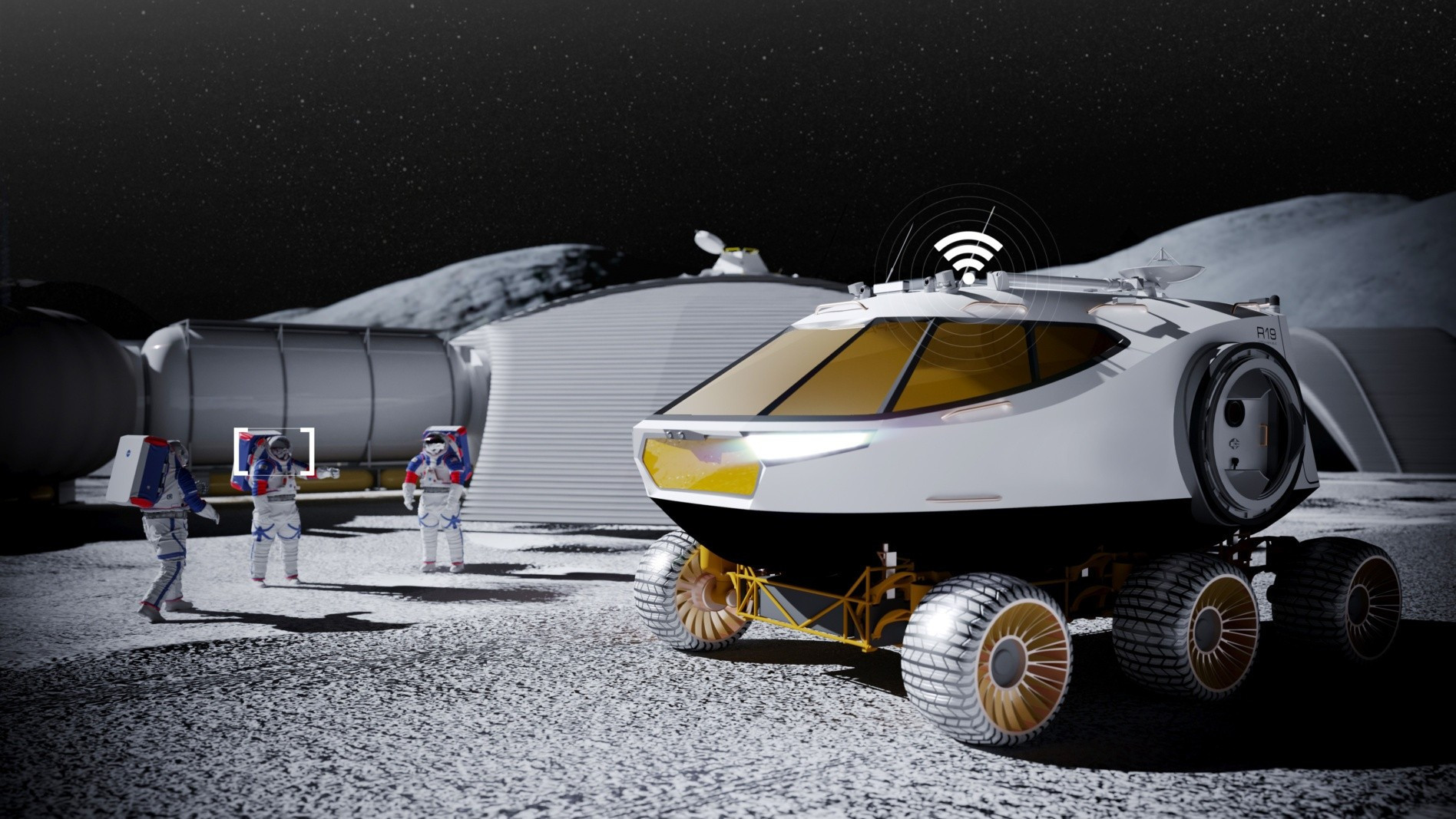
      Solstar Lands NASA Contract to Build Wi-Fi for Moon Missions
      Solstar Lands NASA Contract to Build Wi-Fi for Moon Missions
      Share
      Facebook Twitter LinkedIn Pinterest Email

      NASA has recently demonstrated a significant milestone in planetary robotics by allowing artificial intelligence to plan and execute driving maneuvers for its Perseverance Mars rover, overcoming the severe communication delays between Earth and Mars that have traditionally required human operators to chart the rover’s daily waypoints. In a controlled test conducted in late 2025 and reported in early 2026, Perseverance completed multiple AI-planned drives across the challenging terrain of Jezero Crater’s rim, marking the first time generative AI was used to autonomously analyze high-resolution imagery and terrain data to generate safe navigation routes without direct human intervention. The demonstration, led by engineers at NASA’s Jet Propulsion Laboratory and involving advanced vision-language AI models, covered hundreds of meters of Martian surface over two days and showed the potential for smarter, faster exploration without the need for lengthy delays in Earth-to-Mars communications. NASA officials see this as a stepping stone toward more autonomous exploration tools on future missions, including drones and other robotic assets that could extend scientific reach and capabilities on Mars and other worlds.

      Sources

      https://www.jpl.nasa.gov/news/nasas-perseverance-rover-completes-first-ai-planned-drive-on-mars
      https://www.universetoday.com/articles/nasa-let-ai-drive-the-perseverance-rover-for-two-days
      https://www.semafor.com/article/02/16/2026/nasa-trials-ai-powered-driving-of-mars-rover

      Key Takeaways

      • NASA’s use of generative AI to autonomously plan and execute driving routes for Perseverance marks the first time such technology has been applied in real mission operations on another planet, reducing reliance on human planners.
      • The demonstration showed autonomous AI planning over challenging Martian terrain, with the rover traveling distances that highlight its capability to operate safely and effectively despite signal delays from Earth.
      • This advancement is part of broader efforts to equip future Mars missions with smarter, faster robotic systems that can explore complex environments with greater autonomy.

      In-Depth

      NASA’s Perseverance Mars rover has taken a major step forward toward robotic autonomy with the successful demonstration of AI-planned driving on the surface of Mars. Traditionally, scoring safe routes for planetary rovers has been a painstaking process conducted by human operators on Earth, who analyze images and terrain data to plot waypoint-to-waypoint paths for each Martian day’s activities. But the vast distance between Earth and Mars means that even light signals take up to about 24 minutes one way, creating nearly a 48-minute delay for a round trip. That lag makes remote “joy-stick” control impossible and has limited how quickly or efficiently rovers can navigate complex, rocky terrain.

      In late 2025, engineers at NASA’s Jet Propulsion Laboratory (JPL) changed course by incorporating advanced artificial intelligence directly into Perseverance’s navigation workflow. Using generative AI — a vision-language model designed to understand and interpret high-resolution imagery — operators fed the system imagery captured by the rover’s navigation cameras and orbital data from Mars Reconnaissance Orbiter. The AI then processed that information to identify hazards such as boulders, sand ripples, and steep slopes, and to plot waypoints that led the rover across the rugged rim of Jezero Crater.

      The rover executed these AI-generated plans on two occasions in early December 2025, traversing several hundred meters autonomously over both days. These drives were completed without the usual real-time human waypoint input, proving that machine learning systems can take on a task that has historically been one of the most challenging and labor-intensive parts of Martian surface operations. According to NASA officials, this achievement shows that autonomous navigation has matured to the point where it can safely extend human capacity in mission operations rather than simply automate routine tasks.

      With autonomy now proven for basic traversal, NASA is looking to build upon this foundation in future missions. Engineers are already considering how similar AI techniques could be applied to drone swarms, rover scouting vehicles, or other robotic explorers that could benefit from real-time decision-making on distant worlds. Autonomous navigation will be especially valuable as human missions to Mars and deep-space exploration efforts intensify, where reduced dependence on Earth-based control could increase efficiency and science returns. Beyond the technological leap, this first successful deployment of AI-driven navigation highlights a broader shift in space exploration philosophy: empowering spacecraft to understand and respond to their environments with greater independence, ultimately enabling richer and more far-reaching investigations of our solar system.

      Robotics
      Share. Facebook Twitter Pinterest LinkedIn Tumblr Email
      Previous ArticlePalantir’s Role in Deepening Pentagon-Anthropic AI Dispute Over Military Use
      Next Article David Greene Sues Google, Alleges AI Voice Theft in NotebookLM Tool

      Related Posts

      Artemis II Splashdown Signals A Step Closer to Mass Space Travel

      April 12, 2026

      Anthropic Code Leak Raises Questions About AI Security and Industry Oversight

      April 8, 2026

      The Rise Of Agentic AI Signals A Shift From Tools To Autonomous Digital Actors

      April 8, 2026

      AI Chatbots Draw Scrutiny As Teens Engage In Intimate Roleplay And Emotional Dependency

      April 8, 2026
      Add A Comment
      Leave A Reply Cancel Reply

      Editors Picks

      NASA Astronauts Use iPhones to Capture Historic Artemis II Mission Images

      April 8, 2026

      OpenAI Expands Influence With Strategic TBPN Media Acquisition

      April 8, 2026

      Cybersecurity Veteran Turns Focus To Drone Hacking After Decades Battling Malware

      April 6, 2026

      Anonymous Social App Surges In Saudi Arabia, Testing Limits Of Digital Freedom

      April 6, 2026
      Popular Topics
      Series A Tim Cook Startup Taiwan Tech Ransomware Sundar Pichai Tesla Cybertruck Sam Altman Satya Nadella Viral SpaceX spotlight Samsung UAE Tech Quantum computing Robotics trending Software Tesla Series B
      Major Tech Companies
      • Apple News
      • Google News
      • Meta News
      • Microsoft News
      • Amazon News
      • Samsung News
      • Nvidia News
      • OpenAI News
      • Tesla News
      • AMD News
      • Anthropic News
      • Elbit News
      AI & Emerging Tech
      • AI Regulation News
      • AI Safety News
      • AI Adoption
      • Quantum Computing News
      • Robotics News
      Key People
      • Sam Altman News
      • Jensen Huang News
      • Elon Musk News
      • Mark Zuckerberg News
      • Sundar Pichai News
      • Tim Cook News
      • Satya Nadella News
      • Mustafa Suleyman News
      Global Tech & Policy
      • Israel Tech News
      • India Tech News
      • Taiwan Tech News
      • UAE Tech News
      Startups & Emerging Tech
      • Series A News
      • Series B News
      • Startup News
      Tallwire
      Facebook X (Twitter) LinkedIn Threads Instagram RSS
      • Tech
      • Entertainment
      • Business
      • Government
      • Academia
      • Transportation
      • Legal
      • Press Kit
      © 2026 Tallwire. Optimized by ARMOUR Digital Marketing Agency.

      Type above and press Enter to search. Press Esc to cancel.