

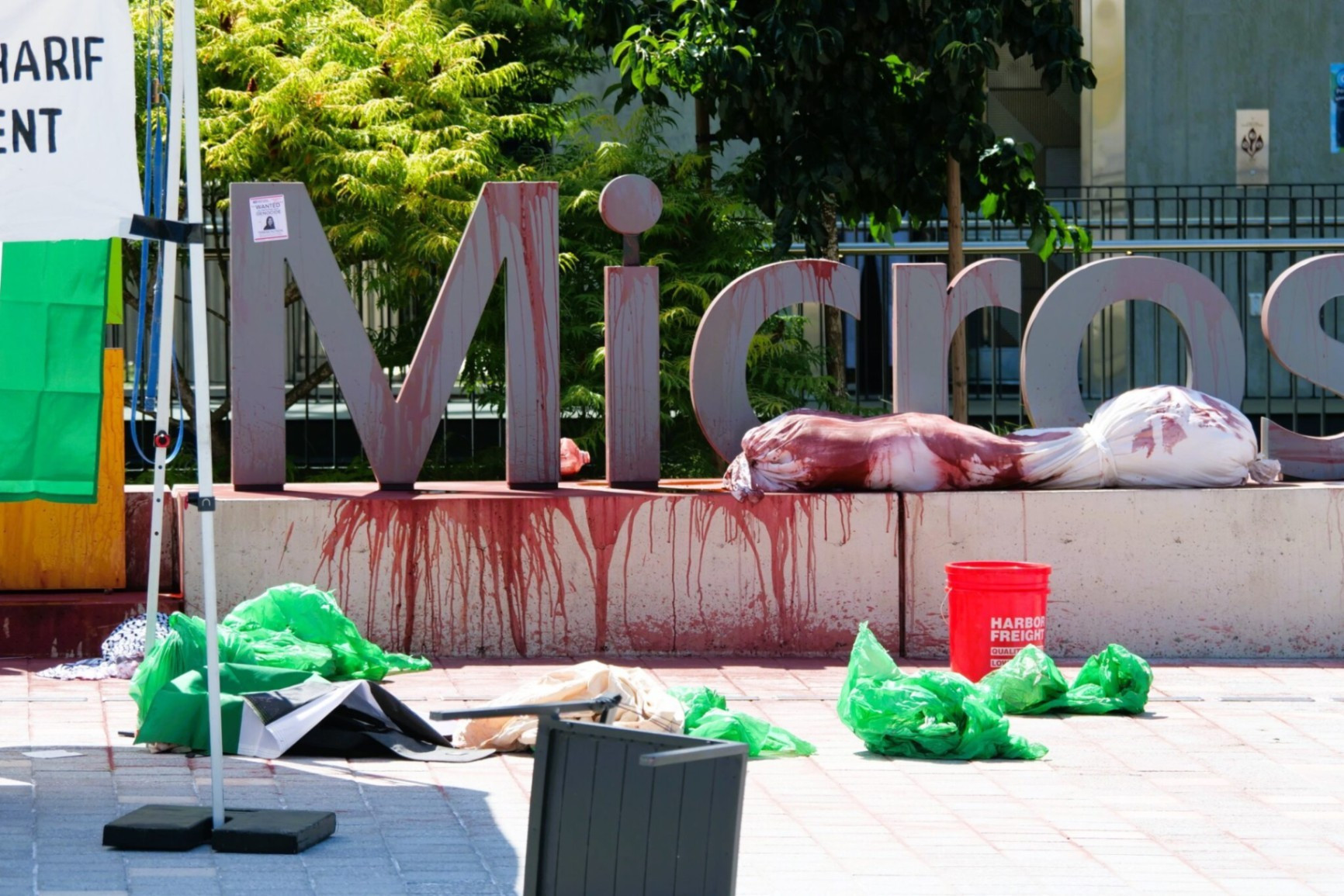
At Microsoft‘s Redmond campus, worker-led protests organized by “No Azure for Apartheid” resulted in 18 arrests after demonstrators splashed red paint on Microsoft signage, formed barricades with furniture, and occupied parts of the plaza to denounce the company’s Azure contracts with the Israeli military amid its conflict in Gaza. The protesters claim the technology is used to surveil and target Palestinians, spurring Microsoft to commission an “urgent” independent review led by law firm Covington & Burling—echoing a February Associated Press probe that linked Azure and AI services to Israeli military surveillance and targeting systems, though an earlier internal review reportedly found no misuse. The events reflect growing tensions between corporate responsibility, employee activism, and international conflict.
Sources: AP News, The Verge, The Guardian
Key Takeaways
– Protesters allege Azure tech enables surveillance and targeting of Palestinians; Microsoft is conducting a second, independent review.
– Demonstrators—including current and former Microsoft staff—resorted to dramatic tactics like paint splattering, barricades, and plaza occupation.
– This is part of a sustained wave of internal activism challenging how big tech intersects with geopolitical and ethical dilemmas.
In-Depth
At the tech giant’s sprawling Redmond campus, tensions boiled over this week as employee-led protests took a dramatic turn. The group “No Azure for Apartheid” drove a graphic message home: red paint splattered across Microsoft’s own sign, barricades built from vendor furniture, and an occupied plaza dubbed a “Liberated Zone.” Their target? Microsoft’s use of its Azure cloud and AI technologies in support of Israel’s military operations in Gaza—a claim tied to investigative reports suggesting the platform enabled surveillance, translation, and targeting capabilities. The company, in turn, promised an “urgent” independent review by Covington & Burling, following an earlier, undisclosed internal probe that denied evidence of misuse.
From a moderate-conservative vantage point, there’s a clear and multifaceted tension here. On one hand, Microsoft must safeguard its reputation, legal standing, and fidelity to human-rights norms. On the other, these protests underline a growing willingness among employees to hold their employers accountable for global implications—especially where advanced tech blurs the line between civilian infrastructure and military use.
Microsoft’s move to commission a high-caliber law firm signals it takes the allegations seriously and values due process. Yet the protesters, emboldened by moral urgency, have shown they’re ready to escalate to make their voices heard. In the end, both sides share a common goal—doing what’s right—but they interpret it differently. Balancing corporate responsibility, international relations, and the free expression of employees will be Microsoft’s delicate challenge moving forward.