

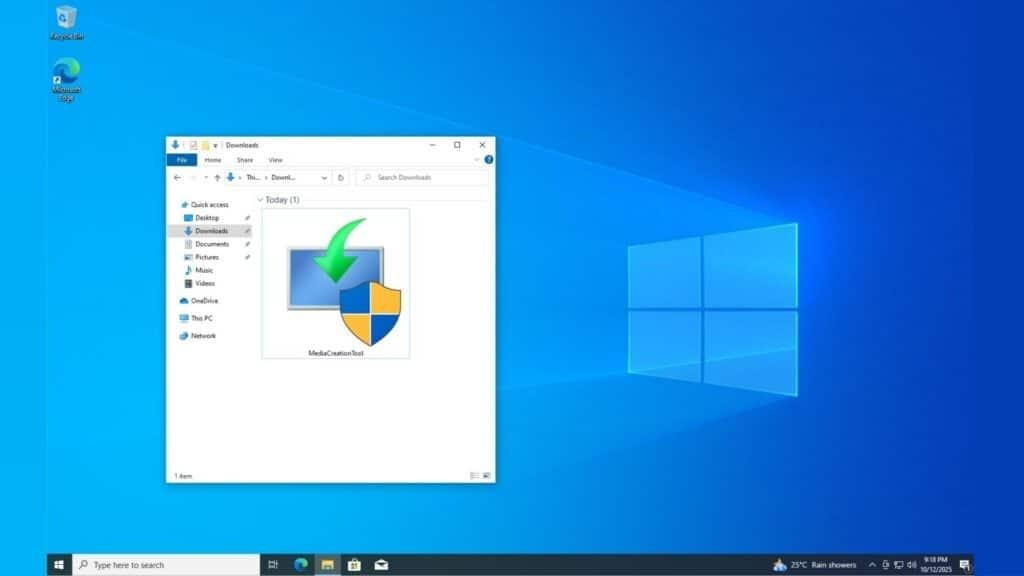
Microsoft has admitted that the latest Windows 11 Media Creation Tool (version 26100.6584, released September 29, 2025) “might not work as expected” when used on Windows 10 22H2 systems — in practice, many users report the utility crashes silently or fails to launch. The admission comes just a day before Microsoft ends mainstream support for Windows 10 on October 14, placing stranded users who waited until the last minute at a serious disadvantage. Microsoft suggests that affected users download the Windows 11 ISO directly from its site as a workaround and promises a future update to repair the broken tool. Meanwhile, coverage across tech outlets underscores the irony and frustration of breaking a key upgrade path just as time is running out.
Sources: Tom’s Hardware, XDA Developers
Key Takeaways
– The broken Media Creation Tool undermines Microsoft’s own push for Windows 10 users to migrate to Windows 11 before end-of-life support drops.
– Microsoft officially acknowledges the bug and offers a temporary workaround (direct ISO download), but no fix timeline is given.
– The timing amplifies user frustration and reinforces criticisms of Microsoft’s heavy-handed upgrade policies and hardware requirements.
In-Depth
Microsoft’s admission that its Windows 11 Media Creation Tool is malfunctioning on Windows 10 PCs couldn’t come at a more awkward moment. On the eve of Windows 10’s cutoff for mainstream support (October 14, 2025), many users still hanging onto the older OS hoped to use that tool to leap into Windows 11—with clean installs, fresh setups, or recovery options in mind. Instead, the tool crashes silently or refuses to run for users on 22H2.
The issue is rooted in the recently released version 26100.6584 of the Media Creation Tool. Microsoft’s status page now flags it as a known issue, noting that the utility “might not work as expected,” offering only that “we are working on a resolution” in a future update. In practice, that vagueness leaves users in limbo. Microsoft’s suggested workaround is to bypass the broken tool entirely and download the Windows 11 ISO directly from Microsoft’s download page for x64 devices. But that workaround assumes users have the technical comfort and bandwidth to handle ISO-based installs, which not everyone does.
Tech outlets have called out the irony and unfortunate timing. Tom’s Hardware describes it as “Microsoft breaks Media Creation Tool on the eve of Windows 10 end-of-life,” highlighting that the tool will “close unexpectedly, displaying no error message.” Windows Latest tested the issue and found that the executable simply disappears after launch, confirming user reports and Microsoft’s own alert. XDA Developers reinforced the broader coverage, noting that the tool failure affects what many saw as the default upgrade path.
More than just a technical hiccup, this represents a symbolic failure for Microsoft. For months, the company has nudged, prodded, and nagged Windows 10 users to prepare for the transition. Pop-ups, banner alerts, and compatibility checks have laid the groundwork. Yet now, the tool most users would naturally turn to is faulty. It raises legitimate suspicion: did Microsoft thoroughly vet this update? Was the broken functionality flagged internally? Or did the timing of the rollout slip into a dangerous zone so close to Windows 10’s sunset?
From a user’s perspective, the broken tool is more than an inconvenience — it’s a barrier. Those who delayed migration now face convoluted installs, reliance on third-party tools like Rufus, or more manual intervention. It’s a blow to user confidence and further fuels criticisms that Microsoft’s hardware requirements and forced cloud-account moves are creating unnecessary friction.
It’s not all doom and gloom. The ISO workaround does let competent users proceed, and Microsoft’s promise to fix the issue leaves hope. But with the clock running down, that fix may come too late for many. And the stain on Microsoft’s reputation will linger — their attempt to shepherd users into the future has, in the final hours, fumbled the pass.