

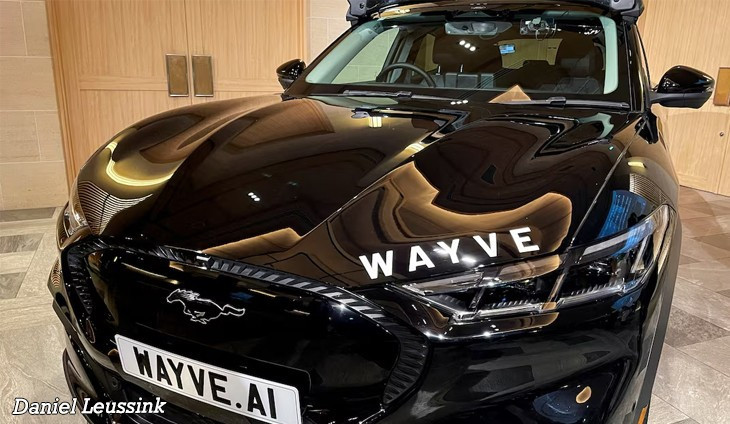
Nvidia has entered into a letter of intent to potentially make a $500 million strategic investment in Wayve, a London-based autonomous driving startup, as part of Wayve’s next funding round. Wayve, founded in 2017, has so far raised over $1 billion, including from SoftBank and Microsoft, and is known for its “camera-only” or vision-based AI driving model that avoids reliance on detailed pre-mapped high-definition maps. The proposed investment is also part of Nvidia’s broader push into the UK AI startup ecosystem, tied to a £2 billion (roughly $2.6–2.7B) commitment aimed at boosting AI innovation.
Sources: Bloomberg, Wayve, TechCrunch
Key Takeaways
– The partnership would deepen Wayve’s ability to scale up its autonomous driving technology globally, especially given its recent testing expansions into markets such as Germany, Japan, and the U.S.
– Wayve’s learning-based, vision-first, map-light approach continues to distinguish it from other players who rely more heavily on sensor suites or detailed mapping, possibly offering lower costs or faster adaptability.
– Nvidia’s investment is not just financial but strategic: it aligns with its hardware-software stack ambitions (e.g. AI chips, vehicle compute platforms), and leverages UK-US tech cooperation to strengthen its position in autonomous mobility.
In-Depth
Wayve’s approach to self-driving has always emphasized adaptability: instead of relying on rigid maps or heavy LIDAR/sensor infrastructures, its AI learns from camera feeds and real-world driving behavior. That makes its model more flexible but also poses harder challenges for safety, reliability, and generalization across diverse road conditions.
Over the past year, Wayve has expanded operations and testing across Germany, Japan, and the U.S., sharpening its machine learning models with more varied data. Nvidia’s possible $500 million investment, formalized via a letter of intent, could give Wayve the capital needed to accelerate development and deployment, scale its infrastructure (data collection, simulation, training), and bring its systems closer to production-level applications. This is part of a larger backdrop in which Nvidia is pushing into the autonomous vehicle space not simply by selling chips, but by embedding itself into the software, AI-driving stacks, and AI foundation models that power such systems.
For Nvidia, the upside lies both in furthering its hardware business (chips in vehicles, data center and cloud compute) and in reinforcing a broader strategy to be a backbone for AI-enabled transport solutions. For the UK, Nvidia’s £2B AI commitment (of which this Wayve deal is an element) signals strong international interest in its AI startup scene, which has been a point of policy focus. But this deal, like many in autonomous driving, comes with hurdles: regulatory approvals, real-world edge cases, ensuring safety, managing costs, and proving business models (whether via robotaxis, automaker partnerships, or advanced driver assistance systems).
If Wayve can execute on scaling its vision-based AI safely and building automotive or mobility partnerships, this investment could be pivotal, potentially accelerating its march toward broader deployment of autonomous capabilities.