

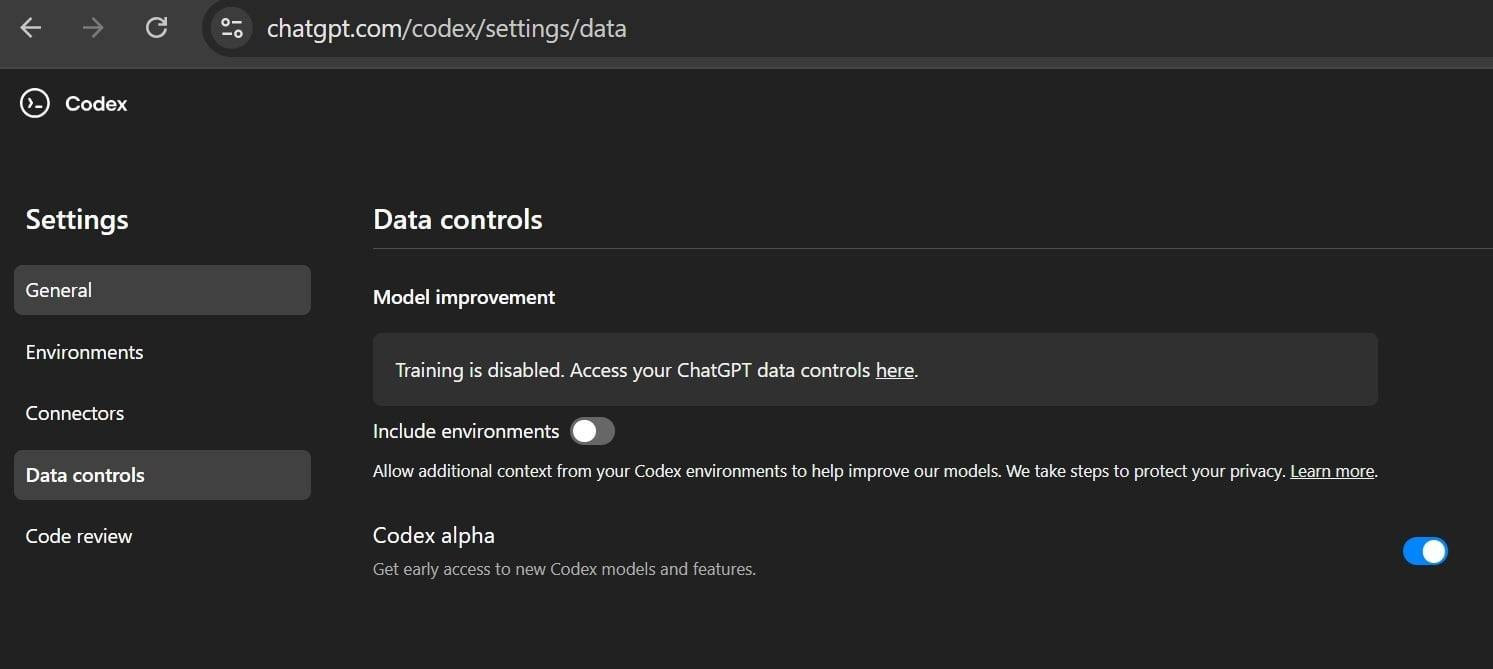
OpenAI has quietly launched a “Codex Alpha” opt-in program that allows developers to test out early versions of enhanced code-generation models based on GPT-5, including multiple tiers like “gpt-5-codex low/medium/high” and “gpt-5 minimal/low/medium/high.” The rollout precedes OpenAI’s DevDay 2025, where more public announcements about Codex and related tools are expected. The Alpha program is meant as a bridge between current public Codex offerings and future enhancements, giving early adopters a chance to experiment with finer control, deeper reasoning, and faster code generation ahead of full general availability. The official OpenAI blog later confirmed that Codex is now generally available, and that new integrations (Slack, SDKs, admin tools) and performance improvements are part of the broader push to make Codex more useful in production settings.
Sources: Bleeping Computer, OpenAI
Key Takeaways
– Codex Alpha lets developers opt into early versions of GPT-5-based models for coding (with multiple tiers of performance/complexity), ahead of broader release.
– The general availability of Codex now includes new integrations (Slack, SDKs, admin features) and deeper deployment options for teams.
– The Alpha program signals OpenAI’s iterative, feedback-driven approach: test with power users first, then expand to mainstream adoption.
In-Depth
OpenAI’s new Codex Alpha program represents a deliberate step in incrementally releasing their more advanced coding models. Rather than launching all features broadly at once, the Alpha approach allows early adopters—developers, power users, testers—to experiment with and stress-test models that aren’t yet stable enough for full public deployment. Through this opt-in offering, users can try out multiple tiers of GPT-5 and GPT-5-Codex variants labeled as “low,” “medium,” “high,” or “minimal,” each tuned for different trade-offs between reasoning depth, latency, and resource usage. The idea is that as these early versions mature, OpenAI can collect feedback, measure usability, and refine safeguards before rolling them out to a wider audience.
This step comes in tandem with OpenAI’s official announcement that Codex is now generally available in production settings, with support for Slack integration, a dedicated SDK, and administrative tools for teams to monitor usage, set defaults, and manage environments. These features speak to OpenAI’s intention to make Codex not just a research toy, but a tool that development teams can rely on in real workflows. The general-availability release is also a bridge from the research preview and earlier CLI + web integrations to a fully supported version for business, education, and organizational use.
Strategically, the Alpha program also reduces potential risk. By limiting access early, OpenAI can watch for misuse, debug edge cases, and calibrate safety and alignment mechanisms before unleashing a more powerful model broadly. For developers, this offers a chance to shape future behavior, get ahead of integration challenges, and help define best practices in adopting advanced generative coding tools.
In short, Codex Alpha is a controlled preview stage: not yet the final polished version, but a stepping stone toward a future in which AI agents assist developers deeper in the workflow. That future looks closer now than it did just months ago.