

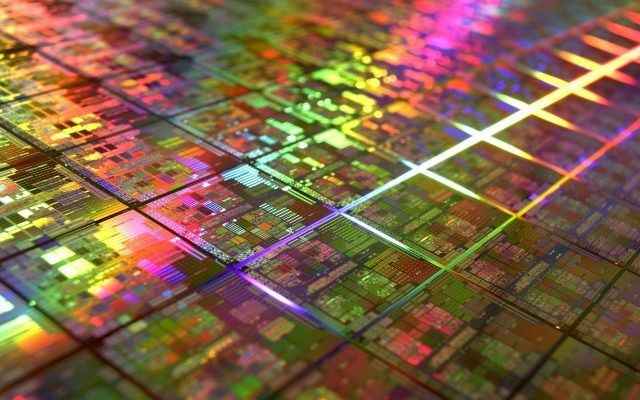
Sandia National Laboratories, through its MESA facility, is stepping up to help the U.S. regain global leadership in semiconductor technology by joining the National Semiconductor Technology Center under the CHIPS and Science Act. Amid the U.S.’s slide from producing over 35% of the world’s chips in the 1990s to just 12% today, Sandia is leveraging advanced chiplet designs and quantum-ready processors to drive innovation in AI, quantum computing, and national-security applications. Notably, as part of more than $12 billion in planned R&D investment under CHIPS—including a $3 billion push for chiplet packaging ecosystems—Sandia is positioning chiplets to function like large monolithic chips but with lower energy needs and faster communication. This effort is a timely and strategic step in ensuring U.S. competitiveness in next-generation microsystems.
Sources: Sandia.gov, SciTech Daily
Key Takeaways
– Sandia’s membership in the National Semiconductor Technology Center marks the first time a national lab has joined that effort to revamp U.S. semiconductor production.
– The CHIPS Act backs a substantial R&D budget—over $12 billion—with $3 billion earmarked for building the chiplet packaging ecosystem.
– Chiplets offer a practical path forward: they allow modular scalability, high-speed low-energy communication, and faster deployment compared to traditional monolithic chips.
In-Depth
Sandia National Laboratories is quietly laying the groundwork for a smart resurgence in American semiconductor leadership—and it’s a move worth backing. After decades of slipping behind in chip production—from roughly 35% global share in the 1990s to just 12% today—the U.S. needs innovation that delivers results. That’s exactly what Sandia brings by joining the National Semiconductor Technology Center, established under the CHIPS and Science Act. With more than $12 billion in planned research and development, including a $3 billion push to grow a chiplet packaging ecosystem, the initiative is timely and strategically significant.
Chiplets—small, independently fabricated components designed to act together like a more complex chip—are a pragmatic way to scale manufacturing, improve energy efficiency, and accelerate deployment. Rather than wait years for a massive, monolithic chip to be proven, we can iterate rapidly with modular components that talk to each other at high speed and low power. Sandia’s MESA facility, with its cleanrooms and acousto-optic wafer expertise, adds credible national-lab muscle to this effort—melding academic rigor, government support, and industry partnerships.
In a world where chips power everything from AI and smartphones to self-driving cars and quantum systems, this approach reinforces U.S. security and competitiveness. It’s an investment in agility that complements ambition—and it’s exactly the kind of public-private synergy that can help our nation build smarter, faster, and more reliably in the years ahead.