

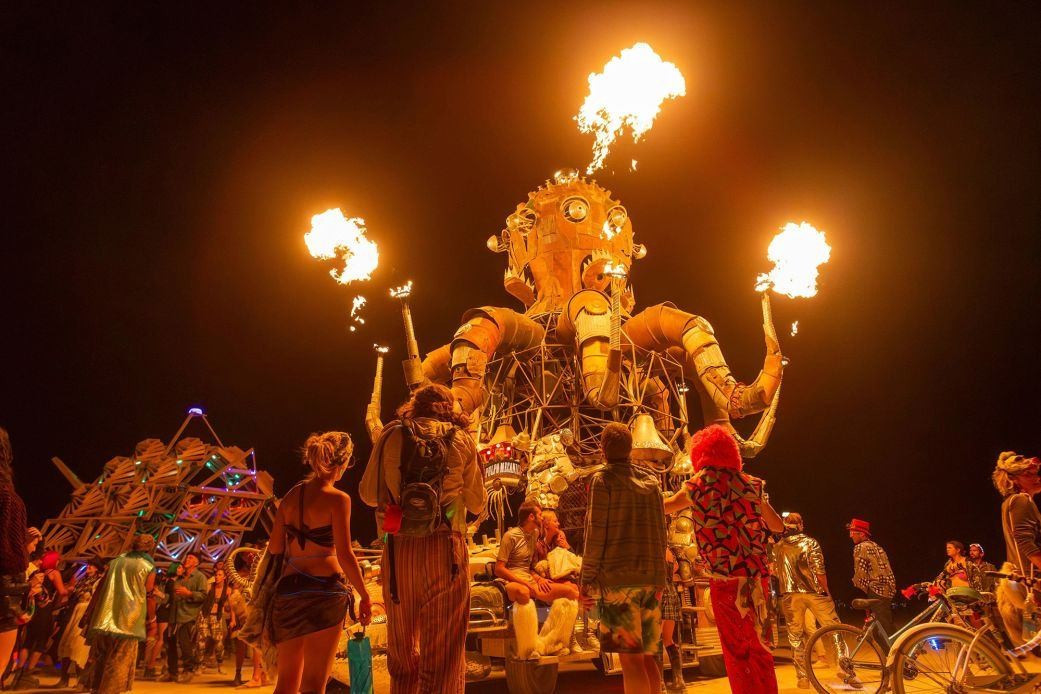
Elon Musk‘s Starlink satellite internet is stirring controversy at Burning Man, a festival once defined by radical self‑reliance and digital disconnection, now increasingly punctured by high‑speed connectivity. At the iForgot camp, longtime attendee and photographer Kevin LeVezu offers Wi‑Fi—but not for free—requiring attendees to trade something quirky like a shot of whiskey or even a playful spanking to get online. While cell reception and even 4G LTE were already making inroads years ago, the arrival of Starlink reinforces concerns that attendees are gathering not to disconnect but to scroll—reflecting how elements of Silicon Valley have transformed the festival into a luxury micro‑economy, eroding its original principles.
Sources: Gizmodo, Wall Street Journal
Key Takeaways
– Connectivity as Currency: Technology like Starlink is now so ingrained at Burning Man that Wi‑Fi access is being literally bartered for—blurring the line between digital culture and the event’s playful traditions.
– Erosion of “Playa Principles”: The surge of online access directly conflicts with the festival’s identity of immediacy and radical self‑reliance, prompting debate about whether the true spirit of Burning Man is being sold off to convenience.
– Silicon Valley’s Shadow: The presence of Starlink, along with luxury “plug‑and‑play” camps, underscores how Silicon Valley’s influence continues to reshape the festival—from a rugged, handmade experience to one increasingly touched by wealth, technology, and spectacle.
In-Depth
Burning Man has long stood as an icon of experiential freedom—no commerce, no expectations, and a rare retreat from the digital overwhelm of modern life. But this year, Elon Musk’s Starlink satellite internet is changing that narrative, raising eyebrows across the playa.
At the iForgot camp—run by veteran photographer Kevin LeVezu—a Starlink terminal offers Wi‑Fi access with a twist: to log on, attendees must first submit to a playful “sacrifice,” such as downing a shot of whiskey or enduring a lighthearted spanking. This humorous trade adds spectacle, but also underscores a serious shift.
Connectivity at Burning Man is not new—cell service and even 4G hubs have crept into the desert in recent years, with reports as early as 2018 of FaceTime sessions during final ceremonies and people playing Pokémon Go instead of fully immersing themselves.
Starlink, however, represents the most far‑reaching intrusion yet, enabling attendees to call into work, manage businesses remotely, and stay constantly plugged in—behavior once shunned in favor of presence and spontaneous expression. One festivalgoer, reportedly, spent five hours daily tethered to his remote business via the iForgot camp’s connection.
The broader irony is notable: Burning Man’s founding principles—immediacy, radical self-reliance, decommodification—are now in tension with Silicon Valley’s penchant for disruption and convenience. The introduction of Starlink isn’t just about faster download speeds; it symbolizes how technology and affluence, once external to the festival’s ethos, now shape it. With luxury camps, SEO-friendly snaps, and digital paywalls, some longtime “burners” worry that the event’s soul is being traded for spectacle. Yet others argue that in today’s world, staying connected is a practical necessity—whether for emergencies, work obligations, or just staying tethered to home. Balancing that need against the festival’s spirited traditions remains a delicate act.