

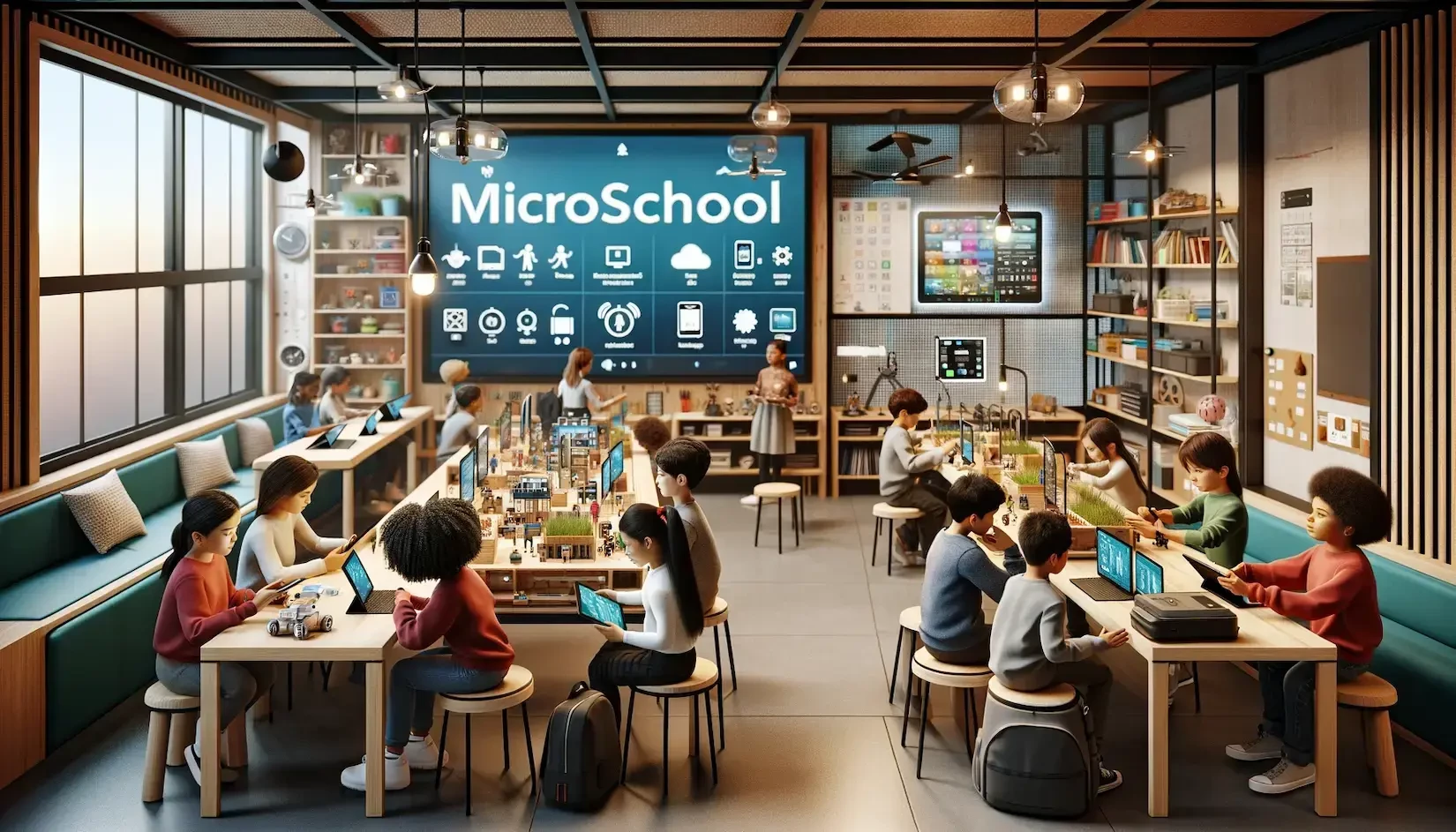
Silicon Valley heavyweights like Elon Musk, Larry Ellison, Marc Andreessen, and Peter Thiel are increasingly turning to microschools—small, often for‑profit institutions outside traditional public school regulations—as personalized alternatives for educating their children and advancing STEM learning. These microschools, offering flexible, accelerated curricula—from middle‑school nuclear chemistry to AI and engineering projects—reflect a technocratic, choice‑driven vision of education aligned with libertarian ideals and edtech innovation. However, critics warn the shift risks widening educational inequity by diverting attention and resources from public schools, even as the microschool market continues to grow amid voucher policies and the AI revolution.
Sources: Wired, Wikipedia, Kahn Lab School
Key Takeaways
– Elite‑driven innovation: Tech leaders are spearheading the microschool movement to offer customized, advanced curricula unconstrained by public education norms.
– Rising popularity amid regulation relief: Growth in microschools is backed by regulatory gaps, educational choice policies, and parental demand for alternatives—especially since the pandemic.
– Equity concerns: As wealthier families flock to microschools, there’s growing concern that public schools may face reduced support and funding, deepening divides in educational access.
In-Depth
In the world of Silicon Valley’s movers and shakers, the notion of “one‑size‑fits‑all” schooling just doesn’t cut it anymore. Big names in tech—Elon Musk, Larry Ellison, Marc Andreessen, Peter Thiel, and cohorts—have embraced microschools as bespoke educational sanctuaries that promote autonomy, STEM excellence, and early intellectual daring. Musk’s own Ad Astra program famously taught middle schoolers nuclear chemistry and encouraged engineering exploration in the confines of his Bel Air estate, setting a model of personalized, accelerated learning that others soon followed.
This trend aligns well with a broader shift: microschools capitalizing on loose regulation and funding mechanisms like education savings accounts have proliferated, offering alternatives that blend homeschooling flexibility with structured instruction. The result is a landscape in which a caring teacher can deliver deeply tailored education in homes, communal spaces, or small classrooms—often at lower overhead than traditional schools.
Proponents argue these microschools catalyze innovation and cater to student potential more adeptly than monolithic public systems. But there’s another side to the coin. Critics warn that as affluent families secure bespoke education for their own, public schools may experience further erosion in resources and equity. The escalation of voucher programs and edtech investment in private models poses real risks to universal public education access. It raises fundamental questions: Should education remain a public good, or become ever more tailored to those who can afford—and fund—it? In either case, the educational landscape in America is decidedly shifting, with tech billionaires quietly rewriting the rules.