

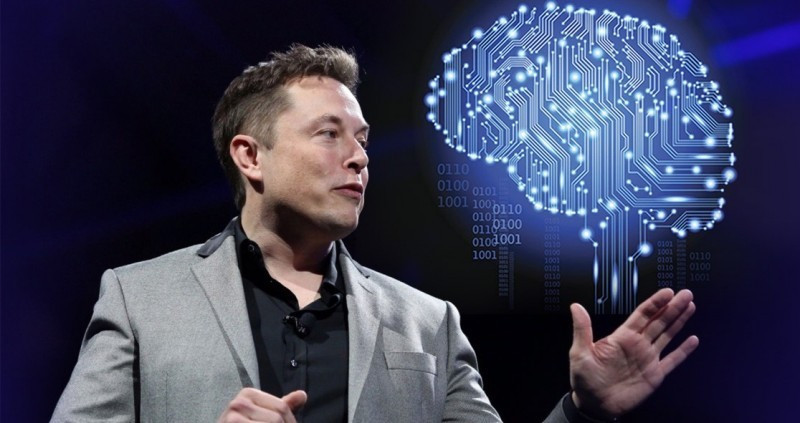
Eighteen months after undergoing a brain-computer interface implant from Neuralink, Noland Arbaugh, who was paralyzed from the shoulders down by a spinal injury, reports that the chip has allowed him to regain meaningful agency: he now uses thoughts to browse the web, play video games, adjust smart home devices, and control a computer cursor. The experiment, while still early and imperfect, has brought him renewed purpose—he’s diving into neuroscience studies and speaking publicly about the intersection of human determination and cutting-edge tech. At the same time, the journey hasn’t been free of personal and technical challenges, from media scrutiny to the hardware’s limitations. Meanwhile, Neuralink is pushing forward: they plan to launch trials aimed at translating speech (thought-to-text) later in 2025, have expanded implantations to multiple patients, and are testing upgraded functionality in growing human tests.
Sources: Valley Vanguard Online, CBS News
Key Takeaways
– The Neuralink implant has given Arbaugh a tangible sense of independence, enabling him to perform digital tasks using only his mind—even if it’s still experimental and limited.
– Neuralink is scaling up: new patients have been implanted, enhancements are being tested, and a speech-decoding trial is slated to begin, positioning the technology closer to assisting broader neurological conditions.
– Despite the promise, the journey is rocky: physical reliability, public perception, device longevity, and safety remain unresolved variables as this bridge between brain and machine is still under construction.
In-Depth
Noland Arbaugh’s story reminds us that what once belonged in sci-fi is inching into lived reality. After his accident in 2016, Arbaugh was left paralyzed from the neck down. In January 2024, he became the first person to receive Neuralink’s experimental brain chip—an array of ultra-fine threads implanted in his motor cortex to decode neural signals and convert them into computer commands. The promise was bold: reclaim some digital autonomy when physical movement is gone.
Initially, the implant allowed him to control a cursor, surf the web, play video games, and manipulate smart devices—actions he once thought out of reach. Over time, he’s leaned into that regained autonomy, studying neuroscience, speaking publicly about the technology, and reflecting on what it means to weave human will with high tech. The device is wireless and compact; it needs periodic charging, but compared to years of helplessness, Arbaugh sees the tradeoff as worth it. The journey hasn’t been smooth. At times, threads shifted, signals weakened, and device calibration required updates. Arbaugh has acknowledged fears about device failure or retraction of the implant, but so far, improvements and recalibrations have restored function.
Beyond his personal narrative, Neuralink is moving aggressively. The company has expanded its human implant count to multiple patients and reportedly plans to carry out a new clinical trial focused on speech decoding—having thoughts translated into text—set to begin in October 2025 in the U.S. The FDA has granted the device “Breakthrough Device” designation for speech, accelerating review. Reuters reports that as of September 2025, at least 12 people worldwide have received Neuralink implants, logging more than 15,000 hours of use. On the regulatory front, the company’s journey hasn’t been linear: earlier safety concerns led to an FDA rejection in 2022, but further data and improvements paved the way for approved trials by 2024.
Yet this experiment raises philosophical and engineering questions. What’s the acceptable balance between autonomy and risk when implanting hardware into the brain? How do we guarantee longevity and upgradeability? And how will public opinion evolve when a device blurs boundaries between biological will and machine control? Arbaugh speaks openly: technology alone isn’t the hero—he emphasizes the partnership between innovation and human spirit. His experience is a proof of concept, a living data point, and a reminder that the march toward brain-machine symbiosis is messy, human, hopeful—and far from guaranteed.