

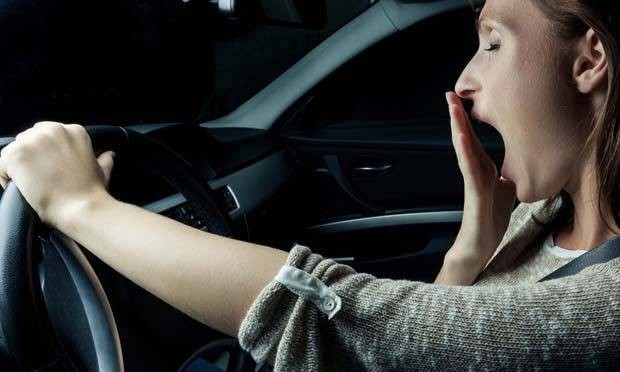
Tesla recently began pushing in-car messages that urge drivers to activate its Full Self-Driving (FSD) system when signs of fatigue or lane drift are detected — messaging like “Lane drift detected. Let FSD assist so you can stay focused” and “Drowsiness detected. Stay focused with FSD.” However, Tesla’s own documentation emphasizes that FSD remains a supervised system requiring constant driver attention, not a hands-off autonomous mode. Critics, including automated systems researchers and safety scientists, warn that prompting drowsy or inattentive users to rely more on automation may worsen safety by encouraging overreliance and eroding human vigilance. The shift in messaging emerges alongside recent updates (e.g. version 2025.32.3) that reportedly embed this functionality, as exposed by independent code researchers. This development comes amid heightened regulatory and legal scrutiny of Tesla’s driver-assist offerings — including past autonomous driving crashes, investigations by the NHTSA, and accusations that Tesla’s naming and marketing of FSD mislead consumers about its actual capabilities.
Sources: Wired, CleanTechnica
Key Takeaways
– Tesla’s new prompts shift from passive alerts to active recommendations that drowsy or inattentive drivers engage FSD, which may confuse users about the system’s oversight limits.
– Experts warn this kind of messaging can exacerbate the “out-of-the-loop” problem, where drivers monitor automation poorly and cannot reengage promptly in emergencies.
– Tesla’s FSD system remains under legal and regulatory pressure due to past crashes, accusations of misleading marketing, and investigations into whether its automation claims are safe and accurate.
In-Depth
Tesla’s recent decision to populate driver displays with messages encouraging activation of Full Self-Driving (FSD) when signs of drowsiness or lane drift are detected is shaking up the safety discourse around driver-assist systems. The spirit behind such prompts may be benign — helping a human driver who’s beginning to lose focus — but the execution raises serious concerns. Tesla’s own documentation still requires that FSD be treated as a supervised system, meaning the human behind the wheel must be ready to take over at any time. The new prompts feel like a tonal reversal: instead of saying “You should reengage,” the car now says, “Let me help.” That nuanced change can carry outsized consequences in the real world.
Behavioral studies in human-automation interaction underscore what’s at stake. When drivers are nudged to rely on automation during moments when they’re already compromised — fatigued, distracted, or drifting — the human element tends to disengage further. This “out-of-the-loop” phenomenon makes it harder to resume control in challenging situations. The paradox is that the very moments drivers need to be especially alert are when they’re most likely to lean on automation — making them less able to detect subtle hazards or intervene promptly.
Tesla introduced these prompts around version 2025.32.3 of its software, as reverse engineers discovered changes in code that shifted from passive alerts to active system suggestions. In practical terms, that means rather than just warning “Lane departure,” the car now encourages turning on FSD to manage drifting. While Tesla also uses in-car driver monitoring cameras and a “strike system” (which can restrict FSD use for inattentiveness), critics argue the new messaging undermines those safeguards by encouraging dependency.
Tesla is no stranger to scrutiny. The company faces ongoing investigations from the National Highway Traffic Safety Administration over crashes linked to FSD or Autopilot usage, including some occurring under reduced visibility. Tesla’s naming of its driver-assist technology has long been criticized as misleading — some argue that calling it “Full Self-Driving” suggests autonomy beyond what the system can safely deliver. Public records show a history of crashes involving Tesla’s active assistance systems and regulatory pressure to clarify the limits of the technology.
As Tesla pushes ahead with claims of autonomy and even robotaxi services, these messaging tweaks matter more than branding; they shape how drivers internalize the system’s boundaries. It’s a delicate balance: better driver support is welcome, but not when the prompts undermine human responsibility or foster dangerous overreliance. The debate now is whether Tesla’s approach errs too far toward advocacy for automation, especially when the technology is not yet infallible.