

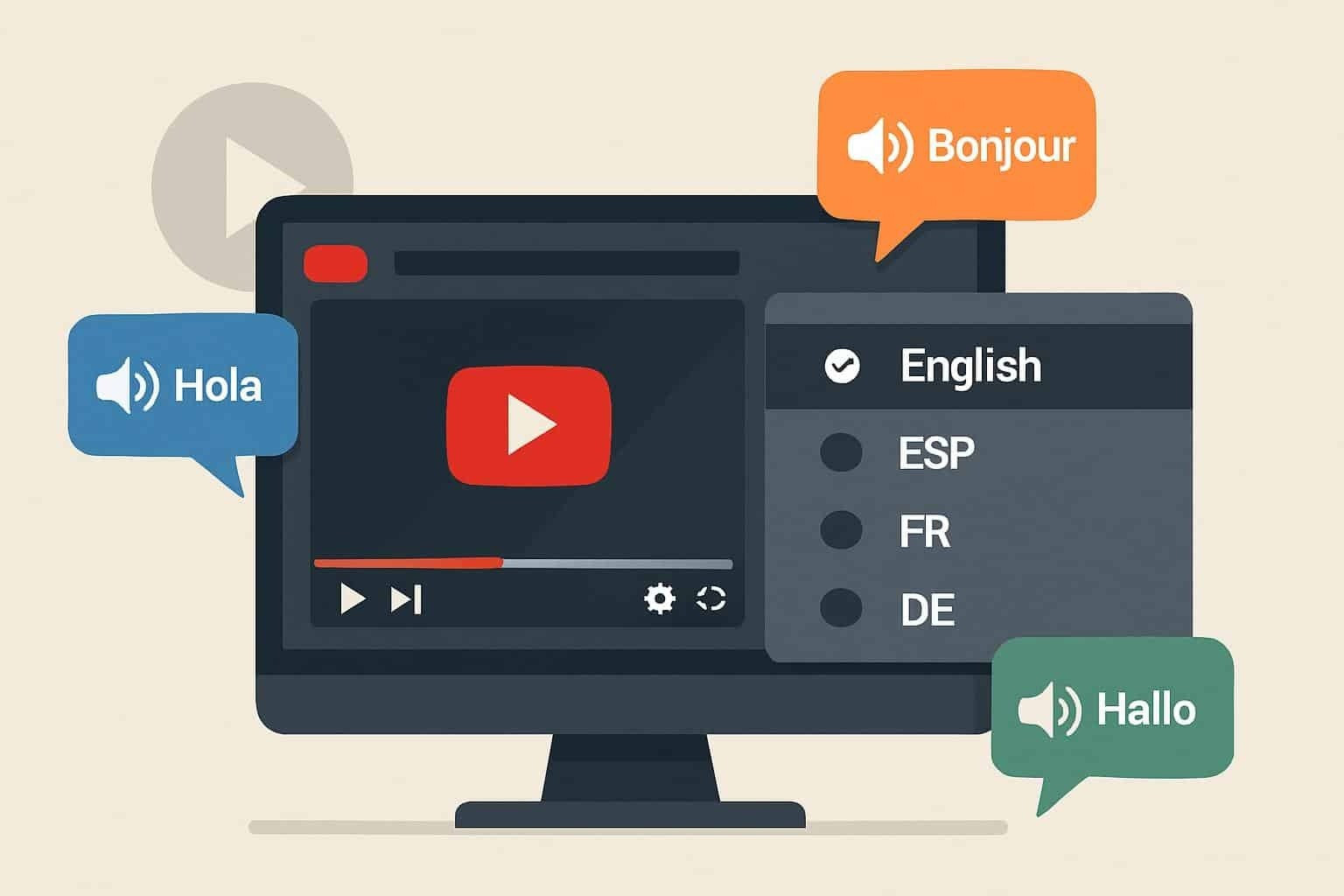
YouTube has officially rolled out its multi-language audio dubbing feature to all creators globally following a two-year pilot program. Originally tested in 2023 with high-profile creators like MrBeast, Mark Rober, and Jamie Oliver, the feature lets creators add dubbed audio tracks in multiple languages—including via Google‘s AI-powered Gemini system that attempts to replicate original tone and emotion. According to YouTube, content creators using this multi-language audio extension have on average seen over 25% of their watch time come from viewers using non-primary (i.e. dubbed) audio tracks. The platform is also piloting localized thumbnails that change text to match a viewer’s preferred language, aiming to further boost international reach and viewer engagement.
Sources: Social Media Today, TechCrunch, YouTube
Key Takeaways
– Creators who adopt multi-language audio tracks see a substantial boost in reach: over a quarter of watch time often comes from audiences using dubbed or non-primary language tracks.
– YouTube’s use of AI (specifically Gemini) is key to scaling the feature, enabling quicker audio dubbing (and matching tone/emotion) than relying solely on manual or third-party dubbing.
– Added localization features—such as multi-language thumbnails—complement the audio tracks, helping videos feel more native across cultures and potentially increasing click-through and engagement across different regions.
In-Depth
YouTube has taken a major step forward in breaking down language barriers by making its multi‐language audio dubbing feature available to all creators, after a two‐year pilot that showed strong results. What started as an experimental tool for a select group—creators such as MrBeast, Mark Rober, and Jamie Oliver—has matured into a platform-wide offering. Under the hood, the system uses Google’s Gemini AI to generate dubbed audio tracks that try to preserve the creator’s voice, tone, and emotion, letting non-primary language viewers enjoy content in their native tongues. The data is promising: creators using dubbed audio see more than 25% of their watch time coming from viewers choosing non-primary audio tracks. Some channels, notably Jamie Oliver’s, have reportedly tripled their viewership as a result.
Beyond audio, YouTube is also experimenting with localized thumbnails—images that display text in the viewer’s preferred language—making the first visual impression more accessible and relevant to international audiences. These changes lower the cost and complexity for creators who used to rely on third-party dubbing or running multiple channels for different languages. Now, a single video can host several audio tracks, reducing duplication and workload.
That said, the rollout doesn’t come without potential trade-offs. While AI dubbing speeds up localization and broadens reach, it still faces challenges around preserving nuance, accent, or cultural context—areas where human translation still shines. Creators will likely need to balance between automated tools and manual oversight to maintain quality. Also, audience preferences can vary: some viewers may prefer subtitles over dubbed audio, or may notice when automated voiceovers fall short.
Overall, this expansion by YouTube seems designed to empower creators large and small to reach global audiences more efficiently, make their content more inclusive, and tap into growth in non-English speaking markets. It’s a move that underlines the growing premium on localization in digital media.