

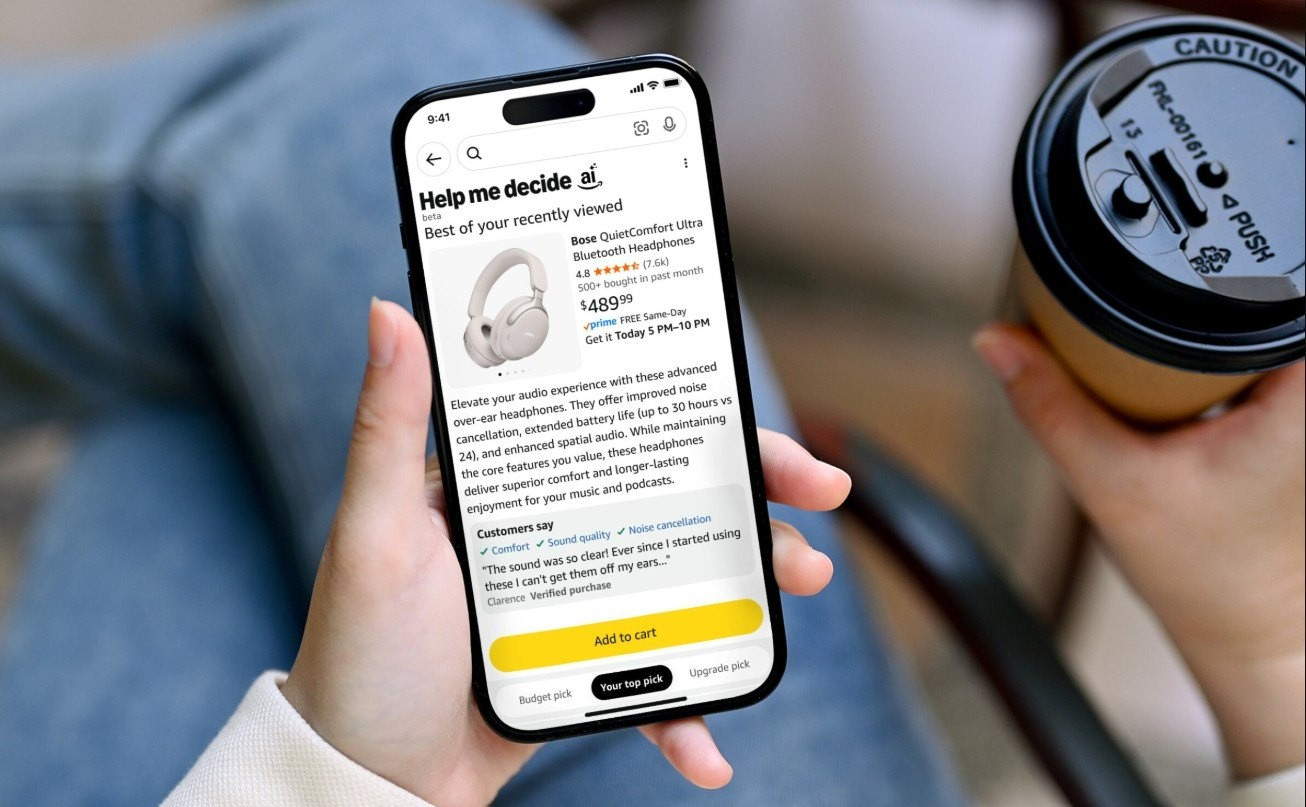
Amazon has rolled out a new artificial-intelligence–powered feature called “Help Me Decide,” which appears within the Amazon shopping app or mobile browser after a user browses multiple similar items without making a purchase. The tool uses the shopper’s browsing activity, purchase history, search behavior and preferences to recommend a specific product and provide an explanation of why it is the “right” choice. Explainability is a key part of the rollout, with Amazon stating the AI will tell you why it chose that product for you. The move is part of a broader push by Amazon to embed generative-AI features deeper into the retail experience and to steer consumers more directly toward purchase decisions. Some analysts flag concerns about transparency, paid placements, and how much of the recommendation stems from user interest versus algorithmic nudging.
Key Takeaways
– The “Help Me Decide” button marks a shift from passive recommendation toward active decision-making support powered by AI, meaning Amazon is increasingly guiding consumers rather than simply suggesting alternatives.
– Because the tool uses detailed user behavior (browsing, search, purchase history) to make its decision, the potential for algorithmic influence—rather than purely serving consumer choice—is greater.
– From a retail strategy standpoint, the feature signifies Amazon’s push to reduce friction and conversion time in the purchase process; for consumers it raises questions about autonomy, transparency and whether the “why” explanation is fully independent of sponsored/partner placements.
In-Depth
In the world of online shopping, consumers frequently face choice overload: dozens of similar products, mixed reviews, subtle differences in features, and the cognitive effort of picking which one to buy. Recognizing this friction, Amazon’s newly announced “Help Me Decide” feature attempts to ease that burden. As users browse multiple similar items and hesitate to choose, the “Help Me Decide” button becomes visible. A tap triggers Amazon’s AI to analyze the user’s past searches, browsing patterns, purchase history, preferences, and even subtle signals like how long you hovered over an item. Based on that data, it selects one product for you and provides a short explanation of why it thinks it’s the best fit. According to Amazon’s blog, the explanation isn’t just “we recommend this because you looked at similar items,” but more personalized: “We noticed you looked at X and Y, and this model offers Z features you prioritized.”
From a consumer’s vantage point, this can feel like a welcome shortcut: instead of wading through spec sheets and reviews you get a tailored pick and rationale. That appeals especially if you dislike decision-fatigue or have only a vague idea of what you want. But from a critical viewpoint, it also raises concerns about how much choice is actually being given. If Amazon’s algorithm is steering you definitively toward one product, the question becomes whether you are choosing or being chosen for. The explanation may assuage some concerns, but analysis from outlets like TechRadar note the deeper issue: “the more confident and accurate the suggestions become, the harder it is to know whether your preferences are shaping your behavior—or the other way around.” (TechRadar)
From a business strategy perspective, Amazon is clearly leaning into generative-AI’s potential to shorten the purchase funnel. The fewer roadblocks between “browse” and “buy,” the higher the conversion rate, and the deeper Amazon can lock in consumer behavior and data feed-back loops. Retail research highlighted that the feature appears precisely when a user is comparing similar items, which is traditionally where decision drop-off is highest. By inserting an AI recommendation at that moment, Amazon is capturing that indecision and converting it into a sale. That said, observers have flagged that the criteria for selecting the “best” item may not be purely consumer-centric: paid placements, Amazon-owned brands, or preferential visibility could influence the AI’s logic behind the scenes. The tool may claim neutrality, but transparency remains an open question.
For consumers and regulators alike, the implications are meaningful. On one hand, this is simply modern retail evolution: smarter tools, less friction, more personalization. On the other hand, if algorithmic nudging becomes the norm, the idea of browsing as exploration may shrink. The “why” explanation is a step toward accountability, yet we don’t know how deep the explanation goes—does it show alternative picks, or only present a single recommendation? Also worthy of attention: how Amazon deals with data privacy, choice of marketplaces, competitor products, and whether similar tools will appear across other platforms.
For those of you who engage in comprehensive purchasing, research-savvy shopping, or simply value autonomy in your buying process, this change is one to monitor. If you prefer to compare dozens of alternatives, read deep reviews, and pick rather than be picked for, then a tool like “Help Me Decide” might feel like it cuts short your process—or even influences it. If, instead, you value speed, personalization, and expert guidance, it may be welcomed. Either way, the update underscores one thing: the age of “browse-then-decide” is increasingly giving way to “AI helps decide.”
For users who frequent Amazon’s ecosystem, be aware: the next time you hover across dozens of similar items, you might see that “Help Me Decide” button—don’t dismiss it, but don’t assume it’s unbiased either. Understanding the logic behind it (even superficially) and maintaining awareness of your own preferences will matter more than ever.