

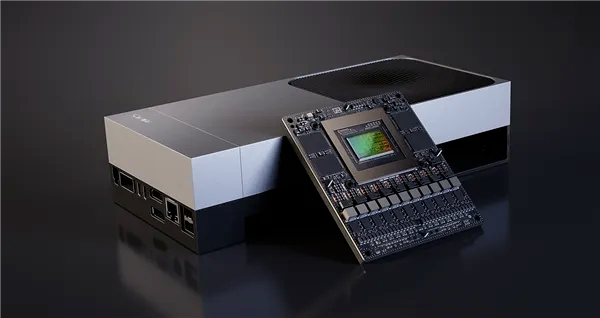
Nvidia Chief Executive Officer Jensen Huang confirmed that there are currently no active discussions or plans to sell the company’s cutting-edge Blackwell AI chips to China, citing both U.S. export restrictions and China’s lack of interest in the advanced units. Reuters reported that the U.S. government under Donald Trump’s administration has explicitly barred new sales of the Blackwell chips to China on national-security grounds. The decision leaves China currently locked out of Nvidia’s most advanced artificial intelligence hardware, while discussions about scaled-down variants of the chip continue to face complexity and delay.
Key Takeaways
– U.S. export-control policy remains firm: the Blackwell chips are effectively off-limits for China for now.
– Nvidia warns that keeping China out of its advanced tech may weaken America’s competitive edge in the global AI race.
– Though lower-performing variants of Nvidia chips are under discussion for China, significant regulatory and strategic hurdles remain.
In-Depth
In a move that illustrates the complex intersection of technology, national security, and global competition, Nvidia CEO Jensen Huang recently stated that his company has no active discussions to sell its flagship Blackwell AI chips to China. These remarks underscore a broader U.S. strategy to retain the upper hand in artificial intelligence infrastructure by limiting access to its most advanced semiconductor technologies.
From a policy standpoint, the refusal to export Blackwell chips aligns closely with Washington’s exporter-control regime, which regards high-end AI processors as dual-use technologies with potential military applications. The Trump administration has reaffirmed that the sale of these chips to China “is not something we’re interested in” at this time—a signal that the U.S. is unwilling to blur the line between commercial and strategic tech dominance.
For Nvidia, the situation presents both strategic restraint and commercial risk. On one hand, the company is prevented from accessing China’s vast market with its most advanced offerings—a substantial opportunity cost. On the other hand, Nvidia’s leadership warns that by denying access to its best hardware, the U.S. may inadvertently push Chinese AI developers to build their own systems, eroding American technological ascendancy over time.
The company has not entirely closed the door to China, however. Nvidia is reportedly in conversations to produce a less capable variant of the Blackwell architecture for China—one that would be scaled down sufficiently to satisfy export-control criteria. But even that path is fraught: regulatory approvals are slow, and Chinese demand remains uncertain. Meanwhile, China’s broader AI ambitions continue apace, and some analysts caution that isolationist technology policies could backfire by incentivizing self-sufficient innovation in Beijing.
In the coming months, all eyes will be on whether U.S. concessions—to revenue-sharing structures, chip-capability limits, or diplomatic tradeoffs—emerge that might open the door for Nvidia. If not, the company may remain effectively locked out of China’s next wave of AI infrastructure projects, while the U.S. government must weigh whether limiting hardware exports truly safeguards national security or merely postpones the inevitable rise of China’s independent AI ecosystem.