

Close Menu

    Subscribe to Updates

    Get the latest creative news from FooBar about art, design and business.

    What's Hot

    Spotify Developers Haven’t Written Code Since December Thanks to AI Transformation

    February 16, 2026

    DHS Issues Hundreds Of Subpoenas To Unmask Anonymous ‘Anti-ICE’ Social Media Accounts

    February 16, 2026

    UK Kids Turning to AI Chatbots and Acting on Advice at Alarming Rates

    February 16, 2026
    Facebook X (Twitter) Instagram
    • Tech
    • AI News
    • Get In Touch
    Facebook X (Twitter) LinkedIn
    TallwireTallwire
    • Tech

      Spotify Developers Haven’t Written Code Since December Thanks to AI Transformation

      February 16, 2026

      Waymo Goes Fully Autonomous in Nashville, Tennessee

      February 16, 2026

      Roku Plans Streaming Bundles Push to Boost Profitability in 2026

      February 15, 2026

      Russia Officially Blocks WhatsApp After Telegram Crackdown

      February 15, 2026

      Amazon’s Eero Signal Introduces Cellular Backup for Home Internet Outages

      February 15, 2026
    • AI News

      Spotify Developers Haven’t Written Code Since December Thanks to AI Transformation

      February 16, 2026

      Australia Puts Roblox on Notice Amid Reports of Child Grooming and Harmful Content

      February 16, 2026

      UK Kids Turning to AI Chatbots and Acting on Advice at Alarming Rates

      February 16, 2026

      US Lawmakers Urge Tighter Export Controls to Curb China’s Access to Chipmaking Equipment

      February 16, 2026

      Waymo Goes Fully Autonomous in Nashville, Tennessee

      February 16, 2026
    • Security

      US Lawmakers Urge Tighter Export Controls to Curb China’s Access to Chipmaking Equipment

      February 16, 2026

      Senator Raises Questions On eSafety Crackdown And Potential Strain On US-Australia Relationship

      February 16, 2026

      AI Safety Researcher Resigns, Warns ‘World Is in Peril’ Amid Broader Industry Concerns

      February 15, 2026

      Microsoft Warns Hackers Are Exploiting Critical Zero-Day Bugs Targeting Windows, Office Users

      February 15, 2026

      Microsoft Exchange Online’s Aggressive Filters Mistake Legitimate Emails for Phishing

      February 13, 2026
    • Health

      UK Kids Turning to AI Chatbots and Acting on Advice at Alarming Rates

      February 16, 2026

      Landmark California Trial Sees YouTube Defend Itself, Rejects ‘Social Media’ and Addiction Claims

      February 16, 2026

      Instagram Top Executive Says ‘Addiction’ Doesn’t Exist in Landmark Social Media Trial

      February 15, 2026

      Amazon Pharmacy Rolls Out Same-Day Prescription Delivery To 4,500 U.S. Cities

      February 14, 2026

      AI Advances Aim to Bridge Labor Gaps in Rare Disease Treatment

      February 12, 2026
    • Science

      XAI Publicly Unveils Elon Musk’s Interplanetary AI Vision In Rare All-Hands Release

      February 14, 2026

      Elon Musk Shifts SpaceX Priority From Mars Colonization to Building a Moon City

      February 14, 2026

      NASA Artemis II Spacesuit Mobility Concerns Ahead Of Historic Mission

      February 13, 2026

      AI Agents Build Their Own MMO Playground After Moltbook Ignites Agent-Only Web Communities

      February 12, 2026

      AI Advances Aim to Bridge Labor Gaps in Rare Disease Treatment

      February 12, 2026
    • People

      Google Co-Founder’s Epstein Contacts Reignite Scrutiny of Elite Tech Circles

      February 7, 2026

      Bill Gates Denies “Absolutely Absurd” Claims in Newly Released Epstein Files

      February 6, 2026

      Informant Claims Epstein Employed Personal Hacker With Zero-Day Skills

      February 5, 2026

      Starlink Becomes Critical Internet Lifeline Amid Iran Protest Crackdown

      January 25, 2026

      Musk Pledges to Open-Source X’s Recommendation Algorithm, Promising Transparency

      January 21, 2026
    TallwireTallwire
    Home»Tech»Nvidia CEO Pushes to Export Blackwell Chips to China as U.S. Lawmakers Sound Alarm
    Tech

    Nvidia CEO Pushes to Export Blackwell Chips to China as U.S. Lawmakers Sound Alarm

    4 Mins Read
    Facebook Twitter Pinterest LinkedIn Tumblr Email
    Nvidia CEO Pushes to Export Blackwell Chips to China as U.S. Lawmakers Sound Alarm
    Nvidia CEO Pushes to Export Blackwell Chips to China as U.S. Lawmakers Sound Alarm
    Share
    Facebook Twitter LinkedIn Pinterest Email

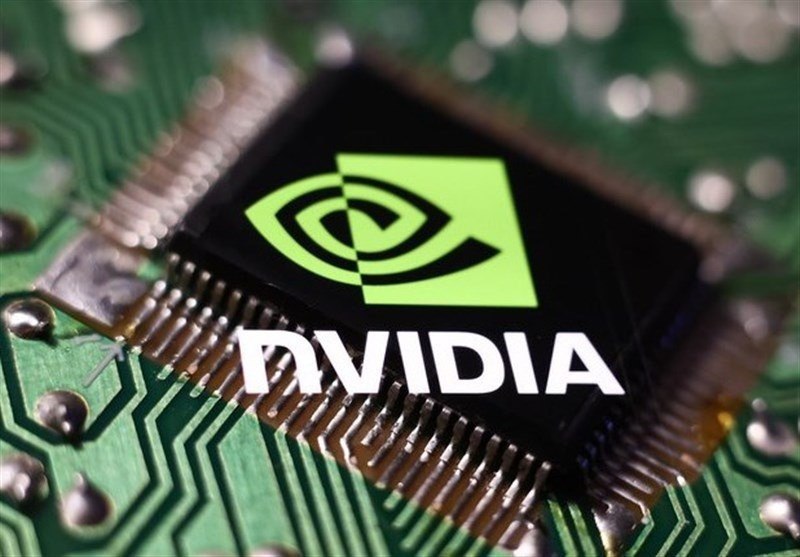
    Nvidia CEO Jensen Huang recently expressed hope that his company’s next-generation “Blackwell” AI chips might eventually be sold to China, though he made clear the final decision lies with Donald Trump and U.S. export regulators. According to Reuters, Huang said he hopes the Blackwell series can be exported to China under future policy changes. In a similar vein, The Epoch Times reports that lawmakers in Washington urged stricter restrictions, warning that even a scaled-down version of the Blackwell architecture could accelerate China’s AI progress. Meanwhile, Tom’s Hardware highlights that Nvidia has already shown a “B30” chip variant—intended for China, offering approximately 80 % of full Blackwell performance—to U.S. regulators, underscoring how close the company is to seeking clearance. 

    Sources: Reuters, Tom’s Hardware

    Key Takeaways

    – The Blackwell chips represent a major technological leap, and there is strong pressure from Nvidia’s leadership to gain China market access, reflecting commercial interests.

    – U.S. national security concerns dominate the policy backdrop, with lawmakers warning that export of advanced AI chips could bolster China’s military or strategic capabilities.

    – Nvidia appears already positioning a China-specific variant (the so-called “B30”) with reduced performance as a possible workaround to current export rules, showing how commercial strategy and regulatory realities are converging.

    In-Depth

    In the ongoing high-stakes contest over artificial intelligence and semiconductor dominance, one of the most telling battlegrounds right now revolves around the export of advanced chips from the United States to China. Nvidia, the American tech giant, stands right in the middle of that battle. At a recent press event, CEO Jensen Huang made clear his company is hopeful that the Blackwell series — Nvidia’s next-gen AI accelerator architecture — may one day be sold in China, though he emphasized the decision lies with the White House. That comment underscores just how much Nvidia sees upside in regaining access to one of the world’s largest AI markets, even as U.S. policy remains firmly anchored on national-security concerns.

    From a commercial perspective, Nvidia’s interest in China is straightforward: vast AI demand, growing infrastructure build-outs, and enterprise/cloud opportunities. But from a policy perspective, the situation is much more complex. The U.S. government has imposed export controls on the most advanced AI chips — in part to deny China a leg up in military and dual-use AI applications. In this case, the Blackwell architecture represents a leap that Washington is obviously cautious about facilitating. Lawmakers have publicly warned that “even scaled-down” versions of Blackwell sold to China could close what used to be a technology gap — and that such an outcome would pose real risks to U.S. tech leadership and strategic advantage.

    Against that backdrop, Nvidia appears to be hedging. Reports indicate the company has already presented a version of a China-specific chip, dubbed “B30,” which reportedly offers around 80 % of the performance of the full Blackwell GPU. This suggests Nvidia is preparing for a scenario in which the company might appeal to regulators for permission to ship a less capable variant into China — a compromise designed to balance commercial access with regulatory constraints. The optics here matter: regulators may be more comfortable with a derivative product that gives China less competitive edge, while Nvidia gets a foothold back in the market.

    That said, the politics remain tricky. The current export regime doesn’t clearly allow a full-fledged Blackwell export to China, and even the B30’s approval is not guaranteed. Moreover, China’s own tech ecosystem is increasingly oriented toward self-sufficiency, reducing Nvidia’s leverage over time. From a conservative perspective, the stakes are clear: U.S. tech strength and national security depend on maintaining a lead in foundational AI hardware, and allowing unfettered access to advanced chips could erode that lead and strengthen a strategic competitor.

    In short, Nvidia finds itself negotiating a tightrope between commercial opportunity and geopolitical risk. The company wants to sell the world’s most cutting-edge AI chips into the world’s largest AI market. Washington wants to ensure that doing so does not hand a strategic advantage to a rival. The outcome of this dance will matter not just for Nvidia and China, but for the broader global balance of AI power. The bottom line: the Blackwell export question is both a business issue and a national-security issue — and how the U.S. government handles it will signal much about America’s approach to tech rivalry going forward.

    Share. Facebook Twitter Pinterest LinkedIn Tumblr Email
    Previous ArticleNow Hiring: Neuroscientists for AI Is the New Trend
    Next Article Nvidia CEO Says No Active Talks to Sell Blackwell AI Chips to China

    Related Posts

    Spotify Developers Haven’t Written Code Since December Thanks to AI Transformation

    February 16, 2026

    Waymo Goes Fully Autonomous in Nashville, Tennessee

    February 16, 2026

    Roku Plans Streaming Bundles Push to Boost Profitability in 2026

    February 15, 2026

    Russia Officially Blocks WhatsApp After Telegram Crackdown

    February 15, 2026
    Add A Comment
    Leave A Reply Cancel Reply

    Editors Picks

    Spotify Developers Haven’t Written Code Since December Thanks to AI Transformation

    February 16, 2026

    Waymo Goes Fully Autonomous in Nashville, Tennessee

    February 16, 2026

    Roku Plans Streaming Bundles Push to Boost Profitability in 2026

    February 15, 2026

    Russia Officially Blocks WhatsApp After Telegram Crackdown

    February 15, 2026
    Top Reviews
    Tallwire
    Facebook X (Twitter) LinkedIn Threads Instagram RSS
    • Tech
    • Entertainment
    • Business
    • Government
    • Academia
    • Transportation
    • Legal
    • Press Kit
    © 2026 Tallwire. Optimized by ARMOUR Digital Marketing Agency.

    Type above and press Enter to search. Press Esc to cancel.