

Close Menu

    Subscribe to Updates

    Get the latest tech news from Tallwire.

      What's Hot

      AI Shopping Bots Threaten Amazon’s E-Commerce Dominance and $70 Billion Advertising Business

      November 7, 2026

      States Deploy GPS Speed Limiters to Curb Reckless Driving and Repeat Speeding Offenders

      November 7, 2026

      3M Reaches $7.35B PFAS Settlement Over Forever Chemicals and Firefighting Foam Injury Claims

      November 7, 2026
      Facebook X (Twitter) Instagram
      • Tech
      • AI
      • Get In Touch
      Facebook X (Twitter) LinkedIn
      TallwireTallwire
      • AI

        AI Shopping Bots Threaten Amazon’s E-Commerce Dominance and $70 Billion Advertising Business

        November 7, 2026

        Project Prometheus Eyes 180,000-Square-Foot San Francisco HQ as AI Boom Revives Office Market

        November 6, 2026

        Disney Partners With OpenArt to Test AI-Generated Lyric Videos Amid Copyright Battles

        November 6, 2026

        Meta Pauses AI Web Scraping Rules Amid Publisher Backlash and Antitrust Investigations

        November 6, 2026

        Google to Block Search Access for K-12 Schools That Reject AI Tools, Sparking Backlash

        November 6, 2026
      • Tech

        Florida Police Introduce First $148,000 Flying Patrol Vehicle for Emergency Response

        November 6, 2026

        AI-Powered Subvocal Glasses Could Replace Typing and Talking With Silent Speech Technology

        November 6, 2026

        Pentagon Investigates Suspected Cyberattack on Military Base Freezers; Food Supplies Disrupted

        November 4, 2026

        AI Chip Shortage Reverses Apple’s Market Power as Memory Suppliers Demand Higher Prices

        November 4, 2026

        Paid Social Media Influencers Target California Voters in $350 Million Billionaire Tax Battle

        November 3, 2026
      • Business/Finance
      • Cybersecurity
      • Government
        • Legal
      • Health

        Majority of AI Health Users Trust Chatbots Over Doctors, Raising Patient Safety Concerns

        November 4, 2026

        Quantum Computing Breakthrough Could Transform AI Data Centers and Slash Energy Costs

        November 2, 2026

        Free AI Tool Offers New Hope in Fight Against Antibiotic-Resistant Infections

        November 2, 2026

        Cyberattack Disrupts New Mexico’s Largest Hospital Network, Forcing Emergency Patient Diversions

        November 2, 2026

        GSK Plans to Nearly Double Cancer Drug Pipeline in 2027 Following $10.6 Billion Acquisition

        November 1, 2026
      • Science
        • Academia
      • Entertainment/Communications
      • People
      • Transportation
      • Opinion
      TallwireTallwire
      Home»Tech»Now Hiring: Neuroscientists for AI Is the New Trend
      Tech

      Now Hiring: Neuroscientists for AI Is the New Trend

      3 Mins Read
      Facebook Twitter Pinterest LinkedIn Tumblr Email
      Trump Signs Executive Order to Use AI in Childhood Cancer Fight, Doubling Federal Support
      Trump Signs Executive Order to Use AI in Childhood Cancer Fight, Doubling Federal Support
      Share
      Facebook Twitter LinkedIn Pinterest Email

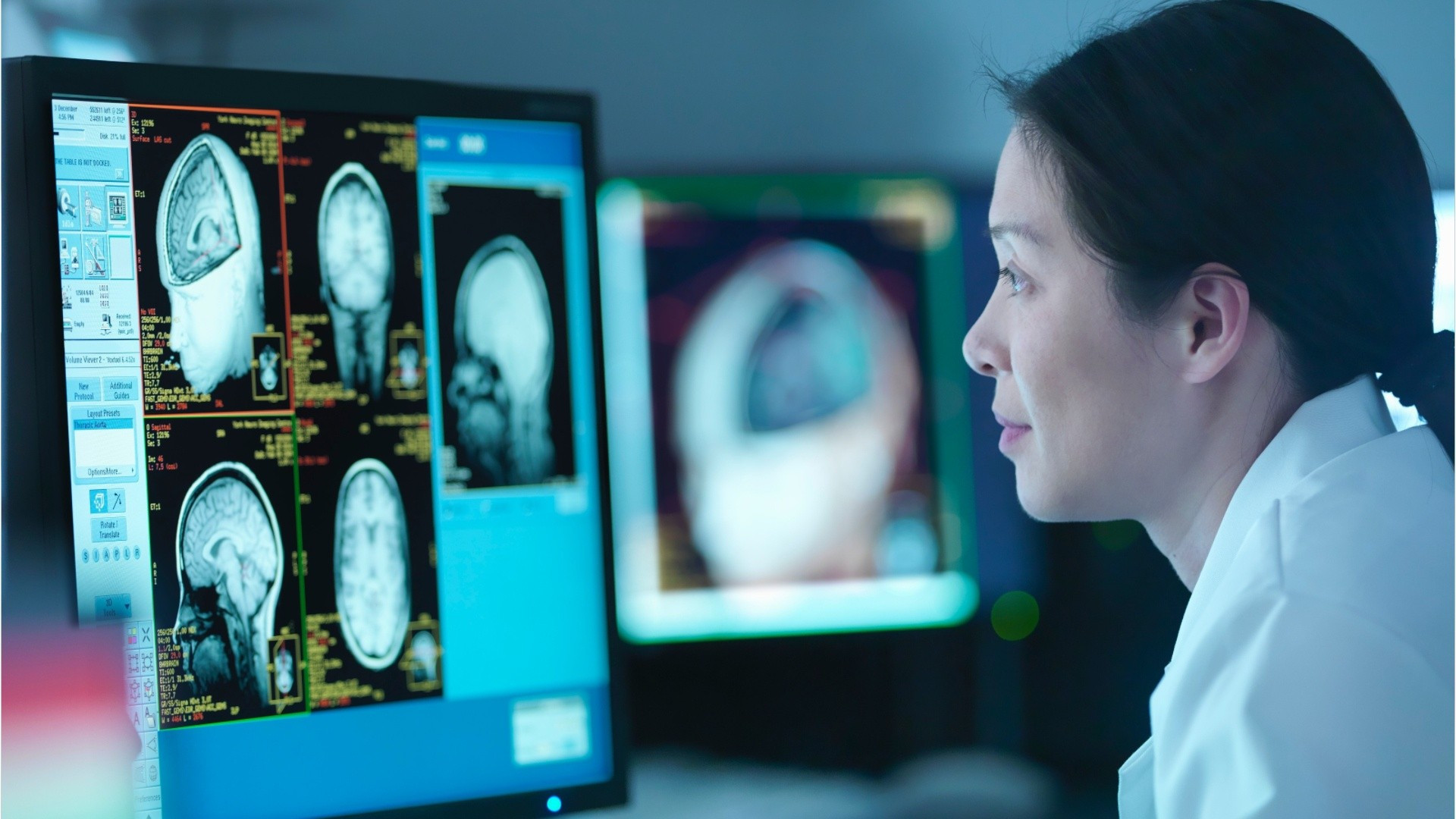
      The hottest job at AI companies right now isn’t prompt-engineering or multimodal design — it’s neuroscience. Firms like Meta and others are actively recruiting scientists with brain-research backgrounds, motivated by a push to make AI more energy-efficient and interpretable. Neuroscience offers tools to study how our brain accomplishes massive computational feats using just ~20 watts, and AI firms hope to apply those efficiency lessons to large models. For many neuroscientists, especially in light of shrinking public-sector funding, private-sector roles offer not just big salaries but the potential for real-world impact.

      Sources: Yahoo Tech, Semafor

      Key Takeaways

      – AI firms are recruiting neuroscientists en masse, signaling a shift from traditional software-only talent toward biologically-inspired research.

      – The rationale: the human brain performs immense computation at roughly 20 watts — a benchmark for energy efficiency and interpretability that current AI hardware struggles to meet.

      – Budget cuts to public neuroscience funding are pushing academics toward private AI jobs, creating an influx of talent with expertise in human cognition and neural systems.

      In-Depth

      The transformation happening right now in AI staffing reflects a deeper shift in how companies are thinking about artificial intelligence — not simply as lines of code or stacks of servers, but as systems that might draw on lessons from one of nature’s most efficient computers: the human brain. A new wave of hiring is underway. According to recent reporting, neuroscientists are now among the most sought-after candidates at leading AI firms.

      This pivot stems from a growing acknowledgment that many of the inefficiencies in modern AI — in power usage, interpretability, and scaling — stem from the way models are structured: massive networks of artificial neurons running on frequently wasteful hardware. Meanwhile, the human brain performs mind-boggling computational feats using roughly the equivalent of twenty watts. If AI companies can understand and replicate even a fraction of that efficiency, the payoff could be enormous: models that are cheaper to run, more scalable, and — critically — more “understandable,” in terms of why they make the decisions they do.

      Enter the neuroscientists. Researchers trained in studying how neurons connect, how cognition emerges, and how decision-making works in the brain are now being recruited to help design AI architecture that more closely mirrors human cognition. One striking example: a scholar from a well-regarded academic neuroscience center recently left to join a major tech company. There he works not on laboratory experiments or theoretical cognition models — but on social-media algorithms and neural-network backends. In his words, he moved because he wanted real-world impact. In a corporate environment, he receives immediate feedback on his modifications: Did the model perform better? Did users respond positively? The contrast with slow-moving academia is clear.

      For the companies hiring, it’s two-fold: first, they get fresh brains with deep understanding of biological neural systems; second, they’re tapping a talent pool that’s increasingly available. As government and public funding for neuroscience — much of it through institutions like the NIH — have shrunk, researchers have fewer incentives to stay in academia. That structural shift, combined with the allure of generous compensation and real-world influence, is shifting the balance toward the private sector.

      In effect, this marks a turning point. Rather than relying solely on traditional machine-learning engineers, AI firms are betting that the next wave of breakthroughs will come from cross-disciplinary thinkers — neuroscientists who can translate principles of brain function into more efficient, interpretable, and powerful AI. If they succeed, we might see a future in which artificial intelligence isn’t just computationally impressive — it’s biologically inspired, lean, and far more aligned with how real brains work.

      Share. Facebook Twitter Pinterest LinkedIn Tumblr Email
      Previous ArticleNo Jolly for AI Toys — Holiday Warning Issued Over Risks to Young Children
      Next Article Nvidia CEO Pushes to Export Blackwell Chips to China as U.S. Lawmakers Sound Alarm

      Related Posts

      Florida Police Introduce First $148,000 Flying Patrol Vehicle for Emergency Response

      November 6, 2026

      AI-Powered Subvocal Glasses Could Replace Typing and Talking With Silent Speech Technology

      November 6, 2026

      Pentagon Investigates Suspected Cyberattack on Military Base Freezers; Food Supplies Disrupted

      November 4, 2026

      AI Chip Shortage Reverses Apple’s Market Power as Memory Suppliers Demand Higher Prices

      November 4, 2026
      Add A Comment
      Leave A Reply Cancel Reply

      Editors Picks

      Florida Police Introduce First $148,000 Flying Patrol Vehicle for Emergency Response

      November 6, 2026

      AI-Powered Subvocal Glasses Could Replace Typing and Talking With Silent Speech Technology

      November 6, 2026

      Pentagon Investigates Suspected Cyberattack on Military Base Freezers; Food Supplies Disrupted

      November 4, 2026

      AI Chip Shortage Reverses Apple’s Market Power as Memory Suppliers Demand Higher Prices

      November 4, 2026
      Popular Topics
      Satya Nadella Sundar Pichai Tim Cook trending Stocks Space Software Startup Tesla Tesla Cybertruck spotlight UAE Tech Viral Series A SpaceX Series B Taiwan Tech Samsung starlink Satellite
      Major Tech Companies
      • Apple News
      • Google News
      • Meta News
      • Microsoft News
      • Amazon News
      • Samsung News
      • Nvidia News
      • OpenAI News
      • Tesla News
      • AMD News
      • Anthropic News
      • Elbit News
      AI & Emerging Tech
      • AI Regulation News
      • AI Safety News
      • AI Adoption
      • Quantum Computing News
      • Robotics News
      Key People
      • Sam Altman News
      • Jensen Huang News
      • Elon Musk News
      • Mark Zuckerberg News
      • Sundar Pichai News
      • Tim Cook News
      • Satya Nadella News
      • Mustafa Suleyman News
      Global Tech & Policy
      • Israel Tech News
      • India Tech News
      • Taiwan Tech News
      • UAE Tech News
      Startups & Emerging Tech
      • Series A News
      • Series B News
      • Startup News
      Tallwire
      Facebook X (Twitter) LinkedIn Threads Instagram RSS
      • AI
      • Tech
      • Business/Finance
      • Cybersecurity
      • Government
      • Legal
      • Health
      • Science
      • Academia
      • Entertainment/Communications
      • People
      • Transportation
      • Opinion
      • Press Kit
      © 2026 Tallwire. Optimized by ARMOUR Digital Marketing Agency.

      Type above and press Enter to search. Press Esc to cancel.