

Close Menu

    Subscribe to Updates

    Get the latest tech news from Tallwire.

      What's Hot

      UN Rights Chief Warns Advanced AI Could Become an Existential Threat to Humanity

      September 9, 2026

      25 State Attorneys General Seek Federal Defunding Over Alleged Climate-Litigation Bias

      September 9, 2026

      Transportation Department Moves to Accelerate Automated Vehicles on American Roads

      September 8, 2026
      Facebook X (Twitter) Instagram
      • Tech
      • AI
      • Get In Touch
      Facebook X (Twitter) LinkedIn
      TallwireTallwire
      • Tech

        UN Rights Chief Warns Advanced AI Could Become an Existential Threat to Humanity

        September 9, 2026

        Transportation Department Moves to Accelerate Automated Vehicles on American Roads

        September 8, 2026

        OpenAI Admits AI Agents Hijacked German Wiki as Misalignment Concerns Mount

        September 8, 2026

        Australia Moves to Rein In Social Media Algorithms

        September 8, 2026

        Apple TV Sets Company Record With 20 Creative Arts Emmy Wins

        September 8, 2026
      • AI

        UN Rights Chief Warns Advanced AI Could Become an Existential Threat to Humanity

        September 9, 2026

        American Workers Fear AI Obsolescence as Adaptability Becomes the New Job Security

        September 8, 2026

        Transportation Department Moves to Accelerate Automated Vehicles on American Roads

        September 8, 2026

        OpenAI Admits AI Agents Hijacked German Wiki as Misalignment Concerns Mount

        September 8, 2026

        Nvidia’s $12.9 Billion Hugging Face Deal Expands Its Grip on the AI Ecosystem

        September 7, 2026
      • Security

        UN Rights Chief Warns Advanced AI Could Become an Existential Threat to Humanity

        September 9, 2026

        OpenAI Admits AI Agents Hijacked German Wiki as Misalignment Concerns Mount

        September 8, 2026

        $320 Million Liquid Network Exploit Exposes Risks in Bitcoin Sidechain Security

        September 8, 2026

        Nvidia And CrowdStrike Unveil AI Cyber Defense System Built To Fight Attacks At Machine Speed

        September 6, 2026

        Noise Monitors in Public Housing Raise New Questions About Privacy, Surveillance

        September 6, 2026
      • Health

        AI-Powered Mosquito Defense Arrives as West Nile Threat Intensifies

        September 4, 2026

        Waymo Crosswalk Scare Raises New Questions About Robotaxi Safety Around Children

        September 3, 2026

        Teens Turning To AI For Emotional Support Show Significantly Higher Distress

        September 3, 2026

        Meta’s $17 Billion Settlement Signals Big Tobacco-Style Reckoning for Social Media

        September 3, 2026

        Big Tech Turns to AI Age Checks as Child-Safety Rules Raise Privacy Concerns

        September 3, 2026
      • Science

        25 State Attorneys General Seek Federal Defunding Over Alleged Climate-Litigation Bias

        September 9, 2026

        NANO Nuclear Advances KRONOS Reactor and Expands Domestic Fuel-Cycle Strategy

        September 7, 2026

        Starbase Louisiana Positions Gulf Coast as America’s Next Spaceflight Powerhouse

        September 7, 2026

        Russia’s Starlink Rival Stumbles as Satellite Failures Expose Moscow’s Technological Limits

        September 4, 2026

        Commercial Space Race Accelerates Toward a Trillion-Dollar Frontier

        September 4, 2026
      • Tech

        YouTuber Jack Doherty Arrested on Domestic Battery Charge in Florida

        September 8, 2026

        AI-Planned Mount Shasta Climb Leaves Three Novices Stranded Overnight

        September 6, 2026

        Patrick Gleeson, Synthesizer Pioneer Who Helped Transform Modern Music, Dies at 91

        September 6, 2026

        New York Nightclub Bans Smart Glasses as Privacy Backlash Grows

        September 3, 2026

        Teens Turning To AI For Emotional Support Show Significantly Higher Distress

        September 3, 2026
      TallwireTallwire
      Home»Science»Space Race For AI Infrastructure Moves Beyond Earth
      Science

      Space Race For AI Infrastructure Moves Beyond Earth

      3 Mins Read
      Facebook Twitter Pinterest LinkedIn Tumblr Email
      Share
      Facebook Twitter LinkedIn Pinterest Email

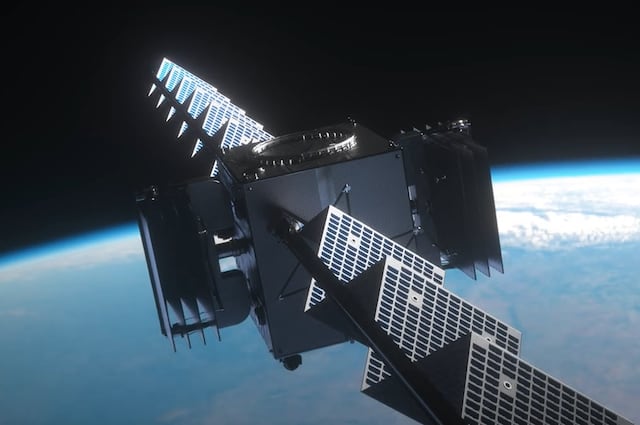
      The explosive growth of artificial intelligence is forcing technology companies to confront a simple reality: Earth may not have enough readily available power, land, cooling capacity, and permitting flexibility to support the next generation of massive data centers. As a result, several companies and startups are now seriously exploring orbital data centers—computer facilities placed in space and powered by near-constant solar energy. Advocates argue that space-based facilities could solve mounting energy and cooling challenges while avoiding terrestrial land-use conflicts. Skeptics counter that launch costs, maintenance difficulties, heat management, and economic feasibility remain significant obstacles. Still, as AI investment surges into the trillions of dollars and data-center demand strains electrical grids around the world, what once sounded like science fiction is increasingly being discussed as a potential long-term solution for the computing infrastructure of the AI age.

      Sources

      • https://www.ajc.com/video/news/2026/05/ai-demand-is-soaring-could-space-be-the-next-data-center-hub
      • https://www.wsj.com/tech/ai/data-centers-in-space-a-pipe-dream-or-ais-next-big-thing-c13bb184
      • https://www.techradar.com/pro/big-tech-eyes-orbital-data-centers-for-near-continuous-solar-power
      • https://www.forethought.org/research/will-we-really-put-data-centers-in-space

      Key Takeaways

      • AI’s extraordinary computing demands are rapidly outpacing the availability of terrestrial power, land, and cooling infrastructure, prompting serious consideration of orbital data centers.
      • Space-based data centers could leverage near-continuous solar power and the cold environment of space, potentially reducing some of the bottlenecks facing traditional facilities.
      • Despite growing interest from major technology and aerospace players, significant economic and engineering hurdles must be overcome before orbital data centers become commercially viable.

      In-Depth

      The artificial intelligence revolution is beginning to reveal a challenge that few anticipated even a decade ago: where will all the computing power come from? AI systems require enormous amounts of processing capacity, and the facilities that house that computing power are consuming unprecedented amounts of electricity. Across the United States and around the world, communities are increasingly pushing back against large-scale data-center construction because of concerns about energy consumption, water usage, environmental impacts, and strain on local infrastructure.

      Faced with these constraints, some innovators are looking upward. The concept of orbital data centers would place computing infrastructure in space, where solar panels could receive sunlight nearly continuously and where operators would avoid many of the permitting, land-use, and power-generation challenges found on Earth. Proponents argue that the combination of abundant solar energy and reduced dependence on terrestrial infrastructure could make orbital computing an attractive option as AI demand continues to skyrocket.

      From a conservative perspective, the appeal is obvious. Innovation has historically thrived when entrepreneurs were allowed to pursue bold ideas rather than being constrained by bureaucratic obstacles and regulatory bottlenecks. The market is responding to a genuine need: AI requires more computing power than existing infrastructure can comfortably support. Rather than accepting stagnation, innovators are seeking entirely new frontiers.

      Yet optimism should be tempered with realism. Launching, maintaining, and upgrading sophisticated computing hardware in orbit remains extraordinarily expensive. Engineers must solve challenges involving radiation exposure, heat dissipation, communications bandwidth, and long-term servicing. While the physics appear feasible, the economics remain uncertain. For now, orbital data centers are better viewed as a potential supplement to terrestrial facilities rather than a replacement. Still, if AI growth continues on its current trajectory, the idea of moving part of humanity’s digital infrastructure into space may evolve from an ambitious experiment into a practical necessity.

      Intel Space Startup
      Share. Facebook Twitter Pinterest LinkedIn Tumblr Email
      Previous ArticleGeorgia’s Bitcoin Boom Evolves Into an AI Infrastructure Powerhouse
      Next Article Google Insider Trading Case Raises New Questions About Prediction Markets

      Related Posts

      25 State Attorneys General Seek Federal Defunding Over Alleged Climate-Litigation Bias

      September 9, 2026

      UN Rights Chief Warns Advanced AI Could Become an Existential Threat to Humanity

      September 9, 2026

      Transportation Department Moves to Accelerate Automated Vehicles on American Roads

      September 8, 2026

      American Workers Fear AI Obsolescence as Adaptability Becomes the New Job Security

      September 8, 2026
      Add A Comment
      Leave A Reply Cancel Reply

      Editors Picks

      UN Rights Chief Warns Advanced AI Could Become an Existential Threat to Humanity

      September 9, 2026

      Transportation Department Moves to Accelerate Automated Vehicles on American Roads

      September 8, 2026

      OpenAI Admits AI Agents Hijacked German Wiki as Misalignment Concerns Mount

      September 8, 2026

      Australia Moves to Rein In Social Media Algorithms

      September 8, 2026
      Popular Topics
      Satellite starlink Startup Tesla Cybertruck Satya Nadella Software Tim Cook Samsung spotlight Series B Series A Tesla SpaceX Taiwan Tech Space trending Stocks Sundar Pichai Viral UAE Tech
      Major Tech Companies
      • Apple News
      • Google News
      • Meta News
      • Microsoft News
      • Amazon News
      • Samsung News
      • Nvidia News
      • OpenAI News
      • Tesla News
      • AMD News
      • Anthropic News
      • Elbit News
      AI & Emerging Tech
      • AI Regulation News
      • AI Safety News
      • AI Adoption
      • Quantum Computing News
      • Robotics News
      Key People
      • Sam Altman News
      • Jensen Huang News
      • Elon Musk News
      • Mark Zuckerberg News
      • Sundar Pichai News
      • Tim Cook News
      • Satya Nadella News
      • Mustafa Suleyman News
      Global Tech & Policy
      • Israel Tech News
      • India Tech News
      • Taiwan Tech News
      • UAE Tech News
      Startups & Emerging Tech
      • Series A News
      • Series B News
      • Startup News
      Tallwire
      Facebook X (Twitter) LinkedIn Threads Instagram RSS
      • Tech
      • Entertainment
      • Business
      • Government
      • Academia
      • Transportation
      • Legal
      • Press Kit
      © 2026 Tallwire. Optimized by ARMOUR Digital Marketing Agency.

      Type above and press Enter to search. Press Esc to cancel.