

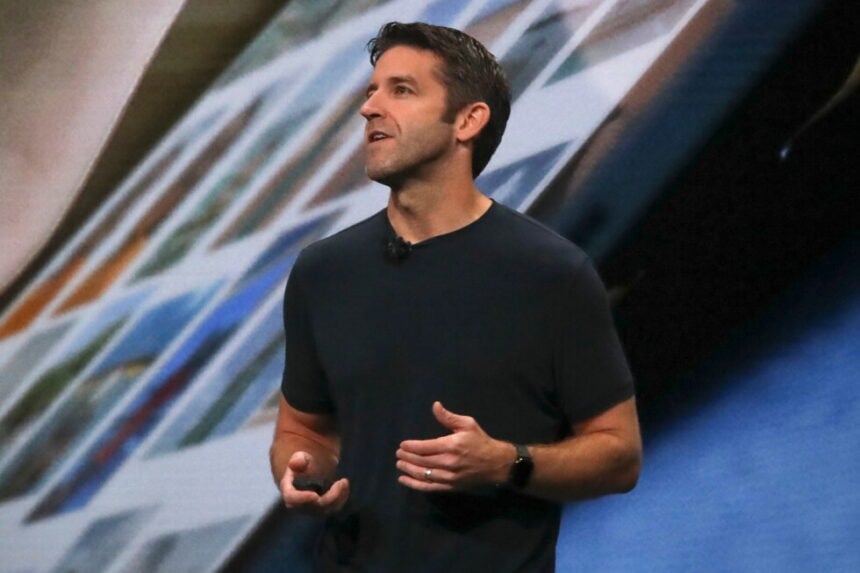
John Ternus has officially become Apple‘s chief executive, succeeding Tim Cook and marking the company’s first CEO transition since 2011. Cook remains involved as executive chairman, providing continuity as Ternus inherits a technology giant valued above $4 trillion but confronting significant strategic challenges. A 25-year Apple veteran who previously led hardware engineering, Ternus assumes command as artificial intelligence reshapes the technology industry, component demand strains supply chains, regulatory pressures intensify, and Apple seeks its next generation of breakthrough products. His hardware background could signal renewed emphasis on product innovation, beginning with a September 9 event expected to showcase new iPhones and potentially a foldable model.
Key Takeaways
- John Ternus succeeds Tim Cook after 15 years, becoming Apple’s first new CEO since Cook replaced Steve Jobs in 2011, while Cook remains executive chairman and continues handling significant external and political responsibilities.
- Ternus inherits an enormously profitable company but faces a consequential competitive test in artificial intelligence, where Apple has been forced to play catch-up while simultaneously confronting supply-chain pressures, China exposure, regulatory challenges, and changing executive leadership.
- Ternus’ engineering background suggests Apple may increasingly rely on hardware innovation—including foldable devices, smart glasses, AI-oriented products, and other new form factors—to distinguish itself rather than simply following competitors into an escalating artificial-intelligence spending race.
In-Depth
John Ternus begins his tenure as Apple CEO with an enviable inheritance and an uncomfortable assignment. Tim Cook transformed Apple into a corporate colossus, dramatically expanding its valuation, services businesses, international reach, supply-chain sophistication, and profitability. But preserving an empire is different from defining its next era.
Ternus, who joined Apple in 2001, brings a distinctly engineering-oriented background. He oversaw hardware development involving the iPhone, iPad, Mac, AirPods and other major products while participating in the transition toward Apple-designed silicon. That experience matters because Apple’s strongest competitive advantage remains its ability to tightly integrate hardware, software and services rather than simply chase fashionable technologies.
Artificial intelligence nevertheless represents Ternus’ immediate strategic challenge. Apple enters his tenure financially powerful but perceived as trailing faster-moving competitors in generative AI. The danger is not merely technological. AI is increasing demand for memory and other components, placing additional pressure on a global supply chain already complicated by American-Chinese tensions and efforts to diversify manufacturing.
Ternus also inherits an evolving leadership structure. Cook will remain executive chairman, preserving institutional continuity and providing an experienced hand for political, regulatory and international relationships. Other longtime executives are departing or changing responsibilities, giving Ternus an opportunity to establish his own management team.
The central question is whether Apple needs another caretaker or another product builder. Cook demonstrated extraordinary operational discipline, but Apple’s future may require greater willingness to take product risks. Ternus’ hardware pedigree makes him an intriguing choice. His success will ultimately depend on whether Apple can turn enormous resources into products consumers genuinely want rather than allowing competitors to define the next technological era.
Sources
- https://www.reuters.com/technology/john-ternus-become-apple-ceo-tim-cook-become-executive-chairman-2026-04-20/
- https://apnews.com/article/2fac80118828b4ada9d160d012c7be32
- https://www.apple.com/leadership/
- https://investor.apple.com/leadership-and-governance/person-details/default.aspx?ItemId=74ee6968-1323-4887-a108-d80ab5c35b02