

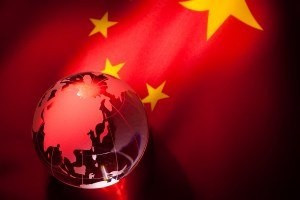
Artificial intelligence is rapidly emerging as a defining measure of national power, placing the United States and China in an increasingly consequential competition over computing capacity, infrastructure, energy, technical standards and military applications. The central argument surrounding America’s AI strategy is that excessive restrictions on domestic development—particularly limitations affecting data centers and computing infrastructure—could surrender strategic ground to Beijing at precisely the moment China is accelerating its own technological ambitions. China’s dominance of critical-mineral supply chains offers a cautionary precedent: dependence can become geopolitical leverage. With Beijing already employing AI-supported surveillance domestically and seeking greater technological influence internationally, American policymakers face a difficult balance between legitimate oversight and preserving the innovation, infrastructure and industrial capacity required to maintain U.S. leadership in a technology increasingly viewed as fundamental to economic and national security.
Key Takeaways
- Artificial intelligence is increasingly being treated as strategic infrastructure, with U.S. leadership carrying economic, military and geopolitical consequences comparable to previous technological revolutions.
- China’s established leverage over critical-mineral supply chains illustrates the potential danger of allowing another strategically important technology or its supporting infrastructure to become concentrated under Beijing’s influence.
- Legitimate concerns about AI, electricity consumption, water use, privacy and data-center development require responsible oversight, but policies that substantially impede American investment could strengthen China’s competitive position rather than restrain global AI development.
In-Depth
Artificial intelligence is becoming a strategic contest over economic capacity, military advantage, industrial infrastructure and political influence. The central concern is no longer simply whether AI should be regulated, but whether regulation could weaken American development while China accelerates its capabilities. Washington’s policy treats AI leadership, data centers, energy production and advanced computing as interconnected elements of national power.
China provides a warning through its dominance of critical-mineral supply chains. Beijing’s position in rare earth processing has given it leverage over industries ranging from electronics to defense. AI could create an even greater dependency if the United States allows computing infrastructure, model development or technical standards to migrate toward Chinese leadership.
Concerns are heightened by China’s domestic use of artificial intelligence for surveillance and state control. A Chinese-led AI ecosystem could export technology but governance standards different from American traditions of individual liberty, open markets and constitutional restraint.
The policy dispute inside the United States is legitimate. Data centers consume electricity and water, affect communities and require infrastructure. AI also presents concerns involving employment, privacy and security. Those issues warrant oversight, but restrictions should be weighed against the geopolitical consequences of surrendering technological momentum.
The larger strategic question is who establishes the rules, infrastructure and standards of the AI era. If artificial intelligence becomes a new form of intellectual energy, American leadership may prove as consequential as leadership in electricity, computing, aviation and nuclear technology. Losing that position could reshape economic power, national security and the international order for decades.
Sources
- https://www.btcpolicy.org/articles/foreign-influence-in-the-campaign-against-american-ai
- https://www.whitehouse.gov/wp-content/uploads/2025/07/Americas-AI-Action-Plan.pdf
- https://www.cfr.org/articles/china-united-states-and-critical-chokepoint-minerals
- https://www.sanders.senate.gov/press-releases/news-sanders-calls-on-tech-giants-to-pause-development-of-out-of-control-ai/