

Close Menu

    Subscribe to Updates

    Get the latest creative news from FooBar about art, design and business.

    What's Hot

    Utah Launches First-Ever AI Prescription Pilot in the U.S., Sparking Debate on Safety and Innovation

    January 13, 2026

    EU Widens Tech Crackdown, Targeting Musk’s Grok and TikTok Over Alleged AI Law Violations

    January 13, 2026

    Malicious Chrome Extensions Compromise 900,000 Users’ AI Chats and Browsing Data

    January 12, 2026
    Facebook X (Twitter) Instagram
    • Tech
    • AI News
    Facebook X (Twitter) Instagram Pinterest VKontakte
    TallwireTallwire
    • Tech

      Malicious Chrome Extensions Compromise 900,000 Users’ AI Chats and Browsing Data

      January 12, 2026

      Wearable Health Tech Could Create Over 1 Million Tons of E-Waste by 2050

      January 12, 2026

      Viral Reddit Food Delivery Fraud Claim Debunked as AI Hoax

      January 12, 2026

      Activist Erases Three White Supremacist Websites onstage at German Cybersecurity Conference

      January 12, 2026

      AI Adoption Leaders Pull Ahead, Leaving Others Behind

      January 11, 2026
    • AI News
    TallwireTallwire
    Home»Tech»US Claims $40 Billion Windfall From Intel Equity Deal Amid Surge in Stock Value
    Tech

    US Claims $40 Billion Windfall From Intel Equity Deal Amid Surge in Stock Value

    3 Mins Read
    Facebook Twitter Pinterest LinkedIn Tumblr Email
    US Claims $40 Billion Windfall From Intel Equity Deal Amid Surge in Stock Value
    US Claims $40 Billion Windfall From Intel Equity Deal Amid Surge in Stock Value
    Share
    Facebook Twitter LinkedIn Pinterest Email

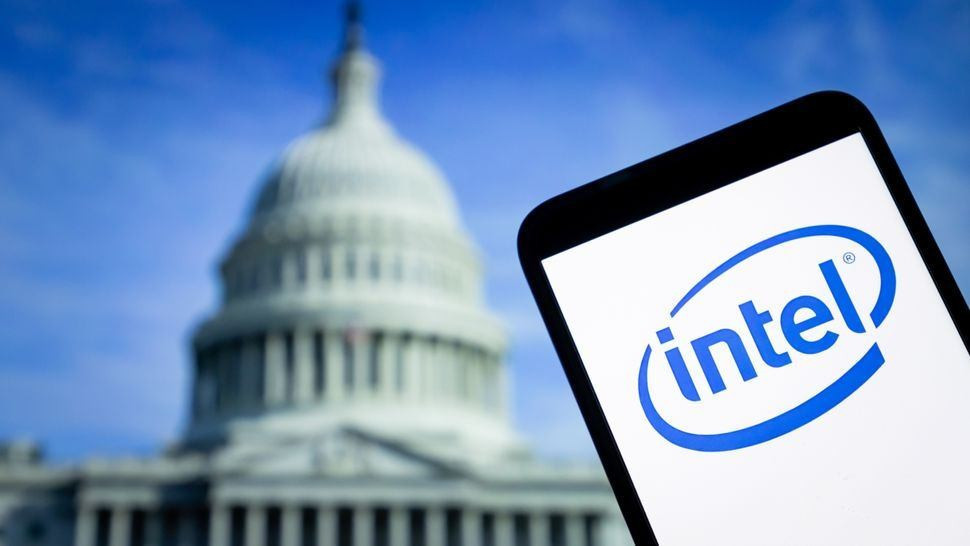
    President Trump recently declared that the U.S. “made $40 billion” from the government’s equity deal with Intel, after the value of its shares soared nearly 100 percent following the administration’s acquisition of a roughly 10 percent ownership stake this summer.

    Sources: Reuters, Epoch Times

    Key Takeaways

    – The U.S. government purchased approximately 433.3 million Intel shares for $20.47 each, converting prior subsidies under the CHIPS and Science Act and related programs into a 9.9 % stake in Intel.

    – Since the investment, Intel’s market capitalization roughly doubled — driving the apparent $40 billion gain Mr. Trump cited — though much of that increase rests on stock-market optimism rather than realized cash returns.

    – Some analysts warn that the government’s stake could complicate Intel’s international business, expose it to political pressure, and blur the line between private enterprise and state ownership.

    In-Depth

    In mid-2025, the U.S. government made a bold move: converting roughly $11.1 billion in grant commitments — part of the CHIPS and Science Act funding and defense-related incentives — into a near 10 percent ownership stake in Intel. By purchasing about 433.3 million non-voting shares at $20.47 apiece, the government positioned itself as a major stakeholder in one of America’s largest chip manufacturers.

    That decision quickly paid off on paper. As Intel’s share price surged — nearly doubling within months — the company’s market capitalization skyrocketed. According to one analysis, Intel added around $73 billion in market value since the investment. Riding that wave, President Trump recently told reporters the U.S. had “made $40 billion” on the Intel deal, framing it as a major win for taxpayer value.

    Proponents view the move as a savvy way to leverage federal support into real equity — ensuring that government assistance to vital industries isn’t a one-way grant, but a stake in future profits. It’s portrayed as part of a broader push to reinvigorate domestic semiconductor production, reduce dependence on foreign chipmaking, and align national security with industrial policy.

    But not everyone’s convinced this is such a win. Critics caution that the “gain” remains largely theoretical until shares are sold or dividends paid. More importantly, having the government as a major shareholder could introduce political interference, complicate corporate governance, and hinder Intel’s ability to compete globally — especially in markets sensitive to foreign-ownership rules or wary of U.S. government ties. Some warn this kind of state-capitalism move sets a risky precedent, shifting away from free-market principles toward heavy government involvement in private industry.

    Share. Facebook Twitter Pinterest LinkedIn Tumblr Email
    Previous ArticleUniversity Of Pennsylvania Confirms Major Data Breach Affecting Alumni And Donors
    Next Article US DOJ Charges Ransomware Negotiators With Launching Their Own Attacks

    Related Posts

    Malicious Chrome Extensions Compromise 900,000 Users’ AI Chats and Browsing Data

    January 12, 2026

    Wearable Health Tech Could Create Over 1 Million Tons of E-Waste by 2050

    January 12, 2026

    Viral Reddit Food Delivery Fraud Claim Debunked as AI Hoax

    January 12, 2026

    Activist Erases Three White Supremacist Websites onstage at German Cybersecurity Conference

    January 12, 2026
    Add A Comment
    Leave A Reply Cancel Reply

    Editors Picks

    Malicious Chrome Extensions Compromise 900,000 Users’ AI Chats and Browsing Data

    January 12, 2026

    Wearable Health Tech Could Create Over 1 Million Tons of E-Waste by 2050

    January 12, 2026

    Viral Reddit Food Delivery Fraud Claim Debunked as AI Hoax

    January 12, 2026

    Activist Erases Three White Supremacist Websites onstage at German Cybersecurity Conference

    January 12, 2026
    Top Reviews
    Tallwire
    Facebook X (Twitter) Instagram Pinterest YouTube
    • Tech
    • AI News
    © 2026 Tallwire. Optimized by ARMOUR Digital Marketing Agency.

    Type above and press Enter to search. Press Esc to cancel.