

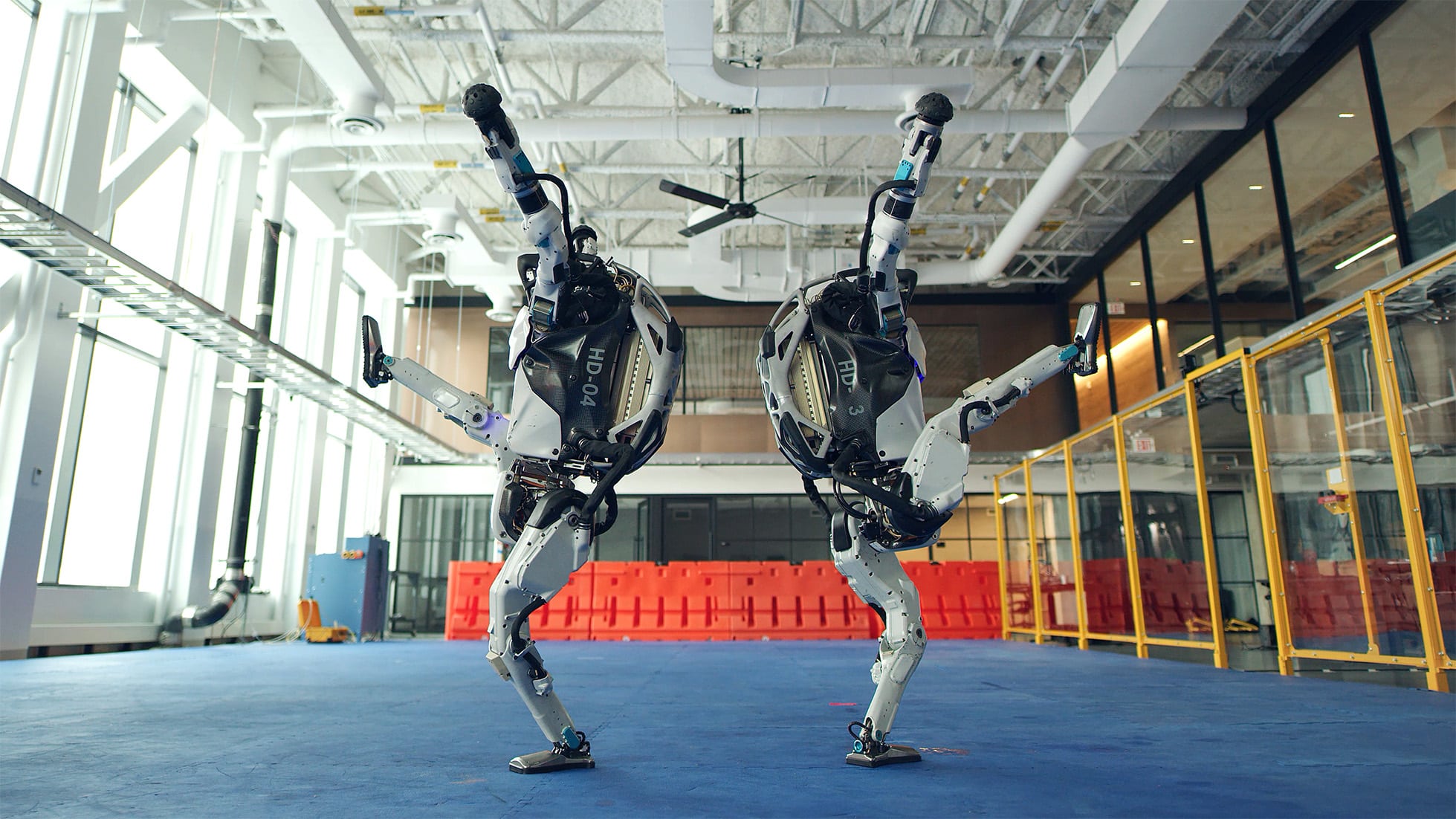
Hyundai Motor Group and its robotics subsidiary Boston Dynamics unveiled an all-electric humanoid robot called Atlas at CES 2026 and announced plans to begin mass-producing the machine by 2028, aiming to build 30,000 units annually for deployment at U.S. manufacturing plants such as the Savannah, Georgia facility, where these robots will assist with repetitive and parts-sequencing tasks before advancing to more complex assembly work; the initiative is part of Hyundai’s broader push into factory automation and AI-assisted production, backed by partnerships with AI leaders like Google DeepMind and Nvidia, though this shift also stokes debate about the future of human labor in industrial settings—the technical capabilities of Atlas and Hyundai’s strategic investment in humanoid robotics for post-2028 manufacturing evolution.
Sources:
https://www.theverge.com/news/853973/hyundai-boston-dynamics-atlas-robot-factory-2028
https://www.axios.com/2026/01/05/hyundai-humanoid-robots-boston-dynamics
https://www.reuters.com/business/autos-transportation/hyundai-motor-group-plans-deploy-humanoid-robots-us-factory-2028-2026-01-05/
Key Takeaways
- Hyundai and Boston Dynamics plan to mass-produce 30,000 Atlas humanoid robots annually by 2028 for use in U.S. factories, signaling a major step in industrial robotics deployment.
- The robots are initially slated for repetitive and parts-sequencing tasks, with plans to expand their roles into more complex assembly duties by 2030.
- Strategic partnerships with AI firms like Google DeepMind and Nvidia underpin Hyundai’s effort to combine robotics hardware with advanced artificial intelligence capabilities.
In-Depth
At the Consumer Electronics Show (CES) 2026 in Las Vegas, Hyundai Motor Group and its robotics arm Boston Dynamics revealed a production-ready version of the Atlas humanoid robot, marking a watershed for the practical adoption of autonomous machines in serious industrial use. After years of prototypes and demos that thrilled audiences with backflips and acrobatics, Atlas is now being pitched as a tool to boost efficiency on factory floors, starting with Hyundai’s vehicle assembly operations in Savannah, Georgia.
According to multiple reports, Hyundai plans to ramp up production to about 30,000 robots per year by 2028, an ambitious target that would place it at the forefront of large-scale humanoid robotics manufacturing. This isn’t science fiction anymore — it’s a calculated strategic shift by a major global automaker to integrate advanced robotics into core production lines. Initially, Atlas is expected to handle parts sequencing and other tasks where consistency and precision can improve throughput and reduce human strain. By 2030, the company aims to expand Atlas’ responsibilities to even more complex and repetitive assembly work.
Underpinning this strategy is Hyundai’s broader U.S. investment and its collaboration with AI powerhouses like Google DeepMind and Nvidia, suggesting that the robots won’t just be mechanical muscle but also increasingly smart. While proponents emphasize gains in safety and productivity, critics warn about the potential impact on human jobs. That tension underscores the larger cultural and economic conversation around automation: how to balance technological progress with job security and workforce adaptation.