

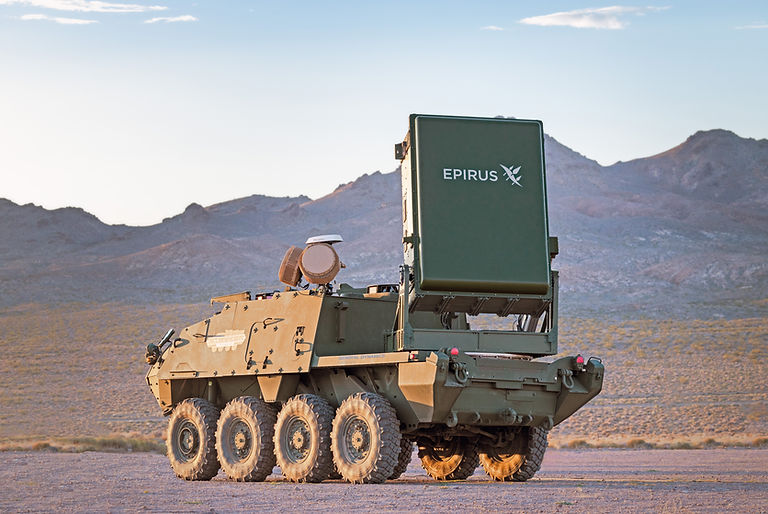
Epirus, a U.S. defense technology firm founded by Silicon Valley entrepreneurs and military veterans, is advancing its Leonidas high-power microwave (HPM) system as a cutting-edge directed energy weapon aimed at countering growing drone threats by disabling swarms and electronic targets with bursts of weaponized electromagnetic energy; recent demonstrations include a December 2025 live-fire test at a U.S. government site where Leonidas successfully defeated fiber-optic-guided unmanned aerial systems—drones normally immune to traditional jamming—and U.S. military interest is underscored by Army contracts and past demonstrations showing dozens of drones neutralized in seconds, positioning Leonidas as a scalable, software-defined, non-kinetic element in layered air-defense architectures.
Sources
https://www.jpost.com/defense-and-tech/article-884657
https://www.epirusinc.com/press-releases/epirus-leonidas-demonstrates-successful-use-of-high-power-microwave-to-defeat-fiber-optic-controlled-uas
https://www.epirusinc.com/electronic-warfare
Key Takeaways
• The Leonidas high-power microwave system is designed to disable drones and other electronic threats by emitting directed electromagnetic energy rather than traditional projectiles or jamming.
• Recent live-fire demonstrations showed Leonidas successfully neutralizing fiber-optic-guided drones, a type of unmanned system that traditionally evades standard electronic warfare measures.
• U.S. military testing and contracts highlight the system’s growing operational relevance as part of future layered air-defense strategies against swarming and advanced drone threats.
In-Depth
Epirus’ Leonidas system represents a shift in counter-unmanned aerial system (UAS) strategy toward directed energy weapons that leverage high-power microwave technology to neutralize electronic systems on drones without kinetic impact. Unlike traditional air-defense technologies that rely on projectiles or even radio-frequency jamming, Leonidas emits concentrated bursts of electromagnetic energy designed to overwhelm onboard electronics. This fundamentally changes the engagement model: rather than intercepting individual devices, Leonidas can target a volume of space, disrupting any electronics that pass through and making it particularly well suited for addressing large swarms of inexpensive drones. According to company and press release material, the system is built on a software-defined, solid-state architecture using gallium nitride semiconductors, which makes it more compact and mobile than legacy high-power microwave systems, and capable of deployment on various platforms from ground vehicles to aerial and maritime applications.
The operational significance of Leonidas was underscored in a December 2025 U.S. government test where the system successfully defeated fiber-optic guided drones, a category that bypasses many traditional defenses because these drones use physical cable links instead of radio frequencies, making them resistant to jamming and spoofing. Reports describe this event as a first in which electromagnetic interference was weaponized to defeat such drones, reinforcing the argument that directed energy can fill critical gaps in counter-UAS capabilities. The ability to produce a “full kill” by directly impacting a drone’s internal electronics without resorting to physical interception or explosive ordnance reduces collateral risks and provides commanders with a tool to counter advanced aerial threats that proliferate in modern conflict zones, from tactical reconnaissance to offensive swarm tactics.
U.S. defense interest in Leonidas has been visible in Army contracts and tests that explore its effectiveness against swarms and advanced drone designs. The scalability and non-kinetic nature of the system fit within broader discussions on layered defense frameworks, where kinetic interceptors, jamming systems, and directed energy weapons work in concert to provide comprehensive protection against a spectrum of aerial threats. Leonidas’ development also reflects a broader industry trend toward software-defined and modular defense technologies that can adapt to evolving threats without extensive hardware modifications. As drone technology advances and adversaries employ increasingly sophisticated unmanned systems, including those with hard-to-jam guidance links, directed energy systems like Leonidas could become key components of modern air defense. This evolution of counter-drone strategy not only enhances battlefield flexibility but also signals a move toward energy-based defensive solutions as a complement to traditional approaches.