

Close Menu

    Subscribe to Updates

    Get the latest creative news from FooBar about art, design and business.

    What's Hot

    DeSantis Pushes Aggressive State AI Regulation With AI Bill of Rights and Data Center Limits

    February 9, 2026

    Lawmakers, Parents Renew Push To Sunset Section 230 And Make Big Tech Liable

    February 9, 2026

    Slovenia Proposes Ban On Social Media For Under-15s Amid Growing Global Push

    February 8, 2026
    Facebook X (Twitter) Instagram
    • Tech
    • AI News
    • Get In Touch
    Facebook X (Twitter) LinkedIn
    TallwireTallwire
    • Tech

      Lawmakers, Parents Renew Push To Sunset Section 230 And Make Big Tech Liable

      February 9, 2026

      NASA Clears Smartphones for Artemis Moon Mission

      February 7, 2026

      SpaceX Acquires xAI in Record-Setting Merger, Pivots Toward Space-Based AI Data Centers

      February 7, 2026

      Iran’s Government Blackout of the Internet Amid Protests Stifles Communication and Masks Violence

      February 6, 2026

      Israeli Aerospace Startup Unveils Heavy-Lift Cargo Drone at Singapore Airshow

      February 6, 2026
    • AI News

      DeSantis Pushes Aggressive State AI Regulation With AI Bill of Rights and Data Center Limits

      February 9, 2026

      EU Drove Global Censorship Through Tech Platforms: House Judiciary Report

      February 8, 2026

      China’s Porn Spam Tactic on X Draws Red Flags Over Digital Censorship

      February 8, 2026

      Amazon Begins Closed Beta Testing of AI Tools to Reshape Film and TV Production

      February 8, 2026

      European University Offline for Days After Major Cyberattack Disrupts Systems

      February 7, 2026
    • Security

      EU Drove Global Censorship Through Tech Platforms: House Judiciary Report

      February 8, 2026

      Slovenia Proposes Ban On Social Media For Under-15s Amid Growing Global Push

      February 8, 2026

      NSW Moves to Make Employers Liable for AI and Digital System Harms Under Work Safety Law

      February 8, 2026

      Hackers Dump Millions of Harvard and UPenn Records After Refused Ransom Demands

      February 8, 2026

      European University Offline for Days After Major Cyberattack Disrupts Systems

      February 7, 2026
    • Health

      AI Technology Offers Early Warning System for Deadly Coral Bleaching

      February 6, 2026

      Israel’s New Soreq B Desalination Plant Reaches Full Operational Capacity Boosting Water Supply

      February 3, 2026

      Institutions Are Missing AI’s Potential For Drug Discovery, Experts Say

      February 2, 2026

      Landmark Legal Battles Ignite Over Alleged Social Media Addiction Impacting Youth and Schools

      February 1, 2026

      OpenAI Deploys Free AI-Powered Scientific Workspace Prism to Reshape Research

      January 31, 2026
    • Science

      Pacific Fusion Advances Cheaper Path to Fusion Through Sandia Reactor Experiments

      February 8, 2026

      Trump’s Critical Minerals Reserve Signals U.S. Adapts to Electric Future Amid China Competition

      February 7, 2026

      NASA Clears Smartphones for Artemis Moon Mission

      February 7, 2026

      Elon Musk Pushes Forward With Orbital Data Center Ambitions

      February 7, 2026

      AI Technology Offers Early Warning System for Deadly Coral Bleaching

      February 6, 2026
    • People

      Google Co-Founder’s Epstein Contacts Reignite Scrutiny of Elite Tech Circles

      February 7, 2026

      Bill Gates Denies “Absolutely Absurd” Claims in Newly Released Epstein Files

      February 6, 2026

      Informant Claims Epstein Employed Personal Hacker With Zero-Day Skills

      February 5, 2026

      Starlink Becomes Critical Internet Lifeline Amid Iran Protest Crackdown

      January 25, 2026

      Musk Pledges to Open-Source X’s Recommendation Algorithm, Promising Transparency

      January 21, 2026
    TallwireTallwire
    Home»Science»NASA Unveils Athena: Agency’s Most Powerful, Efficient Supercomputer to Advance Space, Aeronautics Research
    Science

    NASA Unveils Athena: Agency’s Most Powerful, Efficient Supercomputer to Advance Space, Aeronautics Research

    3 Mins Read
    Facebook Twitter Pinterest LinkedIn Tumblr Email
    Share
    Facebook Twitter LinkedIn Pinterest Email

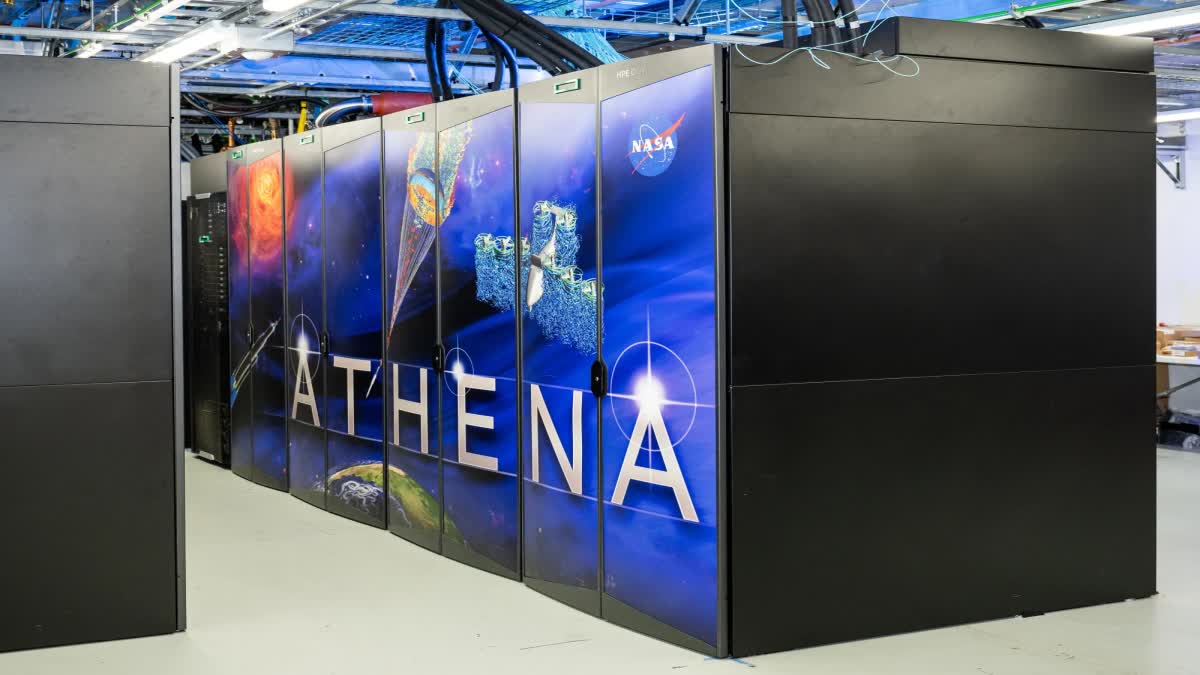
    NASA has announced the rollout of its most powerful and efficient supercomputer yet, named Athena, housed at the Modular Supercomputing Facility at the agency’s Ames Research Center in Silicon Valley and now available to researchers following a beta period, delivering over 20 petaflops of peak performance to support complex mission modeling, advanced simulations for rocket launches and next-generation aircraft, and large-scale data analysis while cutting utility costs and expanding computational capacity to meet evolving agency needs through a hybrid approach combining supercomputing and commercial cloud resources.

    Sources

    https://www.nasa.gov/technology/computing/nasa-launches-its-most-powerful-efficient-supercomputer/
    https://sciencesprings.wordpress.com/2026/01/28/from-the-national-aeronautics-and-space-administration-nasa-launches-its-most-powerful-efficient-supercomputer/
    https://www.nas.nasa.gov/hecc/resources/environment.html

    Key Takeaways

    • NASA has brought its Athena supercomputer online as the most powerful and efficient system in its High-End Computing Capability portfolio, achieving over 20 petaflops of theoretical peak performance and offering researchers advanced capabilities for simulations, AI model development, and data-intensive science.

    • Athena is housed in an environmentally considerate module of the Modular Supercomputing Facility at Ames Research Center and contributes to reduced utility costs and expanded hybrid computing flexibility by integrating with cloud-based resources for mission-critical workloads.

    • The new system surpasses previous NASA supercomputers like Aitken and Pleiades in power and efficiency, underscoring the agency’s investment in high performance computing to support everything from space exploration and aeronautics research to artificial intelligence and large-scale scientific computing.

    In-Depth

    NASA’s recent announcement of Athena, the agency’s latest supercomputer, marks a significant milestone in high-performance computing for space exploration and scientific research. Rolled out to users after successful beta testing earlier this year, Athena delivers more than 20 petaflops of peak performance, placing it at the forefront of NASA’s computational capability. This massive computing power allows scientists and engineers to run complex simulations that are critical for designing rocket launches, modeling aeronautical systems for next-generation aircraft, and training advanced artificial intelligence models on enormous datasets. The result is a computing platform that not only boosts performance but also supports the broad, multidisciplinary research NASA undertakes to push the boundaries of discovery.

    Housing Athena within the Modular Supercomputing Facility at the Ames Research Center in California’s Silicon Valley reflects NASA’s long-term strategy of building energy-efficient, environmentally aware computing infrastructures. The modular approach significantly lowers the energy and water costs traditionally associated with large high-performance computing installations and complements NASA’s hybrid computing strategy, which allows workloads to flexibly run on both dedicated supercomputing hardware and commercial cloud environments. By integrating cloud resources alongside Athena, researchers can scale their projects more efficiently and tailor computation environments to the challenges of different mission requirements.

    This new supercomputer also succeeds and surpasses its predecessors in both computational power and operational flexibility. Systems like Aitken and Pleiades have long supported NASA’s computing needs, but Athena promises expanded capabilities to meet the agency’s evolving missions. This enhanced performance will be crucial as NASA tackles increasingly data-intensive tasks, from large-scale environmental simulations and aerodynamic modeling to the development of artificial intelligence tools that can uncover new insights from astronomical and Earth science data.

    By expanding its high-performance computing portfolio, NASA is not just enhancing the technological foundation necessary for future missions; it is also reinforcing the United States’ leadership in scientific computing. The investment in Athena aligns with broader goals to maintain national competitiveness in areas where advanced computing plays a strategic role in innovation, economic growth, and scientific discovery.

    With Athena now operational, NASA researchers — and qualified external scientists supporting agency programs — will have access to one of the nation’s most powerful research computing environments, unlocking new opportunities to advance our understanding of the universe, improve aeronautical systems, and accelerate innovations that rely on high performance computation.

    Share. Facebook Twitter Pinterest LinkedIn Tumblr Email
    Previous ArticleGoogle Warns Of Ongoing Active Exploitation Of WinRAR Vulnerability By Nation-State And Criminal Actors
    Next Article Microwave Defense Weapon Gains Traction With U.S. Tests and Counter-Drone Breakthroughs

    Related Posts

    DeSantis Pushes Aggressive State AI Regulation With AI Bill of Rights and Data Center Limits

    February 9, 2026

    Lawmakers, Parents Renew Push To Sunset Section 230 And Make Big Tech Liable

    February 9, 2026

    EU Drove Global Censorship Through Tech Platforms: House Judiciary Report

    February 8, 2026

    Slovenia Proposes Ban On Social Media For Under-15s Amid Growing Global Push

    February 8, 2026
    Add A Comment
    Leave A Reply Cancel Reply

    Editors Picks

    Lawmakers, Parents Renew Push To Sunset Section 230 And Make Big Tech Liable

    February 9, 2026

    NASA Clears Smartphones for Artemis Moon Mission

    February 7, 2026

    SpaceX Acquires xAI in Record-Setting Merger, Pivots Toward Space-Based AI Data Centers

    February 7, 2026

    Iran’s Government Blackout of the Internet Amid Protests Stifles Communication and Masks Violence

    February 6, 2026
    Top Reviews
    Tallwire
    Facebook X (Twitter) LinkedIn Threads Instagram RSS
    • Tech
    • Entertainment
    • Business
    • Government
    • Academia
    • Transportation
    • Legal
    • Press Kit
    © 2026 Tallwire. Optimized by ARMOUR Digital Marketing Agency.

    Type above and press Enter to search. Press Esc to cancel.