

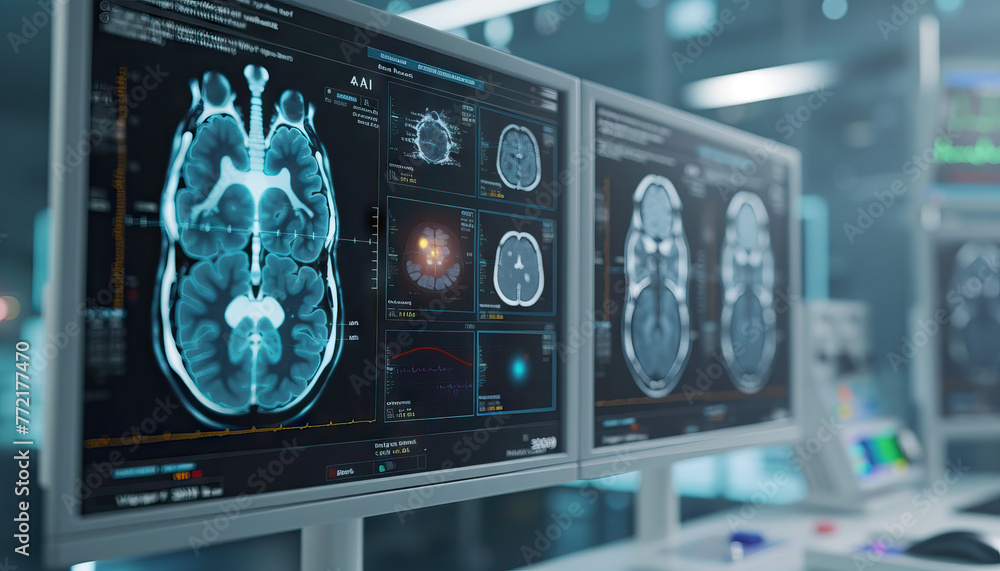
A newly published study finds that a next-generation artificial intelligence system has surpassed human physicians in diagnosing complex emergency room cases, delivering higher accuracy rates in triage and clinical reasoning tasks, but experts caution that while the technology shows real promise as a diagnostic support tool, it remains far from ready to replace doctors due to its lack of real-world testing, inability to interpret human cues, and unresolved concerns around safety, accountability, and overreliance in clinical settings.
Sources
https://www.sfchronicle.com/health/article/ai-outscores-doctors-er-diagnosis-study-22230972.php
https://www.theguardian.com/technology/2026/apr/30/ai-outperforms-doctors-in-harvard-trial-of-emergency-triage-diagnoses
https://www.vox.com/health/487425/open-ai-chatgpt-diagnosis-symptoms-second-opinion-study
Key Takeaways
- Artificial intelligence demonstrated higher diagnostic accuracy than physicians in controlled emergency room scenarios, particularly in complex cases requiring layered reasoning.
- Despite outperforming doctors in testing environments, the technology lacks real-world validation and cannot replicate human judgment, empathy, or patient interaction.
- Experts emphasize that AI should augment—not replace—physicians, warning of risks tied to overreliance, accountability gaps, and insufficient clinical oversight.
In-Depth
The latest research showcasing artificial intelligence outperforming physicians in emergency diagnostic scenarios should serve as both a wake-up call and a reality check. On one hand, the findings reinforce what many have suspected for years: that machine-driven analysis, unburdened by fatigue, bias, or time constraints, can process complex medical data with remarkable precision. In controlled environments, the AI system demonstrated superior reasoning capabilities, identifying correct diagnoses at a higher rate than trained doctors and even outperforming them in formulating long-term treatment strategies.
But before anyone starts talking about replacing physicians with algorithms, a dose of common sense is in order. These results were achieved in structured, text-based scenarios—not in the chaos of a real emergency room, where patients present incomplete information, symptoms evolve in real time, and decisions carry immediate life-or-death consequences. The AI’s inability to assess physical cues, emotional distress, or subtle clinical nuances highlights a glaring limitation. Medicine is not just a logic puzzle—it is a human endeavor requiring judgment, accountability, and trust.
There is also a broader concern that deserves attention: the risk of overreliance. If physicians begin to lean too heavily on AI recommendations, there is a real possibility of skill erosion, where clinical instincts weaken over time. That is not progress—it is dependency. And when something goes wrong, as it inevitably will in any system, the question of accountability becomes unavoidable. Who is responsible—the doctor, the developer, or the machine?
The more grounded view is that AI represents a powerful tool, not a replacement. Used properly, it can serve as a second set of eyes, catching missed diagnoses and helping physicians manage increasingly complex workloads. Used improperly, it could introduce new risks into a system already under strain. The challenge now is not whether AI belongs in medicine—it clearly does—but whether it can be integrated in a way that strengthens, rather than undermines, the role of the physician.