

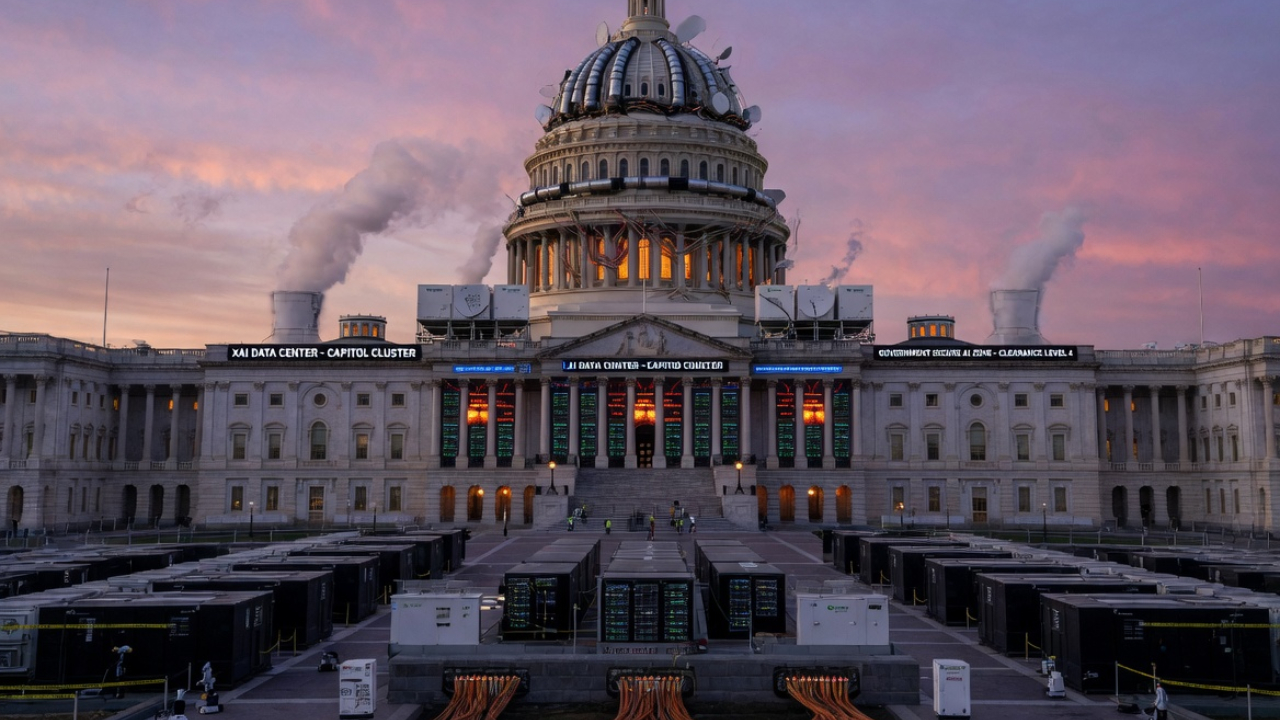
Artificial intelligence is no longer a speculative frontier—it is an active battleground where innovation, economics, and governance are colliding in real time. As AI systems become more deeply embedded in everything from healthcare diagnostics to financial markets and national security, governments at every level are stepping in to shape how this technology is developed, deployed, and controlled. At the center of this intervention lies a critical question: does government involvement in AI—particularly in regulating the construction and operation of massive data centers—protect the public interest, or does it risk suffocating the very innovation that drives economic growth?
The modern AI ecosystem depends heavily on large-scale data centers—vast facilities housing thousands of servers that power machine learning models. These centers require enormous amounts of electricity, land, water for cooling, and infrastructure investment. As a result, local, state, and federal governments are increasingly inserting themselves into the approval, zoning, and environmental review processes tied to these developments. In some cases, they are also offering subsidies and tax incentives to attract AI infrastructure, while in others, they are imposing restrictions based on environmental or community concerns.
From a conservative perspective, this dual approach—both enabling and restricting—raises legitimate concerns about overreach and unintended consequences. On one hand, there is a reasonable argument for government oversight. Data centers are not benign. They consume vast amounts of energy, can strain local grids, and often reshape communities. Left entirely unchecked, rapid expansion could lead to environmental degradation, higher utility costs for residents, and infrastructure bottlenecks. In that sense, a measured level of regulation can ensure that growth is sustainable and that private companies do not externalize their costs onto the public.
However, the problem arises when “measured” turns into “micromanaged.” The regulatory burden surrounding AI infrastructure is growing more complex by the year. Lengthy permitting processes, inconsistent rules across jurisdictions, and politically driven decision-making can delay projects or kill them altogether. This creates a chilling effect on investment. Companies that might otherwise build and expand domestically begin to look overseas, where regulatory frameworks may be more predictable or less restrictive. The result is not just a loss of economic opportunity, but a strategic vulnerability as critical AI capabilities migrate beyond U.S. borders.
For consumers, the implications are not abstract. AI development is capital-intensive, and the costs associated with regulation inevitably get passed down the chain. When companies face higher compliance costs, delays, or outright project cancellations, those expenses don’t disappear—they are reflected in higher prices for AI-powered services, slower innovation cycles, and fewer choices in the marketplace. In a competitive environment, these inefficiencies can make the difference between leadership and lagging behind.
At the same time, there is a legitimate consumer protection argument in favor of some level of oversight. AI systems are increasingly responsible for decisions that affect people’s lives—loan approvals, hiring recommendations, medical assessments, and more. Without guardrails, there is a risk of bias, lack of transparency, and misuse of personal data. Government involvement, when narrowly tailored, can set baseline standards that protect consumers without dictating outcomes. The challenge is ensuring that these standards remain flexible enough to evolve with the technology, rather than locking in outdated rules that hinder progress.
The free market, when functioning properly, is an extraordinarily effective engine for innovation. Competition drives efficiency, rewards risk-taking, and punishes failure. In the AI space, this dynamic has already produced remarkable advancements at a pace few could have predicted. Heavy-handed government intervention threatens to disrupt this balance. When regulators attempt to pick winners and losers, or impose blanket rules that fail to account for the diversity of use cases within AI, they risk replacing market signals with political ones.
Yet, a completely hands-off approach is not realistic either. National security concerns, data privacy issues, and the sheer scale of AI’s potential impact mean that some level of public-sector involvement is inevitable. The question is not whether government should play a role, but how limited and targeted that role should be.
The most effective path forward likely lies in a restrained, principle-based framework. Governments should focus on clear, narrowly defined objectives—protecting critical infrastructure, ensuring transparency where it matters, and preventing demonstrable harm—while avoiding the temptation to regulate every aspect of AI development. Streamlining permitting processes for data centers, creating consistent standards across jurisdictions, and resisting politically motivated restrictions would go a long way toward maintaining the United States’ competitive edge.
In the end, the stakes are high. AI is not just another industry; it is a foundational technology that will shape the economy, national security, and daily life for decades to come. Overregulation risks driving innovation away and burdening consumers, while under-regulation risks real harm and instability. Striking the right balance is not easy, but it is essential. The goal should not be control for its own sake, but a framework that allows innovation to thrive while ensuring that its benefits—and its risks—are responsibly managed.