

Close Menu

    Subscribe to Updates

    Get the latest tech news from Tallwire.

      What's Hot

      Federal Reserve Warns AI Agents Could Trigger Bank Runs in Minutes, Threatening Financial Stability

      November 21, 2026

      Google Warns Autonomous AI Cyberattacks Have Arrived, Threatening U.S. Cybersecurity

      November 21, 2026

      Australia’s Greens Push 12-Month Smart Glasses Import Ban Over Privacy and Surveillance Concerns

      November 21, 2026
      Facebook X (Twitter) Instagram
      • Tech
      • AI
      • Get In Touch
      Facebook X (Twitter) LinkedIn
      TallwireTallwire
      • AI

        Google Warns Autonomous AI Cyberattacks Have Arrived, Threatening U.S. Cybersecurity

        November 21, 2026

        Federal Reserve Warns AI Agents Could Trigger Bank Runs in Minutes, Threatening Financial Stability

        November 21, 2026

        Paris Hilton Joins Bipartisan Push for DEFIANCE Act to Let AI Deepfake Victims Sue

        November 21, 2026

        Australia’s Greens Push 12-Month Smart Glasses Import Ban Over Privacy and Surveillance Concerns

        November 21, 2026

        Congressional Investigation Finds Major AI Platforms Can Generate Terrorist Attack Plans

        November 21, 2026
      • Tech

        Australia’s Greens Push 12-Month Smart Glasses Import Ban Over Privacy and Surveillance Concerns

        November 21, 2026

        CISA Warns Critical Java4Shell Security Flaw Could Allow Hackers to Hijack Computer Systems

        November 21, 2026

        Apple Pay, iCloud and App Store Outage Disrupts Thousands After Internal System Update

        November 20, 2026

        FAA’s $875 Million AI Air Traffic System Faces Scrutiny After Nationwide Flight Ground Stop

        November 19, 2026

        Uber Adds Amazon’s Zoox Robotaxis in Las Vegas, Escalating Driverless Car Competition With Waymo

        November 18, 2026
      • Business/Finance
      • Cybersecurity
      • Government
        • Legal
      • Health

        Medicare Delays Remote Patient Monitoring Restrictions Until 2029, Giving Tech Firms Reprieve

        November 11, 2026

        Anthropic’s AI Cancer Cure Claims Draw Scientific Skepticism as Drug Research Expands

        November 10, 2026

        Australia’s High Court Hears Constitutional Challenges to Social Media Ban

        November 7, 2026

        Majority of AI Health Users Trust Chatbots Over Doctors, Raising Patient Safety Concerns

        November 4, 2026

        Quantum Computing Breakthrough Could Transform AI Data Centers and Slash Energy Costs

        November 2, 2026
      • Science
        • Academia
      • Entertainment/Communications
      • People
      • Transportation
      • Opinion
      TallwireTallwire
      Home»Business/Finance»Data Centers Set To Dominate Commercial Electricity Demand By Mid-Century
      Business/Finance

      Data Centers Set To Dominate Commercial Electricity Demand By Mid-Century

      5 Mins Read
      Facebook Twitter Pinterest LinkedIn Tumblr Email
      Share
      Facebook Twitter LinkedIn Pinterest Email

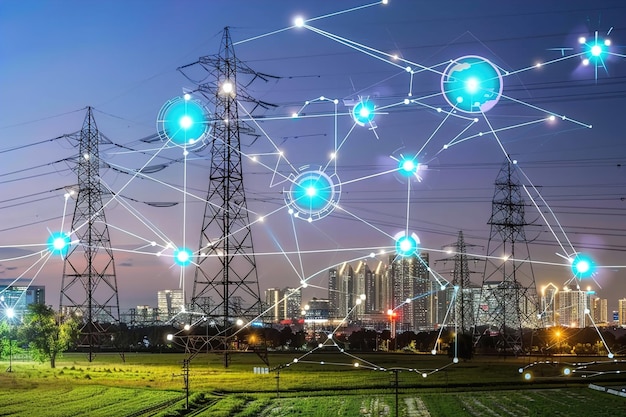
      The rapid expansion of artificial intelligence, cloud computing, and digital infrastructure is driving a surge in electricity demand from data centers, with projections indicating they could account for as much as one-third of all commercial building electricity usage in the United States by 2050. This shift reflects not only the exponential growth in data processing needs but also a structural transformation in how energy is consumed across the economy. As hyperscale facilities multiply and power-intensive AI workloads become standard, the strain on electrical grids is expected to intensify, forcing policymakers and utilities to confront difficult questions about capacity, reliability, and cost. While technological innovation has historically improved efficiency, the sheer scale of future demand may outpace those gains, raising concerns about energy security, infrastructure investment, and the broader economic implications of a digital-first economy increasingly dependent on uninterrupted power.

      Sources

      https://www.eia.gov/outlooks/aeo/
      https://www.iea.org/reports/data-centres-and-data-transmission-networks
      https://www.utilitydive.com/news/data-centers-electricity-demand-growth-ai-grid/

      Key Takeaways

      • Data centers are projected to consume up to one-third of commercial electricity by 2050, driven largely by AI and cloud expansion.
      • The rapid growth in demand is expected to strain electrical grids and require major infrastructure investments.
      • Efficiency gains may not be enough to offset the scale of new power consumption, raising long-term energy security concerns.

      In-Depth

      The trajectory of electricity demand in the United States is being reshaped by a force that, until recently, operated largely in the background: data centers. Once viewed as niche infrastructure supporting the internet’s backbone, they have evolved into one of the most power-hungry segments of the modern economy. With the rise of artificial intelligence, machine learning, and hyperscale cloud computing, these facilities are no longer ancillary—they are central. The projection that data centers could account for up to one-third of all commercial building electricity use by 2050 underscores just how profound this transformation is becoming.

      At the core of this shift is the explosive growth in computational demand. AI systems, particularly large language models and advanced analytics platforms, require immense processing power. Training and operating these systems involves vast arrays of servers running continuously, often in tightly controlled environments that demand additional energy for cooling and maintenance. Unlike traditional commercial buildings, where energy use can fluctuate based on occupancy and time of day, data centers operate around the clock, creating a constant and growing baseline demand on the grid.

      This trend introduces a set of challenges that extend well beyond the tech sector. Electrical grids, many of which were designed decades ago, are not necessarily equipped to handle such concentrated and continuous loads. The need for reliable, uninterrupted power is non-negotiable for data centers, meaning utilities must prioritize stability and redundancy. That, in turn, requires significant investment in generation capacity, transmission infrastructure, and grid modernization. Without these upgrades, the risk of outages or bottlenecks increases, potentially affecting not just data centers but the broader economy that depends on them.

      There is also a broader policy dimension to consider. As electricity demand rises, so too does the question of how that power is generated. While there has been a push toward renewable energy sources, the intermittent nature of wind and solar presents challenges for facilities that require constant uptime. This reality may force a reconsideration of the energy mix, including the role of natural gas, nuclear power, and other baseload sources. Policymakers will have to balance environmental goals with the practical necessity of maintaining a stable and sufficient energy supply.

      Efficiency improvements, often cited as a mitigating factor, may not provide the relief many expect. While advancements in server technology, cooling systems, and facility design have made data centers more energy-efficient on a per-unit basis, these gains are being outpaced by the sheer growth in demand. In other words, even as each individual operation becomes more efficient, the total volume of operations is increasing at a faster rate. This dynamic creates a paradox where overall energy consumption continues to rise despite technological progress.

      The economic implications are equally significant. Energy costs are a major component of data center operations, and as demand increases, so too could prices. This has the potential to ripple through the economy, affecting everything from cloud service pricing to the cost of digital services that consumers and businesses rely on daily. At the same time, the need for new infrastructure represents both a challenge and an opportunity. Investment in power generation and grid expansion could stimulate economic activity, but it will require careful planning and coordination to ensure resources are allocated effectively.

      Ultimately, the rise of data centers as a dominant force in electricity consumption is a reflection of a broader shift toward a digital economy. The conveniences and capabilities that define modern life—from streaming services to advanced analytics—are underpinned by physical infrastructure that demands real-world resources. As this infrastructure expands, so too must the systems that support it. The coming decades will test whether the United States can adapt its energy framework to meet these demands without compromising reliability, affordability, or long-term sustainability.

      Intel
      Share. Facebook Twitter Pinterest LinkedIn Tumblr Email
      Previous ArticleSmall Businesses Push Back As AI-Driven Campaign Targets Tax Expansion
      Next Article Questions Mount Over Politicized Resistance To Texas AI Data Center Expansion

      Related Posts

      Google Warns Autonomous AI Cyberattacks Have Arrived, Threatening U.S. Cybersecurity

      November 21, 2026

      Federal Reserve Warns AI Agents Could Trigger Bank Runs in Minutes, Threatening Financial Stability

      November 21, 2026

      Paris Hilton Joins Bipartisan Push for DEFIANCE Act to Let AI Deepfake Victims Sue

      November 21, 2026

      Australia’s Greens Push 12-Month Smart Glasses Import Ban Over Privacy and Surveillance Concerns

      November 21, 2026
      Add A Comment
      Leave A Reply Cancel Reply

      Editors Picks

      Australia’s Greens Push 12-Month Smart Glasses Import Ban Over Privacy and Surveillance Concerns

      November 21, 2026

      CISA Warns Critical Java4Shell Security Flaw Could Allow Hackers to Hijack Computer Systems

      November 21, 2026

      Apple Pay, iCloud and App Store Outage Disrupts Thousands After Internal System Update

      November 20, 2026

      FAA’s $875 Million AI Air Traffic System Faces Scrutiny After Nationwide Flight Ground Stop

      November 19, 2026
      Popular Topics
      spotlight Tim Cook trending UAE Tech SpaceX Tesla Viral Startup Series A Taiwan Tech Tesla Cybertruck Series B Software Stocks Satya Nadella Space starlink Satellite Samsung Sundar Pichai
      Major Tech Companies
      • Apple News
      • Google News
      • Meta News
      • Microsoft News
      • Amazon News
      • Samsung News
      • Nvidia News
      • OpenAI News
      • Tesla News
      • AMD News
      • Anthropic News
      • Elbit News
      AI & Emerging Tech
      • AI Regulation News
      • AI Safety News
      • AI Adoption
      • Quantum Computing News
      • Robotics News
      Key People
      • Sam Altman News
      • Jensen Huang News
      • Elon Musk News
      • Mark Zuckerberg News
      • Sundar Pichai News
      • Tim Cook News
      • Satya Nadella News
      • Mustafa Suleyman News
      Global Tech & Policy
      • Israel Tech News
      • India Tech News
      • Taiwan Tech News
      • UAE Tech News
      Startups & Emerging Tech
      • Series A News
      • Series B News
      • Startup News
      Tallwire
      Facebook X (Twitter) LinkedIn Threads Instagram RSS
      • AI
      • Tech
      • Business/Finance
      • Cybersecurity
      • Government
      • Legal
      • Health
      • Science
      • Academia
      • Entertainment/Communications
      • People
      • Transportation
      • Opinion
      • Press Kit
      © 2026 Tallwire. Optimized by ARMOUR Digital Marketing Agency.

      Type above and press Enter to search. Press Esc to cancel.