

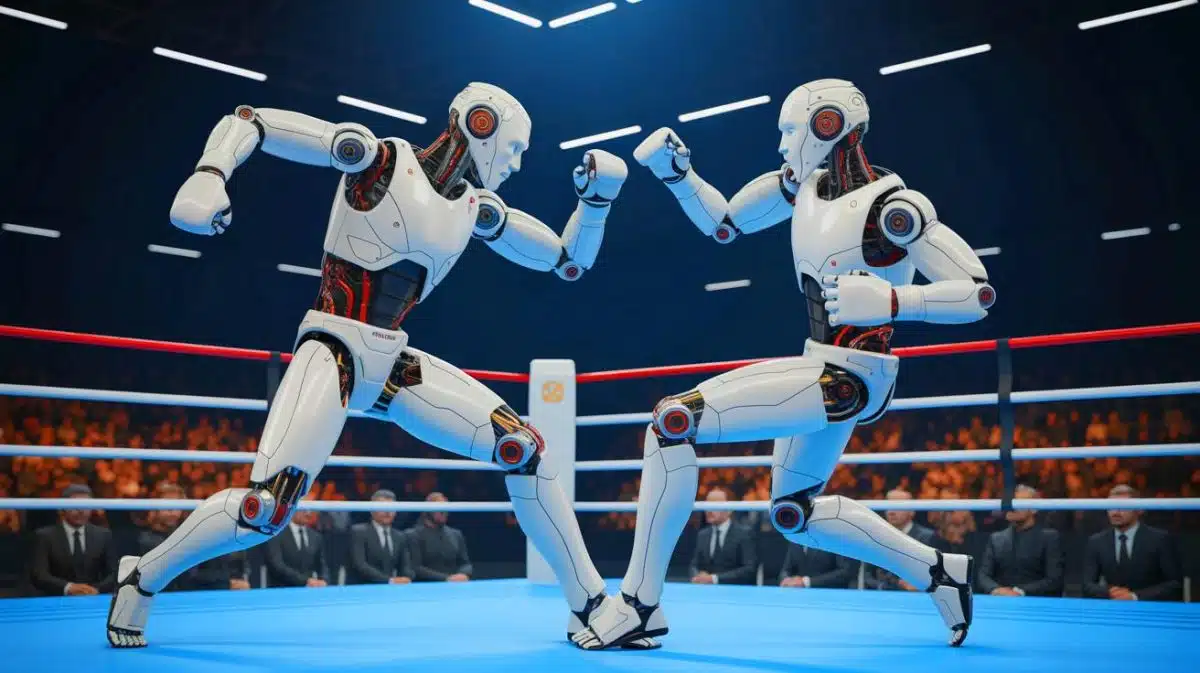
A new robotics entertainment venture in San Francisco is pushing the boundaries of consumer technology and spectacle, as Robot Entertainment Kombat (REK) establishes a permanent home where the public can not only watch humanoid robots engage in full-contact combat but also purchase and customize the machines themselves, signaling a broader shift toward normalizing human-robot interaction in everyday life; the VR-controlled robots, operated by human users, are positioned as both entertainment devices and early-stage consumer products, reflecting the city’s continued dominance in cutting-edge artificial intelligence and robotics development while raising questions about commercialization, cultural acceptance, and the long-term trajectory of humanoid robotics in American society.
Sources
https://www.sfchronicle.com/tech/article/buy-fighting-robots-sf-22231111.php
https://tech.yahoo.com/general/articles/now-buy-humanoid-fighting-robots-200246788.html
https://sfstandard.com/2026/05/03/ai-sf-tourist-s-guide-our-new-robot-overlords-hometown/
Key Takeaways
- The launch of a permanent robot fighting venue reflects a growing push to commercialize humanoid robotics beyond industrial or military applications and into consumer-facing entertainment markets.
- San Francisco continues to act as a proving ground for emerging technologies, where experimental concepts—from autonomous delivery systems to AI-managed retail—are rapidly introduced to the public.
- The blending of virtual reality control with physical robotic systems signals a transitional phase in human-machine interaction, where accessibility and familiarity are being prioritized to accelerate adoption.
In-Depth
What’s unfolding in San Francisco is more than a novelty act or a passing tech gimmick—it’s a calculated effort to bring robotics out of the lab and into the mainstream, and it’s happening in a way that aligns squarely with a broader push toward American technological leadership. The establishment of a permanent venue for robot combat, where consumers can directly engage with, customize, and even purchase humanoid machines, marks a notable escalation in how these technologies are being positioned.
At the center of this effort is a simple but powerful idea: familiarity drives acceptance. By creating an environment where the public can see robots up close, interact with them, and even control them in competitive settings, developers are effectively lowering the psychological barrier that has historically separated people from advanced automation. This isn’t just about entertainment—it’s about conditioning a market. The use of virtual reality as the control interface is especially telling, as it bridges the gap between human intuition and machine execution, making complex robotics feel accessible rather than intimidating.
There’s also a strategic economic dimension here. By introducing a retail component—where robots can be bought, rented, or modified—the venture is testing whether there is a viable consumer market for humanoid machines outside of traditional industrial or defense applications. If successful, it could open the door to an entirely new category of personal technology, one that sits somewhere between gaming hardware and functional robotics. That’s a potentially massive shift, and one that aligns with the broader trajectory of innovation seen across the city, where AI-driven systems are already managing retail spaces and enabling autonomous delivery networks.
From a policy and cultural standpoint, this development reinforces a familiar pattern: the private sector moving faster than any regulatory framework can realistically keep up. While the robots in question are currently positioned as entertainment devices, their underlying capabilities—mobility, interaction, and adaptability—are part of a larger technological ecosystem that is rapidly evolving. The same foundational technologies driving these combat robots are also being explored for logistics, security, and even defense applications, underscoring the importance of maintaining a strong domestic innovation pipeline.
At the end of the day, what’s happening here reflects a distinctly American approach to technological advancement—market-driven, publicly visible, and unapologetically experimental. Whether robot fighting becomes a mainstream sport or remains a niche attraction is almost beside the point. The real story is that the groundwork is being laid for a future where humanoid robots are not just tools or curiosities, but integrated elements of everyday life.